The Whey Protein Industry Doesn’t Want You to Notice This About Their Labels
Two whey protein tubs can both claim “25g protein,” yet deliver very different nutritional quality, digestibility, ingredient transparency, and actual value. Learning to read the label is how you stop buying packaging and start buying quality.
Key Takeaways
Introduction
Walk into any supplement store today and the shelves almost scream at you: 30g protein, ultra lean, 100% pure, scientifically advanced formula.
Most people flip the tub around for a few seconds, glance at the protein number, compare two prices, and move on. That is exactly why whey protein labels have become such a grey area.
Protein is no longer only for bodybuilding. Office-goers, runners, women focused on strength training, weight-loss users, and people managing energy and appetite are now asking a smarter question: are we reading labels properly, or still buying packaging?
The “High Protein” Illusion Most Buyers Fall For
One of the biggest misconceptions in sports nutrition is assuming the front label tells the full story. It rarely does.
What the Front Says
“30g protein per serving” sounds impressive, but it does not explain protein source, purity, or what else is in the scoop.
What Actually Matters
Check where the protein comes from, how concentrated it is, and what else is mixed into the formula.
The Hidden Calculation
If one scoop is 45g but contains 24g protein, the remaining 21g comes from other ingredients.
Research Summary: According to the International Society of Sports Nutrition, protein quality and amino acid profile directly influence muscle protein synthesis and recovery outcomes.
Amino Spiking: The Shortcut Hidden in Plain Sight
What Is Amino Spiking?
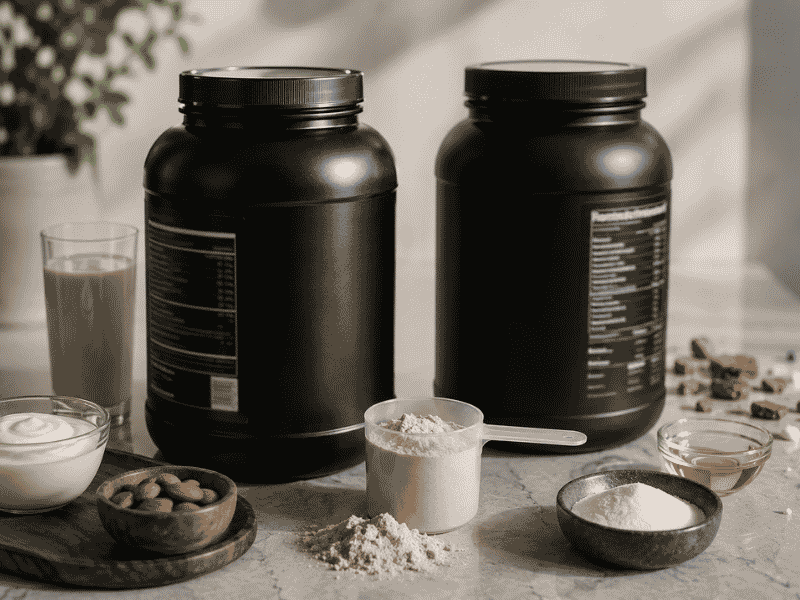
Amino spiking refers to adding inexpensive amino acids like glycine or taurine into protein formulas to artificially inflate protein numbers on lab tests.
Why It Matters
The protein count may appear higher analytically, even if the muscle-building quality is not equivalent to complete whey protein.
Signs That Sometimes Raise Questions
Important: Not every affordable protein uses amino spiking, and not every complex formula is low quality. But clean, transparent brands usually make it easier to understand exactly what you are consuming.
Whey Protein Concentrate vs Isolate Isn’t Just Marketing
The debate around whey protein concentrate vs isolate gets oversimplified online. One gets labelled “cheap,” the other “elite.” Reality sits somewhere in between.
| Type | Typical Profile | Best Fit |
|---|---|---|
| Whey Concentrate | More lactose, slightly higher carbs and fats, lower protein concentration. | Casual daily protein intake and general nutrition support. |
| Whey Isolate | Higher protein purity, lower lactose, faster digestion, leaner macro profile. | Lean recovery, lower calories, easier digestion, and higher protein quality. |
A good concentrate can work perfectly well for someone casually increasing daily protein intake. But for lean recovery, lower calories, easier digestion, or higher protein quality, isolate often makes more sense.
Explore Isolate
Premium formulations like QNT Whey Protein Isolate Range are built for cleaner macro profiles without excessive fillers.
Explore QNTThe Ingredient List Usually Tells the Real Story
Most people focus only on protein grams. That is understandable, because ingredient panels are rarely designed to feel readable after a long workday and a rushed gym session.
Best Practice: Not every scientific-sounding ingredient is automatically harmful, but simpler and more transparent formulations make quality easier to evaluate. A 2023 IFIC survey found that nearly 63% of consumers actively try to choose foods and supplements with recognisable ingredients and clearer labels.
Why Label Transparency Suddenly Matters More Than Ever
Fitness culture has evolved. Whey protein is no longer bought only for “bulking.” It now sits beside overnight oats, office lunchboxes, and shaker bottles carried between meetings.
“The smarter question is no longer ‘How massive will this make me?’ It is ‘What exactly am I putting into my body every day?’”
Brand Trust: Brands that openly communicate sourcing, formulation clarity, and ingredient integrity are increasingly earning long-term trust. This is where QNT Sports India has positioned itself by balancing performance nutrition with cleaner, more transparent formulations.
How Do You Read Whey Protein Labels Correctly?
Here is a simple framework most consumers can actually use before choosing a whey protein.
Check Scoop Size
Compare protein per scoop with total scoop weight.
Calculate Protein %
Look at how much of the scoop is actual protein.
Read Ingredients
Check the first 3–5 ingredients carefully.
Check Protein Type
Understand whether it is concentrate, isolate, or a blend.
Watch for Fillers
Look for excessive fillers or unclear blends.
Compare Transparency
Compare clarity and ingredient integrity, not just price.
Whey Protein Buying Checklist
Final Thoughts
The whey protein industry is not entirely deceptive. There are plenty of genuinely high-quality products on the market today.
But most labels are still designed to catch attention before they explain anything properly, and the industry has quietly relied on the fact that most consumers were never taught how to question them.
Once you understand whey protein labels, questionable formulation tactics, and what contributes to protein quality, it becomes very difficult to buy protein the same way again.
FAQs
Q1. How do you read whey protein labels correctly?
Focus on protein percentage, ingredient transparency, scoop size, protein source, and unnecessary fillers rather than just headline protein claims.
Q2. What is amino spiking in whey protein?
Amino spiking is when cheaper amino acids are added to artificially inflate protein content measurements without meaningfully improving overall protein quality.
Q3. How can you tell if whey protein is high quality?
High-quality whey protein usually has transparent sourcing, strong protein concentration, minimal fillers, and a clear ingredient profile with fewer unnecessary additives.
Q4. What ingredients should you avoid in whey protein?
Watch for excessive sugars, unclear proprietary blends, unnecessary fillers, overly artificial formulations, and hidden ingredients that dilute protein quality.
Q5. Is whey protein isolate better than concentrate?
Whey isolate is generally leaner, lower in lactose, and higher in protein concentration, while concentrate can still be effective depending on your goals and digestion preferences.
Sources & References
- International Society of Sports Nutrition Position Stand on Protein & Exercise: https://jissn.biomedcentral.com/articles/10.1186/s12970-017-0177-8
- Harvard T.H. Chan School of Public Health — Protein Overview: https://www.hsph.harvard.edu/nutritionsource/what-should-you-eat/protein/
- IFIC Food & Health Survey: https://foodinsight.org/2023-food-and-health-survey/
- Healthline — Whey Protein Guide
- National Library of Medicine — Whey Protein Supplementation & Athletic Performance