Do You Actually Need More Zinc?
Zinc appears in immunity supplements, multivitamins and cold remedies, which naturally raises a few questions: What does zinc actually do? How much do you need? And does everyone need a supplement?
The short answer is simple: zinc is essential, but more is not automatically better. For most people, food should come first. Supplementation becomes more relevant when intake is inadequate, absorption is impaired, requirements increase or a healthcare professional identifies a reason to use it.
Key Takeaways
How Much Zinc Do Adults Need?
| Group | Daily Zinc Requirement |
|---|---|
| Adult Men | 11 mg per day |
| Adult Women | 8 mg per day |
| Pregnancy | 11 mg per day |
| Breastfeeding | 12 mg per day |
What Are the Best Food Sources of Zinc?
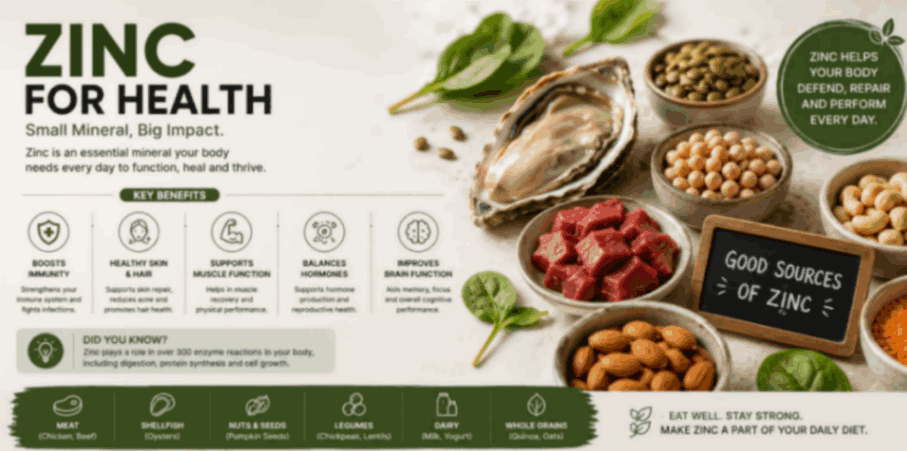
Your first zinc strategy should usually happen in the kitchen. Animal-derived foods generally provide zinc that is more readily absorbed, but vegetarian diets can also contribute meaningful amounts.
Animal Sources
- Meat
- Fish and seafood
- Eggs
- Milk and dairy products
- Oysters, which are especially zinc-rich
Vegetarian Sources
- Pumpkin seeds
- Lentils and beans
- Nuts
- Whole grains
- Soy foods
- Dairy products, if included
Why Can Plant-Based Zinc Be Harder to Absorb?
Legumes, whole grains, nuts and seeds contain phytates. These compounds can bind zinc in the digestive tract and reduce absorption.
“The goal is not maximum zinc. It is adequate zinc.”
How Do You Know If You Are Zinc Deficient?
Online symptom lists can be misleading because zinc deficiency can affect several body systems, while many of its possible signs can also be caused by other conditions.
Who Is More Likely to Have Low Zinc Intake?
Digestive Conditions
Certain gastrointestinal disorders can affect zinc absorption.
Bariatric Surgery
Previous bariatric surgery may affect nutrient absorption.
Vegetarian or Vegan Diets
Intake and absorption deserve attention because phytates can reduce availability.
Pregnancy & Breastfeeding
Requirements increase during these life stages.
Alcohol-Use Disorder
This can increase the likelihood of inadequate zinc status.
Some Older Adults
Marginal zinc intake can occur in some older populations.
Does Zinc Boost Immunity?
Zinc is essential for normal immune function, but there is an important difference between getting enough zinc and assuming that extra zinc will continuously make immunity stronger.
Research on zinc lozenges or syrups suggests that starting them early in a cold may shorten symptom duration by roughly a couple of days in some studies, but findings are inconsistent and zinc does not appear to reliably prevent colds.
Which Zinc Supplement Form Is Best?
Claims that zinc picolinate, bisglycinate, citrate or gluconate is always the “best absorbed” form are stronger than the evidence supports.
| Form | What the Article Notes |
|---|---|
| Zinc Citrate | Similar absorption to zinc gluconate in one study |
| Zinc Gluconate | Commonly used and showed similar absorption to citrate |
| Zinc Oxide | Somewhat lower absorption in the cited comparison |
Can Too Much Zinc Be Harmful?
Yes. This is one of the most important parts of responsible zinc supplementation.
- ! Nausea
- ! Vomiting
- ! Headaches
- ! Stomach discomfort
- ! Loss of appetite
Taking around 50 mg or more per day for several weeks can interfere with copper absorption and may reduce immune function.
Does Zinc Interact With Medicines or Other Minerals?
Certain Antibiotics
Zinc can interfere with absorption of quinolone and tetracycline antibiotics. The article notes taking these antibiotics at least two hours before or four to six hours after zinc.
Iron
Large supplemental iron doses of 25 mg or more taken at the same time can reduce zinc absorption.
Penicillamine
Zinc can also interact with this medication, making timing and professional advice important.
If you use prescription medicines or multiple mineral supplements, checking with a doctor or pharmacist is worthwhile.
Before You Buy a Zinc Supplement
Frequently Asked Questions
Should I take zinc every day?
Not automatically. If your diet already provides adequate zinc, additional supplementation may not be necessary.
Is zinc good for hair?
Zinc deficiency can be associated with hair loss, but zinc supplements are not a universal treatment for hair loss.
Is zinc good for skin and wound healing?
Zinc has an important physiological role in wound healing, but extra zinc does not automatically treat every skin condition.
Do vegetarians need zinc supplements?
Not necessarily. Vegetarian diets can provide zinc, although absorption may be lower because of phytates. Dietary planning or supplementation may be useful depending on intake and individual circumstances.
Can I take zinc with iron?
High-dose supplemental iron taken at the same time can reduce zinc absorption, so timing may matter when using substantial doses of both.
The Bottom Line
Zinc deserves attention—but it does not need hype. It supports essential processes involving immunity, cell growth, protein and DNA synthesis, wound healing and taste.
Start with food. Build a varied diet containing suitable zinc sources. If you follow a vegetarian diet, pay attention to food variety and preparation methods that can help improve mineral availability.
Consider supplementation when there is a genuine reason—not simply because “more zinc means more immunity.”
References
- NIH Office of Dietary Supplements guidance on zinc requirements, food sources and physiological functions.
- NIH guidance on zinc deficiency, assessment and groups at increased risk of inadequate intake.
- NIH information on zinc supplement forms, elemental zinc and absorption.
- NIH guidance on excessive zinc intake, copper interference and upper intake limits.
- NIH guidance on zinc interactions with iron, antibiotics and penicillamine.