
GLP-1 Drugs Burn Fat and Muscle
GLP-1 therapy can produce significant weight loss, but without enough protein and strength training, some of that weight may come from valuable lean muscle.
Key Takeaways
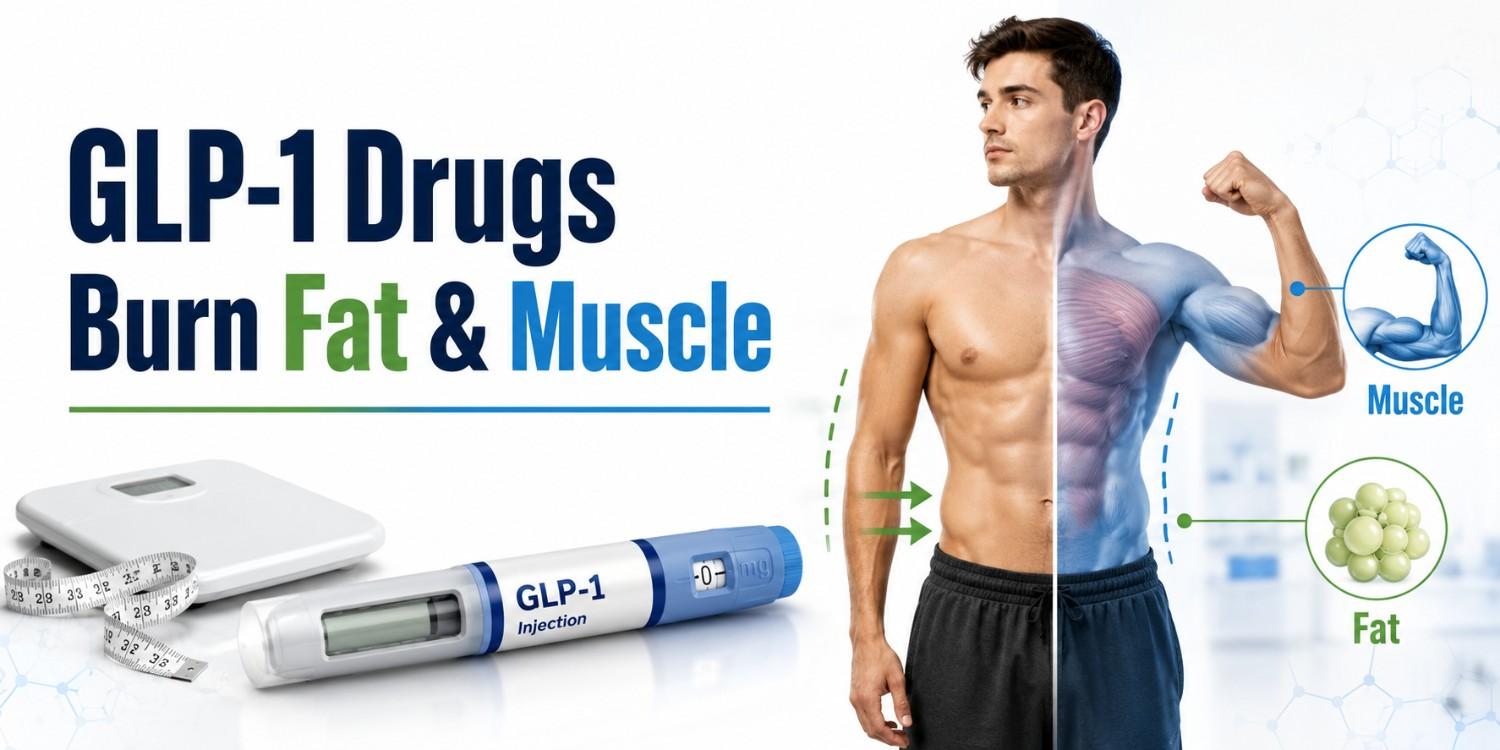
Weight Loss Is Not Always the Same as Fat Loss
GLP-1-based medicines such as Ozempic, Wegovy and Mounjaro can be powerful tools for weight loss. However, the number displayed on the scale does not reveal exactly what the body is losing.
When weight drops quickly, the body may lose more than stored fat. If protein intake is too low and strength training is missing, a substantial portion of the reduction can come from muscle.
This can affect physical appearance, strength, mobility and the long-term quality of the weight-loss result.
“The goal is not simply to become lighter. It is to lose fat while preserving strength, shape and lean muscle.”
1. The Scale Lies on GLP-1
A lower number on the scale can feel like clear progress, but it does not separate fat loss from muscle loss.
When protein intake remains low and resistance exercise is absent, muscle loss may make up a substantial portion of total weight reduction—in some cases approaching half of the weight lost.
| What the Scale Shows | What It Does Not Show | Why It Matters |
|---|---|---|
| Total body weight | How much fat was lost | Fat loss is usually the primary objective. |
| Weekly weight change | How much muscle was lost | Muscle loss can affect strength and physical function. |
| A smaller number | Whether body composition improved | Lower weight does not always mean a stronger or healthier body. |
Why Muscle Loss Changes Shape
Muscle loss can become especially visible in areas such as the glutes, thighs and core. Instead of creating a firm or toned appearance, the body may begin to look flatter or more deflated.
Reduced muscle volume may flatten the shape of the hips and glutes.
Lower-body muscle loss may reduce leg strength and visible definition.
Loss of trunk muscle may affect posture, stability and overall body shape.
2. Why Muscle Loss Is a Long-Term Health Risk
The concern extends beyond physical appearance. Muscle plays a critical role in movement, stability, metabolism and long-term independence.
Muscle supports lifting, balance, walking, climbing stairs and everyday movement.
Muscle is metabolically active tissue and contributes to daily energy expenditure.
Strong muscles help stabilise joints and support the skeletal system.
Maintaining muscle supports resilience, independence and protection against frailty.
3. The Two Muscle-Saving Rules on GLP-1
Muscle loss during GLP-1 therapy is not unavoidable. Two consistent strategies can make a major difference.
Regular Strength Training
- Complete two to three focused sessions per week.
- Prioritise squats, lunges and hip-hinge movements.
- Include pushing and pulling exercises.
- Progress resistance according to ability and recovery.
Higher Protein Intake
- Aim for approximately 0.8–1 gram of protein per pound of body weight.
- Spread protein across several meals and snacks.
- Choose high-quality protein sources.
- Use convenient protein options when appetite is limited.
Spread Protein Across the Day
Consuming all daily protein in one large meal may be difficult when appetite is suppressed. Smaller protein servings can be distributed throughout the day.
4. Why Whey Protein Isolate Fits Low-Appetite Diets
GLP-1 therapy often reduces appetite, which can make it difficult to consume enough protein through regular meals alone.
Why Iso Ripped Stands Out
QNT Iso Ripped
Iso Ripped is positioned as a concentrated whey-isolate formula for calorie-conscious and low-appetite nutrition plans.
5. Strength Training Is the Body’s GPS
GLP-1 medicines tell the body to eat less, but they do not tell it which tissue should be preserved during weight loss.
Strength training provides that signal. It tells the body that muscle is still required for movement, stability and physical performance.
Apply Resistance
Challenge the major muscle groups consistently.
Create a Signal
The body receives a reason to maintain muscle.
Supply Protein
Adequate protein supports muscle maintenance and repair.
Improve Weight-Loss Quality
More of the reduction can shift toward fat rather than muscle.
Compound Movements to Prioritise
6. Action Plan for Anyone on GLP-1
Boost Protein
Aim for approximately 0.8–1 gram of protein per pound of body weight, adjusted through professional guidance.
Lift Consistently
Complete approximately two to three strength-training sessions each week.
Track Beyond Weight
Monitor strength, body shape, energy, movement quality and daily function.
Better Ways to Track Progress
| Progress Marker | What to Monitor | Why It Matters |
|---|---|---|
| Strength | Weights, repetitions and exercise control | Declining strength may indicate poor recovery or muscle loss. |
| Body shape | Clothing fit, measurements and visible definition | Shape changes may reveal more than total weight. |
| Energy | Daily fatigue and workout readiness | Low energy may indicate inadequate nutrition. |
| Mobility | Walking, stairs, balance and daily movement | Functional ability reflects the quality of the result. |
Muscle-Preservation Checklist
- Set an appropriate daily target.
- Spread intake across the day.
- Prioritise high-quality sources.
- Use whey isolate when food intake falls short.
- Train two to three times per week.
- Use compound movement patterns.
- Progress resistance gradually.
- Allow enough recovery between sessions.
- Track strength and physical function.
- Monitor appetite and food intake.
- Report persistent weakness or digestive problems.
- Review the plan with the healthcare team.
Frequently Asked Questions
Can GLP-1 drugs cause muscle loss?
Rapid weight loss may include lean muscle as well as body fat, particularly when protein intake is inadequate and strength training is absent.
How can muscle be protected during GLP-1 weight loss?
Prioritise consistent resistance training, sufficient protein intake and professional monitoring.
How often should GLP-1 users strength train?
The article recommends approximately two to three focused sessions per week, adjusted to health, experience and recovery.
How much protein should someone on GLP-1 consume?
The article proposes approximately 0.8–1 gram per pound of body weight. Individual targets should be confirmed by a qualified professional.
Why is whey isolate useful during low-appetite phases?
It delivers concentrated protein in a relatively small, easy-to-consume liquid serving.
Is body weight the best way to measure GLP-1 progress?
No. Strength, energy, shape, mobility and body composition can provide a more complete picture.
Can Iso Ripped replace a complete meal?
No. A protein supplement can help fill a protein gap, but complete meals provide fibre, vitamins, minerals and other essential nutrients.
Final Thoughts
GLP-1 therapy can be powerful, but without the right strategy it may also contribute to unwanted muscle loss.
Making protein and strength training non-negotiable can improve the quality of the weight-loss process.
The objective is not only to lose weight. It is to reduce fat, preserve muscle and maintain a stronger, healthier and more capable body.
“Lose fat, preserve muscle and build a stronger body—not simply a lighter one.”