Key Takeaways
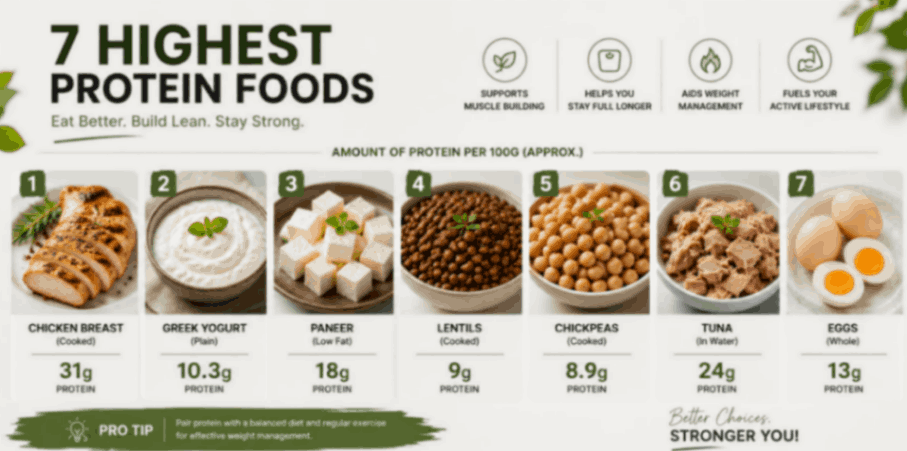
High Protein Foods Are About More Than Protein Per 100 Grams
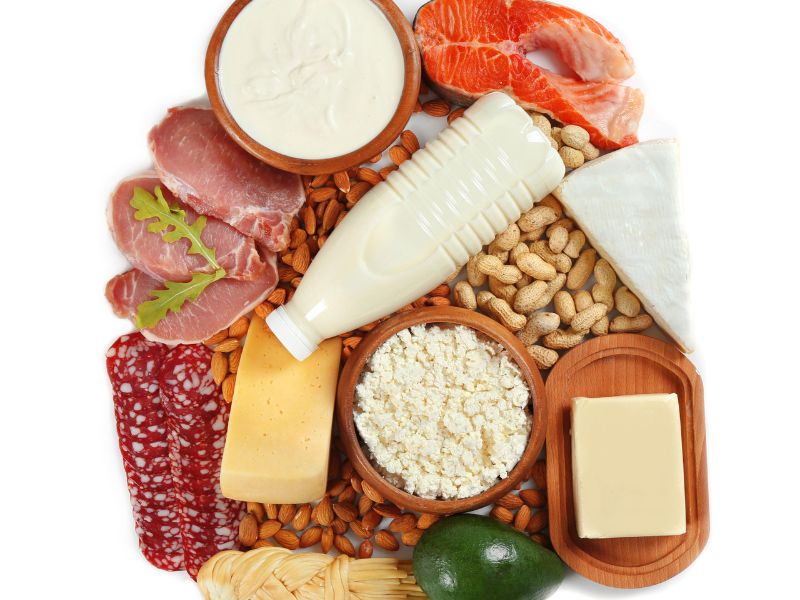
If your goal is to eat more protein, simply choosing the food with the biggest number per 100 grams does not always give you the most useful answer.
Consider the complete protein package: protein content, calories, fats, fibre, micronutrients, portion size and how easily the food fits into your normal meals.
7 High Protein Foods to Add to Your Diet
Lean Chicken
Around 3.5 ounces can provide approximately 31 g of protein, making lean chicken one of the most protein-dense everyday foods.
Pair it with rice, roti, vegetables or salad depending on your calorie and nutrition goals.
Fish
Around 3.5 ounces of salmon can provide approximately 24 g of protein.
Salmon can also provide omega-3 fatty acids. Tuna, sardines and other fish can contribute substantially to protein intake too.
Beans & Lentils
A cup of cooked beans can provide around 18 g of protein, while also contributing fibre and other nutrients.
Dal, rajma, chana and other pulses make this an especially practical option for Indian and vegetarian diets.
Greek Yogurt
Around 6 ounces of plain yogurt can provide approximately 17 g of protein, although amounts vary by product.
Greek-style yogurt works well at breakfast or as a snack with fruit, oats, nuts or seeds.
Tofu & Tempeh
Around 3 ounces of tempeh can provide roughly 16 g of protein, while tofu may provide around 10–17 g depending on the type and serving.
Both can work in curries, wraps, stir-fries and other vegetarian or vegan meals.
Nuts & Seeds
Half a cup of nuts can provide around 14 g of protein.
Almonds, peanuts, pistachios and seeds are easy additions to yogurt, oats and smoothies, although portion size matters because nuts are calorie-dense.
Milk or Soy Milk
A cup of skim milk or soy milk can provide roughly 9 g of protein.
Dairy can support vegetarian diets, while fortified soy milk offers a plant-based option for people avoiding dairy.
High Protein Foods Compared
| Food | Approx. Protein | Useful For |
|---|---|---|
| Lean Chicken | 31 g / 3.5 oz | High-protein meals |
| Salmon | 24 g / 3.5 oz | Protein plus omega-3s |
| Cooked Beans | 18 g / cup | Vegetarian protein and fibre |
| Plain Yogurt | 17 g / 6 oz | Breakfast and snacks |
| Tempeh | 16 g / 3 oz | Plant-based meals |
| Nuts | 14 g / ½ cup | Snacks and meal add-ons |
| Milk / Soy Milk | 9 g / cup | Breakfast and smoothies |
Protein values are approximate and can vary according to food type, brand, serving size and preparation method.
Which High Protein Food Is Best?
There is no single winner. The most useful choice depends on your eating pattern and what else you want from the food.
For Protein Density
Lean poultry and fish provide substantial protein in relatively modest servings.
For Vegetarians
Soy foods, beans, lentils, yogurt and milk can make daily protein easier to reach.
For Convenience
Yogurt, milk, soy milk, nuts and seeds are easy additions when cooking a full meal is not practical.
What If Food Alone Is Not Convenient?
Whole foods should form the foundation of your diet, but there are situations where reaching a protein target through meals alone becomes inconvenient.
Protein powder can be considered when your diet, training schedule or lifestyle makes getting enough protein from meals difficult. It should be used for convenience and gap-filling, not as a replacement for balanced meals.
QNT Prime Whey Triple Blend Isolate Protein
For people training regularly or struggling to get enough protein from meals, QNT Prime Whey Triple Blend Isolate Protein is one option to consider. The current product information lists 25 g of protein per serving.
View QNT Prime WheyHow to Increase Protein Naturally
Start at Breakfast
Use yogurt, eggs, milk or soy foods instead of leaving most protein for dinner.
Build Lunch Around Protein
Add dal, beans, tofu, chicken or fish as a meaningful part of the meal.
Upgrade Snacks
Use yogurt, nuts, milk or other protein-containing snacks when appropriate.
Use Supplements Only if Needed
Use whey or another protein supplement when convenience genuinely helps fill a gap.
“The best high-protein foods are the ones you can include consistently as part of a balanced diet.”
Frequently Asked Questions
What food is highest in protein?
There is no single answer because protein concentration changes with portion size, water content and preparation. Among common everyday foods, lean chicken, fish and other lean animal proteins provide high amounts per serving, while soy foods and legumes are strong plant-based choices.
What are the best high-protein foods for vegetarians?
Good vegetarian options include lentils, beans, tofu, tempeh, Greek yogurt, milk, nuts, seeds and eggs for people who consume them.
Are eggs high in protein?
Yes. One large egg provides about 6 g of high-quality protein and contains all nine essential amino acids.
How can I increase protein naturally?
Include a protein source at several meals instead of trying to consume most of your protein at dinner. Yogurt or eggs at breakfast, dal or tofu at lunch, nuts as a snack and a protein-rich dinner are simple examples.
Do I need whey protein if I eat high-protein foods?
Not necessarily. Many people can obtain enough protein from food. Protein powder is primarily a convenient option when your diet, training schedule or lifestyle makes meeting your protein needs through meals difficult.
The Bottom Line
The best high-protein foods are not simply the seven foods with the biggest protein number. They are protein-rich choices you can eat consistently while maintaining a balanced overall diet.
Lean chicken, fish, beans and lentils, Greek yogurt, tofu or tempeh, nuts and seeds, and milk or soy milk provide practical options across non-vegetarian, vegetarian and plant-based diets. Start with food and use a protein supplement only when it genuinely helps fill a gap.
Sources & References
- Harvard Health Publishing — High-Protein Foods & Protein Sources Protein and protein-food guidance.
- Harvard T.H. Chan School of Public Health — The Nutrition Source: Protein Guidance on protein, amino acids, protein needs and the overall protein package.
- USDA MyPlate — Protein Foods Guidance covering poultry, seafood, beans, lentils, nuts, seeds and soy foods.
- QNT Sport India — Prime Whey Triple Blend Isolate Protein QNT Prime Whey product information referenced in this article.