Whey Protein Comes from Cheese: Here’s Why That’s Actually Brilliant
Whey protein starts as the liquid portion of milk that separates during cheese-making. What was once overlooked is now refined into a complete protein source used worldwide for recovery, performance, and everyday nutrition.
Key Takeaways
Introduction
If someone told you your whey protein started as a leftover liquid from cheese-making, your first reaction might be: “Wait… what?”
For years, the phrase “whey protein made from cheese waste” has made people assume whey is low quality, artificial, or heavily processed. The truth is much more impressive.
What was once discarded during cheese-making has become one of the most valuable discoveries in modern sports nutrition, thanks to food science, filtration, and sustainable nutrition innovation.
What Is Whey Protein, Really?
To understand whey protein, you first need to understand milk. Milk naturally contains two major proteins: casein and whey.
| Milk Component | During Cheese-Making | Nutrition Relevance |
|---|---|---|
| Casein | Forms part of the solid curds used for cheese. | Slow-digesting milk protein. |
| Whey | Remains as the liquid portion after curds separate. | Fast-digesting protein rich in essential amino acids. |
Is Whey Protein Made from Cheese?
Whey is connected to cheese-making because it is the liquid that remains when milk separates into curds and whey.
It is not cheese powder. It is filtered milk protein from the liquid dairy stream left after cheese curds form.
Turning nutrient-rich liquid whey into protein powder is resource efficiency, not poor quality.
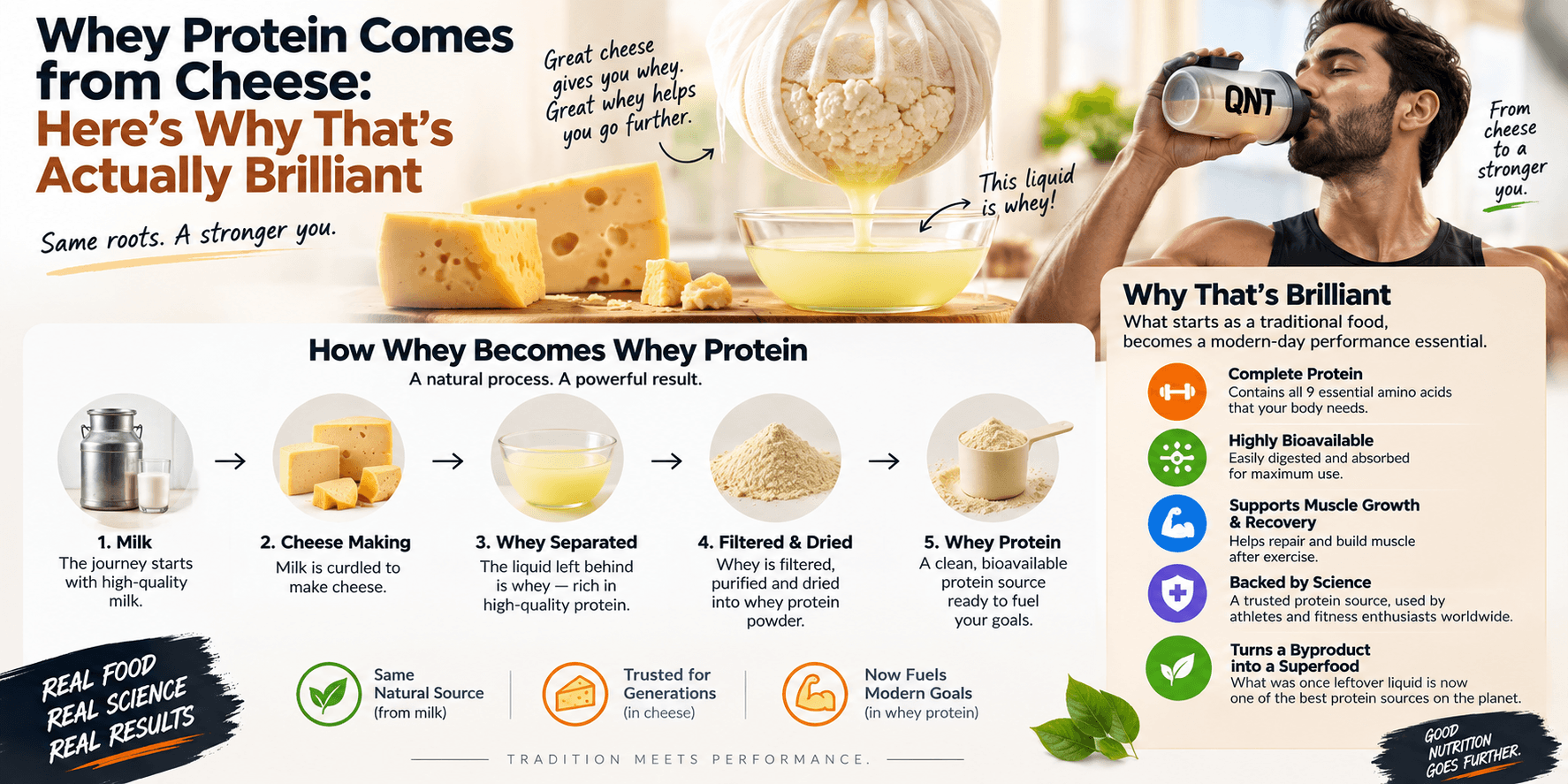
What Happens to Whey During Cheese Making?
Whey protein production sounds simple, but it is a powerful example of food innovation and food waste reduction.
Fresh milk is prepared for cheese production.
Natural enzymes separate milk into curds and liquid whey.
The thicker solid portion is used to create cheese products.
This protein-rich liquid contains valuable nutrients and milk protein.
Modern filtration removes excess water, fats, and lactose.
The remaining protein becomes more concentrated and purified.
The filtered protein is dried into the powder known as whey protein.
How Is Whey Protein Made?
Many people assume whey protein is artificial because it comes in flavoured tubs and shakes. But whey protein production is largely a filtration and purification process, not synthetic manufacturing.
After liquid whey is collected, advanced filtration separates protein from fat, lactose, and water.
| Type | Filtration Level | Nutrition Profile | Best Fit |
|---|---|---|---|
| Whey Concentrate | Less filtered | Lower protein percentage, slightly more carbs and fats | General protein support |
| Whey Protein Isolate | More refined | Higher protein, lower lactose and fat | Leaner, cleaner, faster-digesting protein option |
Is Whey Protein Made from Waste?
Context Matters
Yes, whey was once considered a leftover dairy byproduct. But calling whey protein “waste” today is misleading and outdated.
Smart Innovation
The value was always there. Modern science simply learned how to use it intelligently.
Is Whey Protein Healthy?
For most healthy individuals, whey protein is widely used because it provides convenient, complete protein that supports active lifestyles and fitness goals.
Why Do Athletes Use Whey Protein?
Amino acids reach muscles quickly after training because whey is a fast-digesting protein.
Whey supports recovery, muscle repair, protein synthesis, and lean muscle development.
In India, many active people still struggle to meet daily protein intake through regular meals alone.
What Is the Difference Between Whey and Milk Protein?
| Protein | Share in Milk Protein | Digestion Speed | Common Use |
|---|---|---|---|
| Casein | About 80% | Slow | Longer-release protein support |
| Whey | About 20% | Fast | Workout recovery and busy schedules |
Is Whey Protein Natural or Artificial?
Despite the myths online, whey protein is not a synthetic lab-made substance. It starts with real milk.
The final product goes through filtration, purification, and drying to create concentrated protein powder. Flavouring and sweeteners may vary between brands, but the core protein itself originates from dairy.
In a strange way, whey protein is the nutrition industry’s greatest comeback story.
Why Whey Protein Isolate Has Become So Popular
As consumers became more health-conscious, demand increased for cleaner ingredients, lower lactose options, higher protein percentages, and leaner nutrition products.
For people focused on performance, recovery, and lean muscle support, isolate is often the preferred option because it delivers a refined protein profile with lower fat and carbohydrates.
QNT Whey Protein Isolate Range
QNT Whey Protein Isolate Range offers formulations designed for high protein intake, recovery support, and lean performance-focused nutrition.
Explore QNT Whey IsolateWhey Protein Quality Checklist
Final Thoughts
The next time someone says whey protein comes from “cheese waste,” they are technically describing only half the story. What they are really talking about is one of the smartest transformations in modern nutrition.
A nutrient-rich liquid that was once overlooked is now refined through advanced filtration into a complete protein source trusted across the world.
Whey protein is not something to be disgusted by. It is a modern example of science, sustainability, and nutrition working together intelligently.
FAQs
Is whey protein made from cheese?
Yes, whey protein is connected to the cheese-making process. When milk is used to make cheese, it separates into curds and liquid whey. That liquid whey contains valuable milk protein, which is filtered and refined into whey protein powder.
How is whey protein made?
Whey protein is made by collecting liquid whey from milk during cheese production. It then goes through a whey filtration process that removes excess fat, lactose, and water while concentrating the protein. The final product is dried into powder form.
Why is whey protein considered high quality?
Whey protein is considered high quality because it contains all nine essential amino acids, absorbs quickly, and supports muscle recovery and muscle growth.
Is whey protein made from waste?
The term “waste” can be misleading. Whey was once discarded during cheese-making, but today it is recognised as a nutrient-rich dairy stream with exceptional nutritional value. Modern whey protein production is an example of sustainable nutrition and food waste reduction.
Sources & References
Harvard T.H. Chan School of Public Health — Protein Overview:
https://nutritionsource.hsph.harvard.edu/what-should-you-eat/protein/
Encyclopaedia Britannica — Whey Definition & Dairy Processing:
https://www.britannica.com/topic/whey
Tetra Pak — Cheese Whey and Whey Filtration Process:
https://www.tetrapak.com/solutions/categories/cheese-whey/whey
National Library of Medicine — Whey Protein Supplementation and Athletic Performance
International Society of Sports Nutrition — Protein & Exercise Position Stand