Key Takeaways
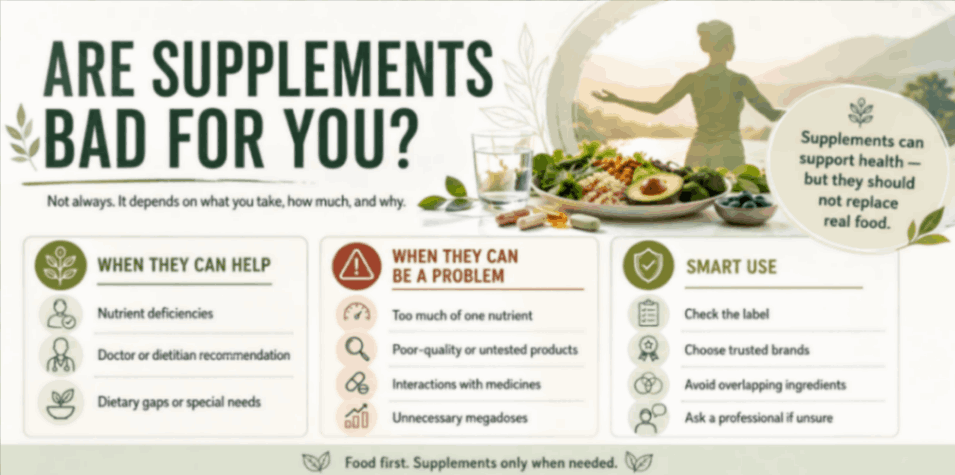
What Are You Asking the Supplement to Fix?
Imagine skipping breakfast, ordering whatever is easiest for lunch, relying on coffee through the afternoon, squeezing in workouts whenever possible and then scrolling until 2 AM.
Now imagine blaming your protein shake because you feel tired. A supplement can still be inappropriate for an individual or interact with medicines, but supplement use should always be judged in the context of the entire lifestyle.
“A supplement can support the foundation. It cannot become the foundation.”
What Supplements Are Actually Designed to Do
The word itself explains the role: supplement. These products are designed to complement the diet, not become the diet.
Food
Provides the nutritional foundation and dietary variety.
Training
Provides the stimulus for fitness and performance adaptation.
Recovery
Sleep and rest give the body time to recover and adapt.
Supplement
Addresses a specific gap or adds targeted support when appropriate.
Protein Powder: Shortcut or Practical Food Tool?
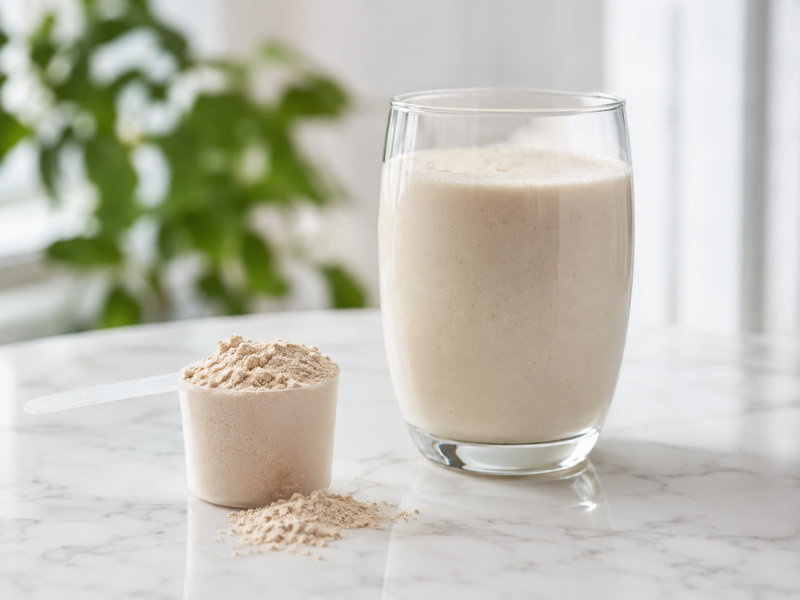
Protein powder is often treated as something completely separate from normal nutrition, but the practical question is much simpler.
If Food Covers Your Needs
You may not need a protein supplement simply because you exercise.
If Protein Intake Is Difficult
A protein supplement can provide a convenient way to contribute toward total daily intake.
A scoop does not replace foods such as dal, paneer, curd, soy, eggs, fish, chicken or other nutritious protein sources. It makes protein intake more convenient.
What About Creatine?
Creatine is another supplement that attracts considerable concern. It is also one of the better-studied sports supplements and can support strength, power and performance during repeated short bursts of intense activity such as resistance training or sprinting.
Women: Supplement Needs Should Be Personal, Not Automatic
Women are often given long lists of “must-have” supplements. That can be just as misleading as claiming women never need supplements.
Menstrual Health
Heavy menstrual blood loss can affect individual iron needs.
Pregnancy
Nutrient requirements can change significantly during pregnancy.
Dietary Pattern
Restricted diets may change exposure to particular vitamins, minerals or fatty acids.
Individual Health
Sun exposure, medical factors and professional assessment can influence requirements.
Instead of asking, “Which supplements should every woman take?” ask, “What does my diet, health, life stage and professional assessment suggest I actually need?”
Five Things Supplements Cannot Fix
How Should You Choose a Supplement in India?
Do not choose a product only because the front of the pack makes impressive promises. Health supplements and nutraceuticals in India fall under FSSAI regulations, and disease prevention, treatment or cure claims are restricted.
✔ Before Purchase Checklist
When Can a Supplement Actually Be Useful?
| Situation | Possible Role |
|---|---|
| Protein intake is difficult through meals | Protein powder may offer convenience |
| Repeated high-intensity training | Creatine may support certain strength and performance goals |
| Diet does not provide enough of a nutrient | A targeted vitamin or mineral may be appropriate |
| Specific life stage or health circumstance | Individual professional assessment can guide supplementation |
Frequently Asked Questions
Are protein supplements harmful?
Protein supplements are not inherently harmful for healthy people simply because they are supplements. Whether one is appropriate depends on total protein intake, dietary pattern, health and individual circumstances.
Can supplements replace healthy food?
No. Supplements can provide specific nutrients, but they cannot replace the fibre, variety and other components supplied by a nutritious diet.
Should everyone take a multivitamin?
No. A multivitamin may be useful in certain circumstances when food intake does not provide enough vitamins and minerals, but it is not automatically necessary for everyone.
Is taking more supplements better?
No. Combining multiple products can cause ingredient or nutrient overlap, and excessive intake of some nutrients can be harmful.
Do I need supplements if I eat a healthy diet?
Not necessarily. Supplement needs depend on dietary intake, activity, life stage, health conditions and individual nutritional requirements.
The Bottom Line
So, are supplements the problem? Sometimes a poor-quality, unnecessary or incorrectly used supplement can certainly be a problem.
But blaming every protein shake, creatine scoop or vitamin tablet while ignoring poor sleep, food quality, inactivity and inadequate recovery does not make sense either.
Build the lifestyle first. Eat well. Train consistently. Sleep properly. Recover. Identify genuine nutritional gaps. Then use a carefully chosen supplement when it has a clear purpose.
Supplements should support the work—not replace it.
References
- NIH Office of Dietary Supplements guidance on dietary supplements and appropriate supplement use.
- NIH information on multivitamin and mineral supplements and their role alongside a varied diet.
- NIH guidance on exercise and athletic-performance supplements, including creatine and protein.
- NIH nutrient guidance regarding iron, vitamin D and magnesium.
- Food Safety and Standards Authority of India guidance for health supplements and nutraceuticals.