When to Take Whey Protein for Best Results
Learn whether whey protein is better before or after exercise, how the anabolic window works, and why total daily protein intake matters more than perfect timing.
Key Takeaways
What Is the Best Time to Take Whey Protein?
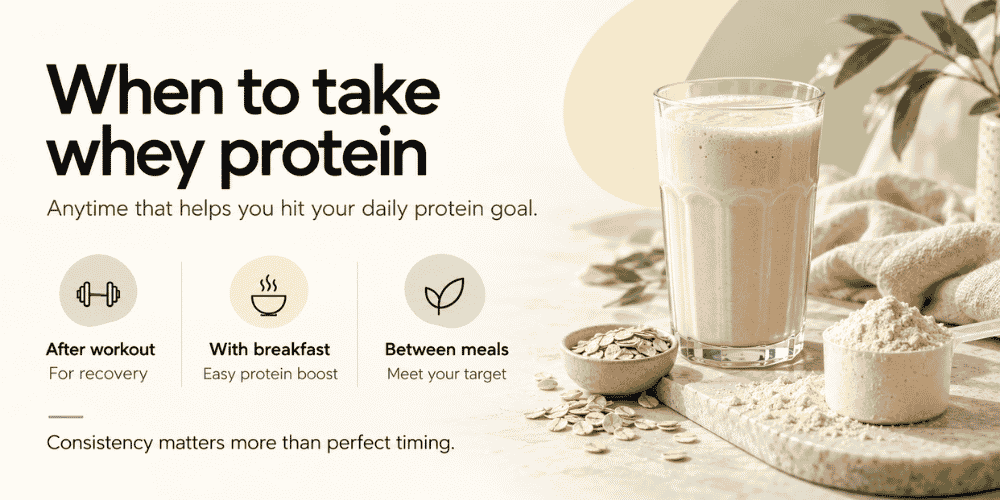
For most people, a practical time to take whey protein is within a few hours after exercise. This helps place a convenient source of amino acids near the recovery period.
However, the answer is not limited to one narrow post-workout window. Your muscles remain responsive to dietary protein after resistance training, while your total protein intake across the full day remains the stronger priority.
Whey can also be taken before exercise, in the morning, between meals or before bed when those timings make it easier to meet your nutritional needs.
The Anabolic Window Explained
The anabolic window describes the period after training when protein and other nutrients can contribute to muscle repair and adaptation.
Total Daily Protein Still Wins
Smart timing can improve convenience, but a perfectly timed shake cannot compensate for consistently low protein intake throughout the rest of the day.
Why a Morning Protein Shake Can Help
After several hours without food overnight, a morning shake can provide a convenient protein serving and make it easier to distribute protein throughout the day.
Supports a Protein-Rich Breakfast
Whey can be combined with oats, milk, fruit, yoghurt or eggs to create a more balanced morning meal.
Improves Daily Distribution
Starting with protein can reduce the need to consume a very large amount in one meal later in the day.
May Support Fullness
A protein-rich breakfast may help some people feel satisfied for longer when used within a balanced calorie-controlled diet.
Whey Protein Before or After a Workout?
Both timings can work. The better option depends on when you last ate, how long you train and which timing is easier to follow.
| Timing | Main Benefit | May Suit |
|---|---|---|
| Before workout | Provides amino acids close to the training period | Long sessions or training several hours after a meal |
| After workout | Provides a convenient recovery-focused protein serving | Most strength and muscle-building routines |
| Across both periods | Distributes protein around a longer training window | Athletes with higher daily protein requirements |
Finding the Best Whey Protein in India
Timing matters less when the product itself does not match your requirements. Compare the complete label rather than choosing only by flavour or tub price.
Whey Protein for Different Fitness Goals
For Weight Management
Protein can support fullness and help maintain muscle while following a calorie-controlled diet. A whey isolate may suit people seeking lower carbohydrate and fat content per serving.
For Muscle Gain
Whey provides a convenient source of essential amino acids, but muscle gain also requires progressive strength training and sufficient total energy intake.
For General Nutrition
A daily shake can help cover a protein shortfall when meals do not provide enough, particularly for people with busy schedules or increased nutritional needs.
How Much Protein Should You Take Daily?
The supplied guidance uses a range of approximately 1.6–2.2 g of total protein per kilogram of body weight per day for people actively focused on muscle gain.
| Body Weight | At 1.6 g/kg | At 2.2 g/kg |
|---|---|---|
| 60 kg | 96 g daily | 132 g daily |
| 70 kg | 112 g daily | 154 g daily |
| 80 kg | 128 g daily | 176 g daily |
Count protein from food and supplements together. Individual requirements vary according to training volume, age, health, body composition and total energy intake.
A Simple Whey-Protein Timing Strategy
Support Your Fitness Routine with QNT Sport
Understanding when to take whey protein can make your routine more convenient, but product quality and total daily nutrition remain equally important.
Explore QNT Sport India’s protein range to compare different formulas, flavours and serving options for your individual training routine.
Frequently Asked Questions
Is it bad to take whey protein at night?
No. Whey can be taken at night when it helps you meet your daily requirement. Casein digests more slowly, but whey can still provide a useful protein serving before bed.
Can I drink whey protein without working out?
Yes. Whey is a convenient dietary protein source and can help cover a protein shortfall. Exercise is still necessary for training-related muscle and performance adaptations.
How much whey protein should I take daily?
Use whey only for the amount your regular food does not provide. One serving may be sufficient for some people, while others may require a different amount based on their total daily target.
Does whey protein cause weight gain?
Body weight increases when total calorie intake consistently exceeds energy expenditure. Whey contributes calories like other foods but does not independently cause fat gain.
Can beginners take whey protein safely?
Healthy beginners can generally use an appropriate whey serving when it suits their diet. Check the ingredients, allergens and total protein intake before adding it regularly.
Final Takeaway
The most practical time to take whey protein is within a few hours after training, particularly when you have not consumed a protein-rich meal close to your workout.
References
- National Institutes of Health and PubMed literature concerning protein intake, resistance exercise and muscle-protein synthesis.
- International Society of Sports Nutrition guidance on protein intake and nutrient timing.
- Current nutrition panels and serving instructions on official protein-product packaging.