
Navratri has its own rhythm. Early mornings, prayers, familiar fasting foods and, for some people, a workout squeezed between work and evening aarti. But when your usual diet changes for nine days, one question can become surprisingly difficult to answer: where is your protein coming from now?
Potatoes, sabudana and kuttu rotis may feature regularly on the plate, depending on your fasting tradition. They provide energy, but they do not automatically make a meal protein rich. If you continue strength training, the difference matters.
The good news is that Navratri fasting and fitness can coexist. You do not need to abandon your vrat traditions or depend entirely on supplements. Start with the foods your fasting rules permit, estimate what they contribute, and then work out whether anything is missing.
Why Protein Intake Can Drop During Navratri
The challenge is often not eating less food. It is changing the balance of what you eat.
A typical fasting meal might include sabudana khichdi, aloo vrat, fruit or a kuttu puri. These can fit into a fasting menu, but protein may take a back seat unless you deliberately include suitable sources.
That is why protein intake during Navratri fasting deserves a little planning, particularly for people who train regularly. Protein supports muscle repair and maintenance, while carbohydrates help fuel workouts. Both matter; increasing protein should not mean cutting out the energy you need to train.
The International Society of Sports Nutrition identifies approximately 1.4-2.0 g of protein per kg of body weight daily as a useful range for many exercising individuals. Your needs depend on training, goals and overall nutrition, so this is a reference point rather than a universal prescription. Source: ISSN position stand.
High Protein Foods for Navratri Fast: Start With What You Can Eat
Before changing your menu, check what your vrat actually permits. Practices vary between families and regions. Some people consume dairy and nuts; others follow stricter rules. Ingredients such as regular grains, pulses, onion and garlic may be excluded under certain traditions, while other households follow different conventions.
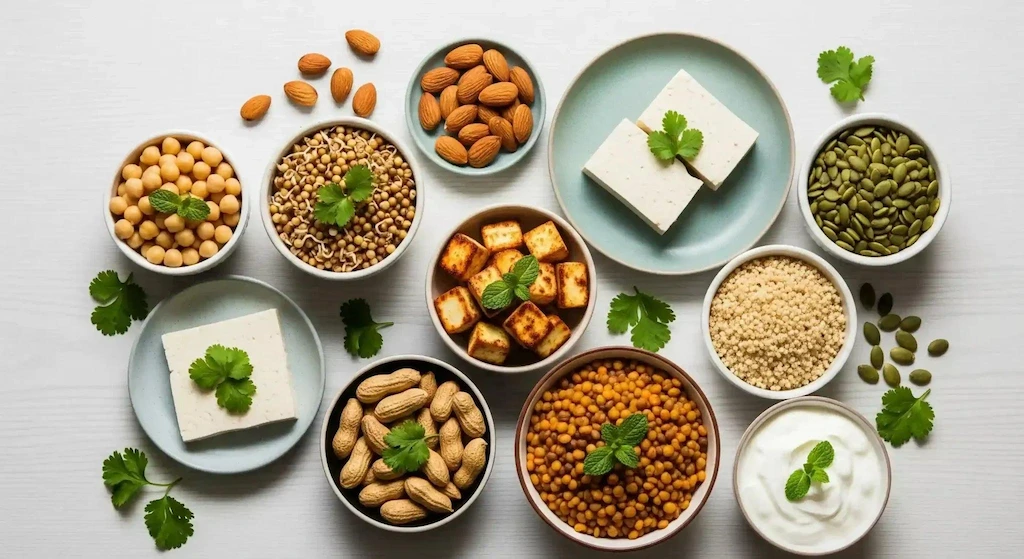
Commonly useful options, where permitted, include:
These are approximate values; brands, recipes, moisture content and portion sizes affect the final numbers. Harvard Health also recommends drawing protein from a variety of foods rather than relying on one source.
The practical takeaway? Build meals around a substantial permitted protein source first. Nuts and seeds can complement it, but a small handful alone may not close a large protein gap.
How Can I Meet My Protein Requirements During Navratri Fasting?
Start with your daily target, then count what you actually eat. Do not estimate protein by looking at how full your plate is.
For example, if your personal target is 90 g and your fasting-friendly meals provide approximately 65 g, you have a gap of around 25 g. That is much more useful information than simply deciding to eat more nuts.
Keep a simple food log for a day or two. Record the quantity of milk, curd, paneer and other permitted foods, using package labels or a reliable nutrition database where possible. Then adjust portions or add another suitable food.
This approach to how to maintain protein intake during fasting also prevents an easy mistake: treating every food labelled healthy as an equally effective protein source.
A Vrat-Friendly High-Protein Meal Plan for Strength Training
Here is a sample day for someone whose Navratri rules permit dairy, nuts, seeds, fruit and the listed ingredients. It is a starting point, not a universal fasting menu.
| Meal | Practical option | Approx. protein |
|---|---|---|
| Breakfast | 250 ml milk, almonds and a banana | 11 g |
| Mid-morning | 200 g curd with pumpkin seeds | 11–14 g |
| Lunch | 100 g paneer with permitted vegetables and kuttu roti | 21–25 g |
| Afternoon snack | 250 ml milk and a small handful of peanuts | 14–16 g |
| Dinner | 100 g paneer with a permitted vegetable preparation | 20–23 g |
Estimated total: 77-89 g protein.
Actual values depend on portions, recipes and the products used. The plan also needs enough overall energy, carbohydrates, fats, fruit and vegetables to suit your needs. If dairy is excluded, the menu must be rebuilt around the protein sources your tradition allows.
Notice something important: even with several protein-focused meals, reaching a higher target can require thought. That is where suitable fasting-compatible recipes, advance preparation and a realistic target make a difference.
For high protein Navratri vrat recipes, try paneer with permitted vegetables, curd with seeds, or a milk-and-nut smoothie if each ingredient fits your rules. Rotate preparations rather than relying on the same meal every day.
Can I Take Whey Protein While Fasting During Navratri?
Potentially, but not under every fasting tradition.
Whey protein is derived from milk. Some people may consider it acceptable because it is dairy based; others may avoid supplements altogether or interpret their vrat rules differently. Check your own practice before using it. A product being vegetarian does not automatically make it permissible for every fast.
If whey is permitted, use it to fill a measured nutritional gap - not as a replacement for every meal.
For example, QNT Prime Whey Triple Blend Isolate Protein provides 25 g of protein per serving, according to its product page. Its blend combines whey isolate, concentrate and hydrolysate.
Another option is QNT ISO Ripped Whey Isolate Protein, which lists 32 g of whey protein isolate per serving.
Both are convenient ways to supplement protein when permitted, but neither is essential for observing Navratri or maintaining muscle. Check the product label and serving directions and remember that the protein amount per serving is not necessarily the amount of powder itself.
How Can Gym-Goers Maintain Muscle During Navratri Fasting?
The answer is not to force your usual training routine through nine days of reduced food intake.
For muscle maintenance during intermittent fasting, the broader principle is the same: total nutrition and resistance training matter more than chasing a perfect post-workout window. If you experience dizziness, marked weakness or other concerning symptoms, stop exercising and reassess your fast. People with medical conditions or medicines affected by fasting should seek individual medical advice before continuing.
What Should You Remember This Navratri?
You do not have to choose between respecting your fasting practices and being thoughtful about nutrition. Begin with the protein-rich fasting foods in India that your vrat allows, estimate their contribution, and identify the remaining gap. Add a suitable food or, where permitted, a convenient supplement.
The aim is not to turn a religious observance into a strict fitness challenge. It is to make sensible nutritional choices within the boundaries you have chosen to follow.