Egg White Pavlova Recipe: Crisp Outside, Soft and Marshmallowy Inside
Learn how to make a classic egg white pavlova with a crisp meringue shell, a soft centre, and a luxurious topping of whipped cream and fresh fruit.
Key Takeaways
What Is Egg White Pavlova?
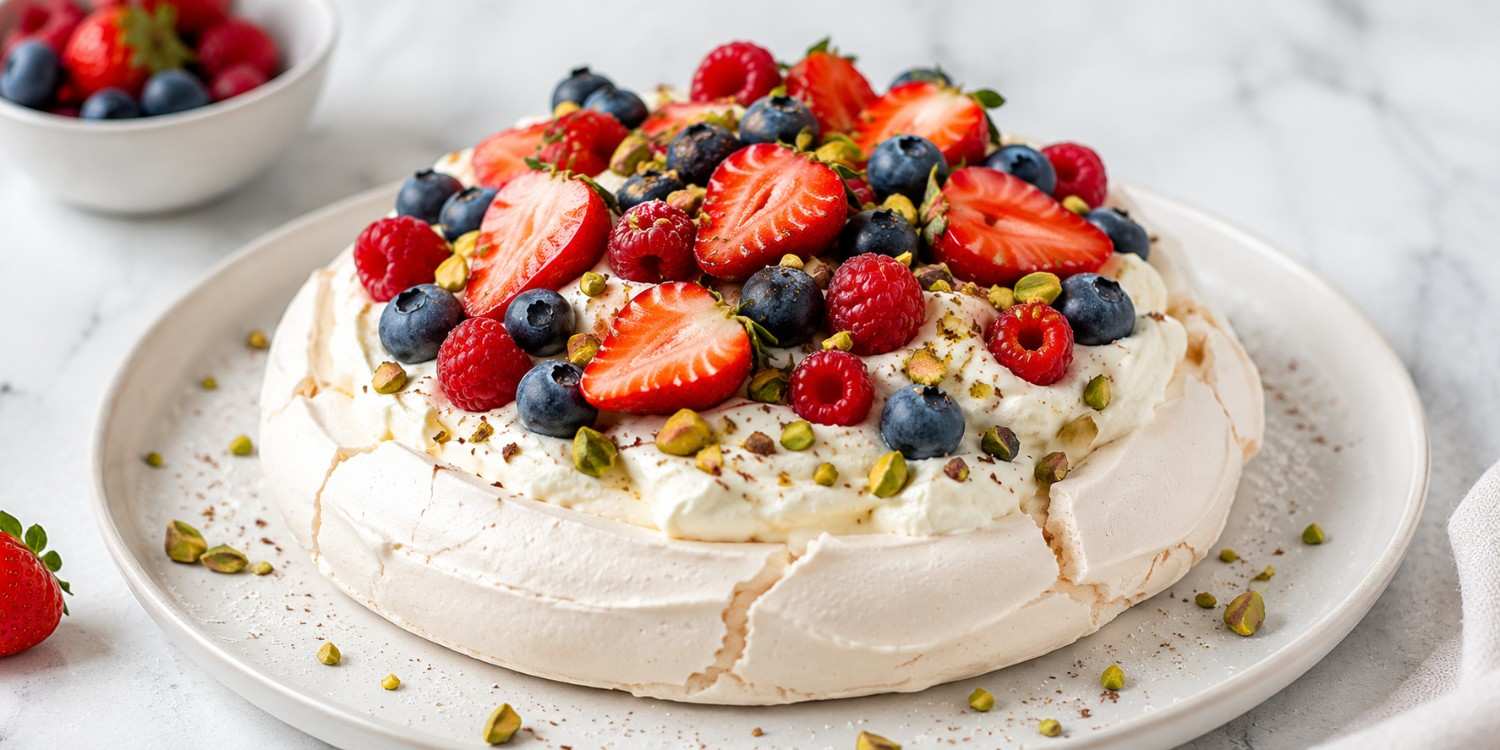
Pavlova is a baked meringue dessert made primarily with whipped egg whites and sugar. It develops a delicate, crisp exterior while remaining soft, light, and marshmallow-like in the centre.
A classic egg white pavlova is usually topped with lightly whipped cream and fresh fruit. Berries, kiwi, mango, passion fruit, and peaches work especially well because their natural acidity balances the sweetness of the meringue.
“The best pavlova combines three textures: a crisp shell, a soft centre and a creamy fruit topping.”
Egg White Pavlova Ingredients
For the Pavlova Base
- 4 large egg whites, at room temperature
- 200 g caster sugar
- 1 teaspoon cornflour or cornstarch
- 1 teaspoon white vinegar or lemon juice
- ½ teaspoon vanilla extract
For the Topping
- 250 ml chilled whipping cream
- 1 tablespoon icing sugar, optional
- ½ teaspoon vanilla extract
- Fresh strawberries, blueberries, or raspberries
- Kiwi, mango, peaches, or passion fruit, optional
How to Make Egg White Pavlova
Prepare the Oven and Tray
Preheat the oven to 120°C conventional or 100°C fan. Line a baking tray with parchment paper and draw an 18–20 cm circle as a guide.
Whip the Egg Whites
Place the egg whites in a clean, dry bowl. Beat at medium speed until soft peaks form and the whites appear foamy but stable.
Add the Sugar Gradually
Add the caster sugar one tablespoon at a time while continuing to whisk. Beat until the meringue becomes thick, glossy, and able to hold stiff peaks.
Test the Meringue
Rub a small amount between your fingers. The mixture should feel mostly smooth rather than noticeably grainy, showing that the sugar has dissolved.
Fold in the Stabilising Ingredients
Add the cornflour, vinegar, and vanilla extract. Fold them gently into the meringue without knocking out too much air.
Shape the Pavlova
Spoon the meringue inside the marked circle. Build the sides slightly higher and create a shallow well in the centre for the cream and fruit.
Bake Slowly
Bake for approximately 75–90 minutes. The exterior should feel dry and firm while remaining pale or lightly cream-coloured.
Cool Gradually
Switch off the oven, leave the door slightly open, and allow the pavlova to cool inside. Cooling slowly helps protect its structure.
Decorate and Serve
Whip the cream with icing sugar and vanilla until soft peaks form. Spoon it over the cooled pavlova and finish with fresh fruit.
Why These Ingredients Matter
| Ingredient | Purpose | Best Practice |
|---|---|---|
| Egg whites | Create the aerated structure of the meringue. | Use room-temperature whites in a grease-free bowl. |
| Caster sugar | Sweetens and stabilises the whipped egg whites. | Add gradually and beat until mostly dissolved. |
| Cornflour | Supports the soft, marshmallow-like centre. | Fold in gently after whipping. |
| Vinegar or lemon juice | Adds acidity that helps stabilise the meringue. | Use only a small measured amount. |
| Whipped cream and fruit | Balance sweetness with creaminess and freshness. | Add shortly before serving. |
Tips for the Best Homemade Pavlova
Wipe the bowl and beaters before whipping to remove grease or moisture.
Its smaller crystals dissolve more easily than standard granulated sugar.
Stop once the meringue is glossy and holds stiff peaks.
Sudden temperature changes can cause the pavlova to collapse.
High humidity can make a meringue shell sticky and soft.
Cream and fruit gradually soften the crisp pavlova shell.
Common Pavlova Problems and Solutions
| Problem | Possible Cause | Solution |
|---|---|---|
| Meringue will not whip | Grease, moisture, or egg yolk entered the bowl. | Start again with a completely clean bowl and fresh egg whites. |
| Pavlova turns brown | The oven temperature is too high. | Reduce the temperature and use an oven thermometer when possible. |
| Pavlova collapses | It cooled too quickly or was underbaked. | Cool it gradually in the switched-off oven. |
| Liquid beads appear | The sugar did not dissolve fully or was added too quickly. | Add sugar gradually and test the mixture before baking. |
| Shell becomes sticky | Humidity or prolonged exposure to cream and fruit. | Store the plain shell in a dry airtight container and decorate later. |
Pavlova Topping Ideas
Classic Berry
Whipped cream, strawberries, blueberries, and raspberries.
Tropical Fruit
Mango, kiwi, and passion fruit with lightly whipped cream.
Chocolate
Cream, berries, and a small amount of grated dark chocolate.
Citrus
Cream, orange segments, and a spoonful of lemon curd.
Storage and Make-Ahead Instructions
Plain Pavlova Shell
Store the completely cooled shell in an airtight container at room temperature for up to one day. Keep it away from heat and humidity.
Decorated Pavlova
Refrigerate once cream has been added and serve as soon as possible. The meringue will gradually soften.
Make-Ahead Method
Bake the shell one day ahead, then prepare the whipped cream and fresh fruit shortly before serving.
Egg White Pavlova Checklist
Frequently Asked Questions
1. What is the secret to a perfect egg white pavlova?
Use clean equipment, add the sugar slowly, whip until the mixture is glossy, and bake at a low temperature. Cooling the pavlova gradually is also important.
2. Why is my pavlova soft and sticky?
Humidity, underbaking, or early decoration can make the shell sticky. Store the plain pavlova in a dry airtight container and add the topping shortly before serving.
3. Can I make pavlova without cornflour?
Yes, but cornflour helps create the characteristic soft and marshmallow-like centre. Without it, the texture may be drier and closer to a traditional crisp meringue.
4. Why does pavlova need vinegar or lemon juice?
A small amount of acid helps stabilise the whipped egg whites and supports a tender interior. The finished pavlova should not taste strongly acidic.
5. How do I know when pavlova is baked?
The exterior should feel dry and firm, and it should lift from the parchment without feeling wet underneath. The centre may remain soft.
6. Is it normal for pavlova to crack?
Yes. Small cracks are common because the crisp outer shell surrounds a softer centre. Sudden temperature changes can cause larger cracks.
7. Can I prepare pavlova the day before?
Yes. Bake and cool the pavlova shell, then store it in an airtight container at room temperature. Add cream and fruit just before serving.
8. Can pavlova be refrigerated?
Refrigerate pavlova only after adding whipped cream. An undecorated shell is better stored in a dry airtight container because refrigerator moisture can soften it.
9. What fruit is best for pavlova?
Strawberries, raspberries, blueberries, kiwi, mango, peaches, and passion fruit are popular choices. Tart or slightly acidic fruit balances the sweet meringue.
10. Can I use granulated sugar instead of caster sugar?
Granulated sugar can be used, but its larger crystals take longer to dissolve. For a smoother and more stable meringue, caster sugar is usually the better option.
Conclusion
This easy egg white pavlova recipe creates an elegant dessert using a few simple ingredients. The key is to build a stable meringue, bake it slowly, and allow it to cool gradually.
Finish your homemade pavlova with whipped cream and fresh fruit for a dessert that is crisp, creamy, light, and visually impressive. With careful whipping and gentle baking, even first-time bakers can produce a reliable classic pavlova.