Beginner’s Guide to the Gym: Training, Nutrition and Progress
Learn how to start gym training safely, choose a simple workout, progress without injury and support your results with practical nutrition and recovery habits.

Key Takeaways
Starting Your Gym Journey
Starting the gym brings new goals, motivation and access to more fitness information than ever. Unfortunately, more information does not always mean better guidance.
Social media is filled with advanced routines and dramatic transformations designed to attract attention. Copying everything you see can leave you exhausted, confused or injured before you establish a consistent routine.
Beginners do not need complicated training splits, advanced intensity techniques or numerous supplements. The first priorities are correct exercise technique, consistency and gradual progression.
“The best beginner programme is not the hardest programme. It is the one you can perform correctly and repeat consistently.”
Why Being a Beginner Is an Advantage
A beginner’s body has not yet adapted to structured resistance training. Almost every sensible training stimulus is new, creating excellent potential for improvement.
Movement patterns often improve quickly through regular practice.
Early strength gains can occur as technique and neuromuscular efficiency improve.
Understanding equipment and exercises makes the gym feel less intimidating.
Regular training can make repeated movements feel easier over time.
Consistent training and nutrition may gradually improve muscle mass and body composition.
Learn Before You Lift Heavy
Your first sessions should feel manageable. You do not need to prove your strength, train to complete failure or leave the gym unable to walk.
Mild delayed-onset muscle soreness can appear 24–72 hours after unfamiliar exercise. Severe or worsening pain may indicate that the workload increased too quickly.
Learn how to adjust seats, pads and handles correctly.
Control both the lifting and lowering phases.
Avoid holding your breath unnecessarily during repetitions.
Learn where you should feel each exercise working.
Distinguish normal effort from sharp or worsening pain.
Observe how your body responds between sessions.
A Simple Beginner Workout
Most beginners can start with two or three full-body sessions per week. This structure trains the major muscle groups while providing frequent opportunities to practise technique.
| Exercise | Sets | Repetitions | Main Area |
|---|---|---|---|
| Leg press or goblet squat | 2 | 10–15 | Thighs and glutes |
| Seated leg curl | 2 | 10–15 | Hamstrings |
| Machine chest press | 2 | 10–15 | Chest and triceps |
| Lat pulldown | 2 | 10–15 | Back and biceps |
| Seated cable row | 2 | 10–15 | Upper back |
| Machine shoulder press | 2 | 10–15 | Shoulders and triceps |
| Cable curl | 1–2 | 10–15 | Biceps |
| Triceps pushdown | 1–2 | 10–15 | Triceps |
| Plank or abdominal exercise | 2 | Controlled effort | Core |
| Easy cardio | 1 | 5–10 minutes | General conditioning |
How to Progress Safely
Progressive overload means gradually increasing the challenge placed on your body. Progress does not only mean adding heavier weights.
Add a repetition while maintaining the same technique.
Use a small increase after reaching the top of the repetition range.
Improve your safe range of motion before chasing load.
Reduce momentum and perform each repetition deliberately.
Add volume only after adapting to the initial workload.
Choose a Range
Use 10–15 repetitions for most beginner exercises.
Reach 15 Repetitions
Complete every set without losing control.
Add a Small Load
Increase the weight conservatively.
Build Up Again
Progress from roughly 10 repetitions towards 15.
How Many Days Should Beginners Train?
Two or three resistance-training days per week are enough for most beginners. Rest days allow muscles, connective tissues and the nervous system to recover.
- Monday: Full-body training
- Wednesday: Full-body training
- Friday: Full-body training
- Tuesday: Full-body training
- Saturday: Full-body training
- Use walking or light activity on other days
Do Not Copy Advanced Athletes
An experienced athlete’s programme reflects their goals, training history, recovery capacity and preferences. It may not be appropriate for a beginner.
Advanced trainees often need more volume or specialised exercises to continue progressing. Beginners can make excellent progress with simpler routines and should avoid changing programmes every week.
“Consistency makes progress measurable. Constantly changing your programme makes it difficult to know what is working.”
Nutrition for Gym Beginners
Training provides the stimulus for improvement, while nutrition supplies the energy and building materials needed for recovery. You do not need to eat every three hours; total daily intake matters more than a rigid meal schedule.
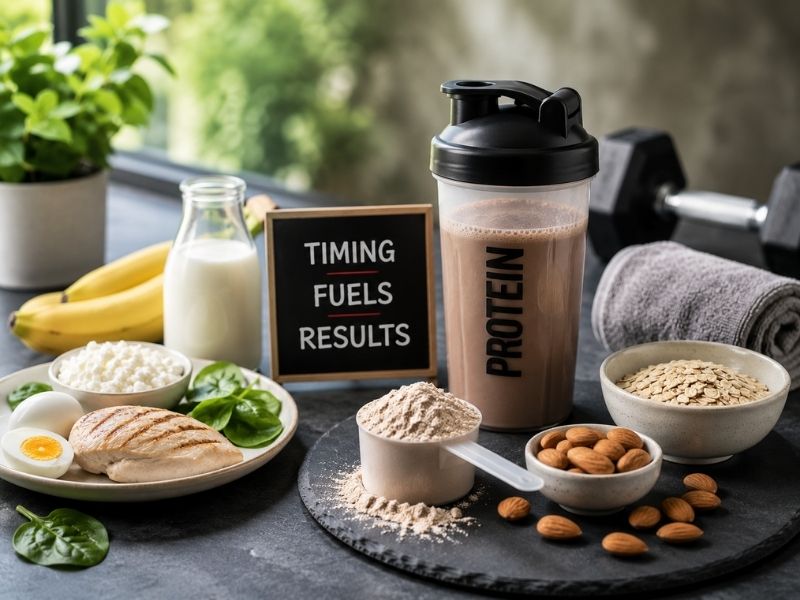
Include protein across your main meals. Most exercising people can target approximately 1.4–2.0 g/kg daily.
Rice, oats, fruit, potatoes and whole grains support training energy and recovery.
Provide fibre, vitamins, minerals and plant compounds that support overall health.
Drink according to heat, sweat rate, workout duration and individual needs rather than relying on one fixed number.
Practical Protein Sources
Sleep and Recovery Matter
Adaptation takes place during the hours and days after training. Recovery habits determine whether you can return to the gym and perform productively again.
Maintain regular sleep and wake times.
Consume enough calories and protein.
Allow recovery between demanding sessions.
Increase sets and workload progressively.
Walking can support movement without adding major fatigue.
Mental stress can influence sleep and recovery.
Avoid Anabolic Steroids
Social media can make extreme physiques appear normal and pressure beginners to seek rapid results.
Anabolic steroid misuse is associated with serious risks, including cardiovascular problems, liver damage, hormonal disruption, reduced sperm production and infertility.
Build your foundation through intelligent training, balanced nutrition, adequate recovery and patience. A faster transformation is not worth compromising long-term physical or mental health.
Beginner Gym Checklist
- ✓Choose a simple programme
- ✓Learn equipment setup
- ✓Use manageable weights
- ✓Warm up with light movement
- ✓Record exercises, weight and repetitions
- ✓Eat a balanced meal with protein
- ✓Rehydrate according to sweat loss
- ✓Allow adequate recovery
Final Advice for Beginners
You do not need to be perfect when you start. You need to begin at a level you can repeat.
Learn the basic exercises, use manageable weights and keep a simple training record. Increase difficulty gradually instead of trying to train like someone with years of experience.
Ask for help when needed, but evaluate the quality of the advice. Good guidance should make training clearer, safer and easier to follow.
“A simple programme followed consistently will always outperform a perfect programme that you cannot maintain.”
Frequently Asked Questions
How many days should a beginner go to the gym?
Two or three full-body resistance-training sessions per week are enough for most beginners.
Should beginners train every muscle in one workout?
A full-body routine is a practical starting point because it trains the major muscle groups and allows frequent technique practice.
Should beginners train to failure?
No. Beginners can make progress while finishing most sets with two or three good repetitions still possible.
How quickly should beginners increase weight?
Increase the weight only after reaching the top of your repetition range with controlled technique across every set.
Is muscle soreness necessary for progress?
No. Mild soreness is common after unfamiliar training, but progress does not require severe soreness.
How much protein does a beginner need?
Most exercising individuals can target approximately 1.4–2.0 grams of protein per kilogram of body weight per day.
Do beginners need protein powder?
No. Protein powder is a convenient food supplement, but daily protein needs can also be met through regular meals.
Should beginners copy workouts from social media?
Not automatically. Choose exercises according to your technique, goals, equipment access and recovery capacity.
References
- American College of Sports Medicine resistance-training guidance
- ACSM position stand on resistance-training prescription
- World Health Organization physical-activity recommendations
- International Society of Sports Nutrition position stand on protein and exercise
- NHS guidance on exercise soreness and musculoskeletal symptoms
- MedlinePlus information on anabolic-steroid risks