
Which Foods Should You Avoid During Monsoon?
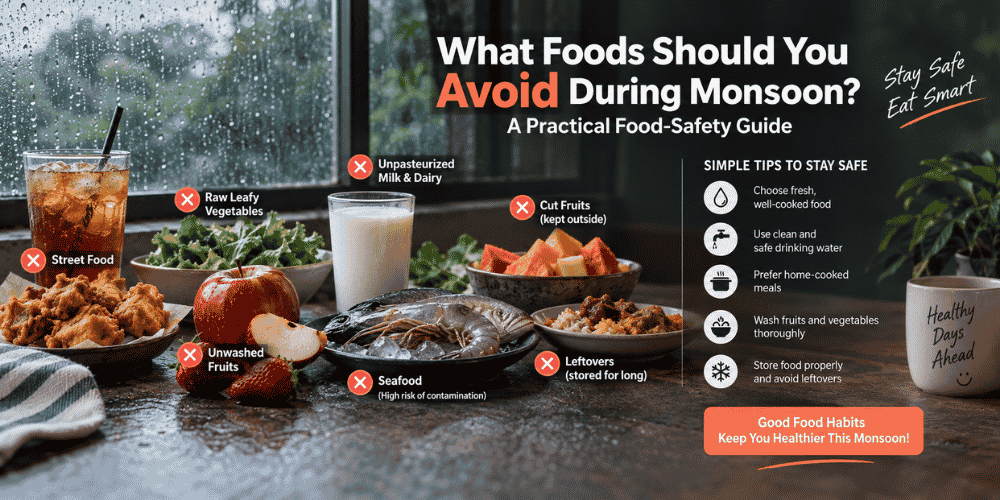
Be especially cautious with uncovered street food, questionable water or ice, raw sprouts, pre-cut fruit, unpasteurised drinks, undercooked seafood and improperly stored leftovers. Entire food groups do not become unsafe during monsoon; sourcing, hygiene, cooking and temperature control matter more.
Key Takeaways
Why Does Food Safety Require More Attention During Monsoon?
The rainy season brings cooler weather and an understandable craving for hot tea, pakoras and comforting meals. It can also make food handling and storage more challenging.
Warm, humid conditions can help certain microorganisms multiply more quickly. Heavy rainfall may also affect water quality, transportation, electricity and refrigeration in some areas.
This does not mean that every fruit, vegetable, dairy product or seafood item becomes unsafe. Focus on where food came from, how it was prepared and how long it remained unrefrigerated.
“The monsoon does not make entire food groups harmful. Unsafe water, poor hygiene, inadequate cooking and improper storage create the real risk.”
Foods That Need Extra Caution During Monsoon
Uncovered street food
Risk increases when food is exposed to flies, dust, rainwater, unsafe utensils or questionable water.
Pre-cut fruit
Outdoor fruit may have been washed with unsafe water or stored unrefrigerated for several hours.
Unpasteurised juice
Safety depends on the fruit, water, ice, blender, glasses and storage conditions.
Raw sprouts
Bacteria can multiply in the same warm and humid conditions used for sprouting.
Poorly washed salads
Avoid raw salads when you cannot verify how the vegetables were washed or stored.
Improperly stored leftovers
Cooked food becomes riskier when it remains at room temperature for several hours.
Is Street Food Completely Unsafe During Monsoon?
Street food is not automatically unsafe. The risk depends on hygiene, water quality, ingredient storage and how recently the dish was cooked.
Foods and Conditions to Check Carefully
Should You Avoid Fruit and Juice During Monsoon?
Fruit remains nutritious during the rainy season. The concern is not fruit itself, but how it was washed, cut and stored.
| Option | Safer choice | What to avoid |
|---|---|---|
| Whole fruit | Wash and cut it at home | Bruised, mouldy or overripe fruit |
| Pre-cut fruit | Freshly cut and refrigerated | Outdoor fruit exposed to flies or heat |
| Juice | Pasteurised and correctly stored | Unpasteurised juice or questionable water and ice |
Can You Eat Leafy Vegetables and Sprouts?
Leafy vegetables
Remove damaged leaves, rinse thoroughly under safe running water and cook properly where practical. Their surfaces can trap soil and contaminants.
Sprouts
Cooking sprouts until steaming hot is safer than eating them raw, especially for people at greater risk of foodborne illness.
Are Leftovers Safe During Monsoon?
Leftovers can be eaten safely when they are cooled, refrigerated and reheated correctly. The problem begins when cooked food remains at room temperature for too long.
Cool promptly
Do not leave cooked food at room temperature for several hours.
Store safely
Use clean, covered containers and refrigerate promptly.
Reheat thoroughly
Heat leftovers until they are steaming hot throughout.
Avoid repeated cycles
Do not repeatedly warm and cool the same dish.
Should You Avoid Seafood During the Rainy Season?
Seafood does not automatically become unsafe during monsoon. Safety depends on freshness, sourcing, refrigeration, cross-contamination control and thorough cooking.
Avoid Seafood When
Keep raw seafood and its juices away from ready-to-eat food, chopping boards and cooked dishes. A complete nutritional ban on all seafood throughout monsoon is not supported by basic food-safety principles.
Are Milk, Paneer and Yoghurt Safe During Monsoon?
Healthy adults do not need to avoid all dairy products. Choose pasteurised products, maintain refrigeration and discard dairy that shows signs of spoilage.
Safer choices
- Pasteurised milk
- Freshly prepared paneer
- Properly refrigerated yoghurt
- Sealed dairy products within date
Avoid or discard
- Raw or unpasteurised milk
- Dairy left unrefrigerated
- Paneer with a sour smell or slimy surface
- Open milk sweets of uncertain freshness
- Curd showing mould or unusual changes
People with lactose intolerance or milk allergies should make choices based on their individual condition rather than the season alone.
Should You Stop Eating Fried Food During Monsoon?
An occasional homemade serving of pakoras is not automatically harmful. The larger concerns are food hygiene, repeatedly reused oil, oversized portions and replacing balanced meals with fried snacks.
Which Foods Do You Not Need to Ban?
The goal is not to create an unnecessarily restrictive monsoon diet. Many nutritious foods remain suitable when they are fresh, washed properly, stored safely and cooked thoroughly.
| Food | Safer approach |
|---|---|
| Leafy vegetables | Wash carefully, remove damaged leaves and cook thoroughly. |
| Fruit | Buy whole fruit and wash and cut it at home. |
| Sprouts | Consume them cooked rather than raw. |
| Dairy | Choose pasteurised products and keep them refrigerated. |
| Eggs | Cook until the white and yolk are properly set. |
| Meat and seafood | Keep chilled, prevent cross-contamination and cook thoroughly. |
| Leftovers | Refrigerate promptly and reheat until steaming hot. |
What Should You Eat During Monsoon?
Build meals around freshly cooked, familiar foods that are easy to prepare and store safely.
Adequate protein remains important when appetite or training routines change. When a complete meal is temporarily inconvenient, a measured serving of QNT Prime Whey may help cover a protein gap, but it does not prevent infection and should not replace properly prepared meals.
What Are the Five Most Important Monsoon Food-Safety Rules?
Keep clean
Wash hands, utensils and food-preparation surfaces.
Separate food
Prevent contact between raw and cooked ingredients.
Cook thoroughly
Pay particular attention to eggs, meat, seafood and sprouts.
Control temperature
Refrigerate perishable food promptly and serve hot food hot.
Use safe ingredients
Use reliable water and avoid damaged or mouldy food.
Frequently Asked Questions
Can I eat leafy vegetables during monsoon?
Yes. Wash them thoroughly, remove damaged leaves and cook them properly. Avoid raw salads from sources with uncertain washing practices.
Is curd safe during the rainy season?
Properly refrigerated curd made from pasteurised milk is generally safe for healthy people. Discard it if it shows mould, smells unusual or has remained unrefrigerated for too long.
Can I eat eggs during monsoon?
Yes. Store eggs correctly and cook them thoroughly. Avoid raw or partially cooked egg dishes when hygiene is uncertain.
Is street food completely banned during monsoon?
No, but choose clean vendors and freshly cooked food. Avoid dishes that depend on raw chutneys, questionable ice or uncovered ingredients.
Should I avoid drinking cold water?
Water safety matters more than temperature. Drink water from a reliable source whether it is cool, warm or at room temperature.
Can supplements prevent monsoon infections?
No. Supplements cannot replace clean water, proper handwashing, thorough cooking, safe storage or medical care when illness occurs.
Final Word
The monsoon does not make entire food groups harmful. The more important risks are unsafe water, inadequate cooking, cross-contamination and poor temperature control.
Avoid uncovered street food, raw sprouts, pre-cut outdoor fruit, unpasteurised drinks and improperly stored leftovers when their safety is uncertain.
At home, prioritise freshly cooked meals, clean preparation surfaces, safe drinking water and prompt refrigeration. A safe monsoon diet should remain balanced and varied rather than being based on fear or unnecessary restrictions.
References
- Article source and seasonal food-safety overview. :contentReference[oaicite:0]{index=0}
- Monsoon food-safety principles and practical precautions. :contentReference[oaicite:1]{index=1}
- World Health Organization: Five Keys to Safer Food
- World Health Organization: Food Safety
- Centers for Disease Control and Prevention: Safer Food Choices
- Food Safety and Standards Authority of India: Safe Food-Handling Guidance