
How to Gain Muscle: Complete Beginner’s Guide
Build a repeatable routine around resistance training, gradual progression, enough protein and energy, and proper recovery.
Key Takeaways
Start With the Fundamentals
Learning how to gain muscle doesn't require complicated workouts or expensive supplements. Beginners should focus on consistent resistance training, gradual progression, sufficient protein and calories, and proper recovery. This guide explains how to build these habits, avoid common mistakes and track your progress towards sustainable muscle growth.
Start With Resistance Training, Not Random Workouts
Muscles grow when they adapt to the demands placed on them. Resistance training provides that stimulus, whether you're using dumbbells, barbells, resistance bands, machines, or your own body weight.
For beginners, strength training for beginners should focus on learning a handful of movement patterns rather than copying complicated routines from social media.
A simple full-body session can include:
- Squat: bodyweight squats or goblet squats
- Push: push-ups or a chest press
- Pull: seated rows or dumbbell rows
- Hinge: a light Romanian deadlift or another hip-hinge variation
- Core: a plank or dead bug
Start with two or three sets per exercise, using a manageable resistance and several repetitions you can complete with good technique. If you're new to lifting, ask a qualified trainer to help you learn unfamiliar movements.
Training the major muscle groups at least twice a week is consistent with adult physical activity guidelines. A three-day full-body routine is one practical way to organise your sessions.
Make Progressive Overload Your Next Priority
Doing the same workout every week can help you build a habit, but your training also needs to become more challenging over time.
That's where progressive overload comes in. It means gradually increasing the demand on your muscles as your strength and technique improve. You might perform an extra repetition, use slightly more weight, or complete the same workload with better control.
- 01
Establish Control
Imagine you can comfortably perform eight repetitions of a dumbbell exercise.
- 02
Build Repetitions
Over several sessions, you work towards ten or twelve with sound technique.
- 03
Increase Gradually
Once that feels manageable, you may increase the weight slightly and build up again.
Keep a basic training log. Record your exercises, weights, repetitions, and how each session feels. It makes progress easier to recognise, especially when visual changes are still subtle.
You don't need a new programme every week. Learn your exercises, practise them consistently, and change your routine when there's a clear reason to do so.
Get Enough Protein to Support Muscle Growth
Training gives your body a reason to build muscle. Protein provides the amino acids needed to support muscle repair and growth.
For many healthy adults who exercise regularly, around 1.4-2.0 grams of protein per kilogram of body weight per day is a useful evidence-based range. A practical starting target for a beginner may be around 1.4-1.6 g/kg, adjusted for individual needs and circumstances.
| Body Weight | Illustrative Daily Protein Target |
|---|---|
| 50 kg | 80 g |
| 60 kg | 96 g |
| 70 kg | 112 g |
| 80 kg | 128 g |
These are estimates, not compulsory targets. Your health, training, total diet, and goals matter too.
What Does a Muscle-Building Diet Look Like?
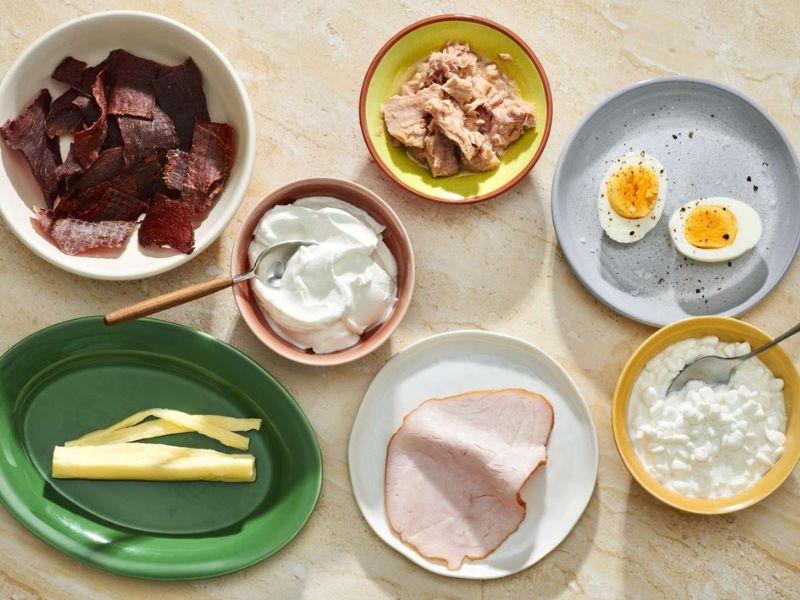
You can get protein from ordinary Indian meals. Dal, rajma, chole, curd, paneer, milk, soy, eggs, chicken, and fish can all contribute. Combining several sources across the day often makes your target easier to reach.
For example, breakfast might include eggs or paneer; lunch could include dal and curd; an evening snack might be milk or roasted chana; and dinner could feature soy, paneer, chicken, or fish alongside your usual meal.
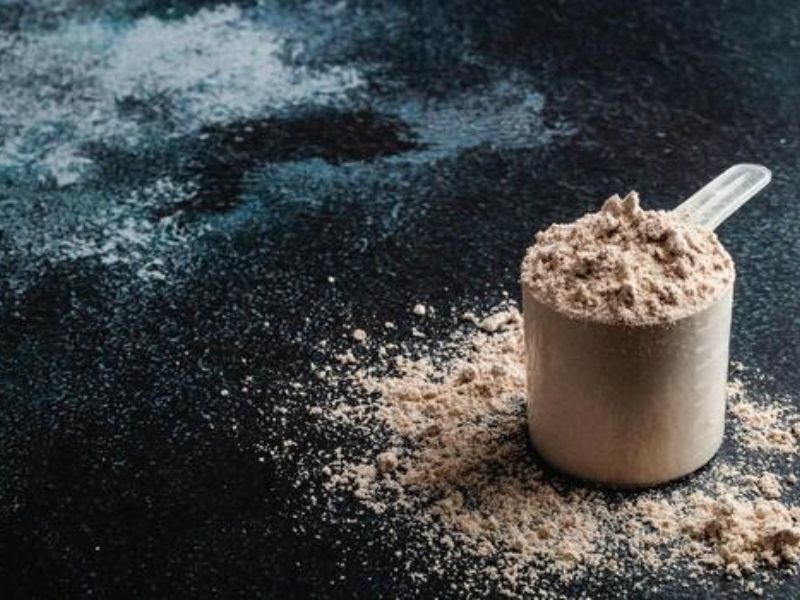
If food alone doesn't conveniently cover your needs, whey protein can help fill the gap. Explore the QNT whey protein range or consider QNT Prime Whey Triple Blend Isolate Protein as an optional addition. It is a convenience, not a requirement for muscle gain.
Eat Enough Calories Without Simply Gaining Weight
You can train consistently and eat plenty of protein yet struggle to build muscle if you're regularly consuming less energy than your body needs.
For some beginners, a modest calorie surplus for muscle gain can help by eating slightly more calories than you burn. An initial estimate of around 200-300 extra calories per day may be reasonable for some people, but it isn't a universal prescription. Your starting weight, activity level, appetite, and goals all influence what you need.
The goal isn't to eat everything in sight. It's to provide enough energy to support training and recovery while avoiding unnecessary weight gain.
A Practical Approach
- Eat regular, balanced meals with a protein source
- Include carbohydrates such as rice, roti, oats, potatoes, and fruit to help fuel training
- Include dietary fats from foods such as nuts, seeds, and oils
- Monitor your body-weight trend over several weeks, alongside your strength and how your clothes fit
- Adjust portions gradually if your weight, training performance, and recovery aren't moving in the direction you want
If you struggle to eat enough because of a low appetite or a busy schedule, a calorie-dense shake may be convenient. QNT's Muscle Mass 3000 Weight Gainer is one option to explore, but first consider whether you actually need the additional calories. A mass gainer isn't automatically necessary just because you're a beginner.
Treat Recovery and Sleep as Part of Training
Your muscles don't grow simply because you spend more time in the gym. Training creates a stimulus; recovery helps your body adapt to it.
Most adults should aim for around 7-9 hours of sleep per night, while recognising that individual needs vary. Rest days, adequate food, hydration, and manageable training volume also matter.
Supplements can play a supporting role, but they cannot compensate for poor sleep or inconsistent training. Creatine monohydrate, for example, is a well-studied optional supplement that can support performance in repeated high-intensity exercise. If you choose to use it, follow the product directions and consider your individual health circumstances. QNT's Creatine Monohydrate Powder is one option to review.
Whey protein and creatine serve different purposes. Whey helps you meet your protein needs; creatine supports exercise performance. Neither replaces a sound muscle gain workout, a suitable diet, or recovery.
Stay Consistent Long Enough to See Progress
A good programme doesn't need to be complicated. It needs to be repeatable.
| Day | Activity |
|---|---|
| Monday | Full-body resistance training |
| Tuesday | Walking or light activity |
| Wednesday | Full-body resistance training |
| Thursday | Rest or gentle movement |
| Friday | Full-body resistance training |
| Saturday | Walking, recreation, or optional light activity |
| Sunday | Rest and prepare for the week |
Adjust the schedule to your experience, availability, and recovery. Two well-managed sessions are a better starting point than a six-day plan you cannot sustain.
Common Mistakes That Slow Muscle Gain
- Changing exercises constantly: You need enough time with a routine to learn movements and measure progress.
- Ignoring progressive overload: Repeating workouts without gradually increasing the challenge can limit further progress.
- Eating too little: Insufficient protein or energy can make muscle growth harder.
- Training hard every day: More sessions don't automatically mean better results.
- Neglecting sleep: Recovery is part of the programme, not an optional extra.
- Depending on supplements: Products can support specific needs, but they don't replace the fundamentals.
So, how long does it take to build muscle? You may notice improvements in exercise technique and strength within the first several weeks. Visible changes often take longer, and the pace varies with training history, genetics, nutrition, sleep, and consistency. There is no reliable single timeline or fixed amount of muscle every beginner should expect to gain.
Track what you can control: completed workouts, exercise performance, eating habits, sleep, and your progress over time. These signals are more useful than judging your results in front of the mirror every morning.
The Takeaway: Build the Habits Before Chasing the Shortcuts
Learning how to gain muscle doesn't require perfect meals, daily gym sessions, or a cupboard full of supplements. Start with resistance training, learn to progress gradually, eat enough protein and energy, and give your body time to recover.
Get those basics working together before worrying about advanced techniques. If a supplement makes a specific part of the plan easier, use it to fill that gap - not as a substitute for the work itself.
Explore QNT Sports India's whey protein range if you need a convenient way to support your daily protein intake. The best starting plan is one you can follow consistently, adjust sensibly, and sustain well beyond your first few weeks in the gym.
Frequently Asked Questions
How can a beginner gain muscle?
Start with resistance training two or three times a week, learn correct technique, and gradually increase repetitions or resistance. Eat enough protein and calories to support your goals, sleep adequately, and track your progress. Consistency matters more than following an advanced workout split or buying multiple supplements.
How much protein do I need to build muscle?
A commonly used evidence-based range for healthy adults who exercise is 1.4-2.0 g of protein per kilogram of body weight daily. Around 1.4-1.6 g/kg can be a practical starting point for many beginners. Your individual requirements may differ, and you can meet your needs through food, supplements, or a combination of both.
How many calories should I eat to gain muscle?
Your calorie needs depend on your body size, daily activity, training, and current energy intake. If you need a surplus to support muscle growth, an additional 200-300 calories per day can be a starting estimate, not a fixed rule. Monitor your progress over several weeks and adjust gradually rather than eating excessively.
What is the best workout for muscle gain?
For many beginners, a full-body resistance-training programme performed two or three times weekly is a practical choice. Include exercises for the legs, hips, chest, back, shoulders, and core. Choose movements you can perform safely, learn proper technique, and gradually increase the challenge as you become stronger.
How long does it take to build muscle?
Strength and technique can improve within the first several weeks, but visible muscle growth generally takes longer. Results vary with training experience, genetics, nutrition, recovery, and consistency. Rather than expecting a fixed amount of muscle by a particular date, monitor your training performance and longer-term changes in strength and body measurements.
References
- International Society of Sports Nutrition (ISSN). Position Stand: Protein and Exercise.
- Morton RW et al. A systematic review, meta-analysis and meta-regression of the effect of protein supplementation on resistance training-induced gains in muscle mass and strength in healthy adults. British Journal of Sports Medicine, 2018.
- Centers for Disease Control and Prevention (CDC). Physical Activity Guidelines for Adults.
- National Health Service (NHS). Healthy ways to gain weight.