Key Takeaways
Why Does Your Protein Shake Upset Your Stomach?
You drink a protein shake, and within a few hours your stomach feels bloated, uncomfortable or unusually noisy. Does that automatically mean whey protein does not suit you?
Not necessarily. The problem may be lactose, but it could also be the serving size, the liquid used to prepare the shake, sweeteners, thickeners or another digestive issue.
Understanding the differences between whey isolate, whey concentrate and plant protein can help you choose a powder that is less likely to cause discomfort.
“Lower in lactose does not always mean lactose-free. The complete product label should guide your decision.”
Lactose Intolerance vs Milk-Protein Allergy
Lactose intolerance
Lactose intolerance occurs when the small intestine does not produce enough lactase, the enzyme needed to digest milk sugar.
Symptoms may include bloating, gas, diarrhoea, nausea, abdominal discomfort and stomach rumbling.
Milk-protein allergy
A milk allergy is an immune reaction to milk proteins such as whey or casein. It can cause hives, swelling, wheezing or a severe allergic reaction.
Anyone with a diagnosed milk-protein allergy should avoid whey isolate, concentrate and hydrolysate.
Isolate, Concentrate or Plant Protein?
| Protein type | Lactose consideration | May suit |
|---|---|---|
| Whey concentrate | Usually retains more lactose than isolate | People who tolerate dairy and want an affordable option |
| Whey isolate | Generally very low in lactose, but not always lactose-free | People with mild lactose intolerance who still consume dairy |
| Whey hydrolysate | Lactose depends on the original whey source and final formula | People choosing partially broken-down whey peptides |
| Plant protein | Naturally free from lactose | Vegans, dairy-free users and people who do not tolerate whey |
Whey Concentrate: Affordable but Higher in Lactose
Whey concentrate is produced by filtering liquid whey to remove some water, lactose, fat and minerals. It is often affordable, creamy and widely available.
Because concentrate usually retains more lactose than isolate, it may be more likely to cause symptoms in someone with lactose intolerance.
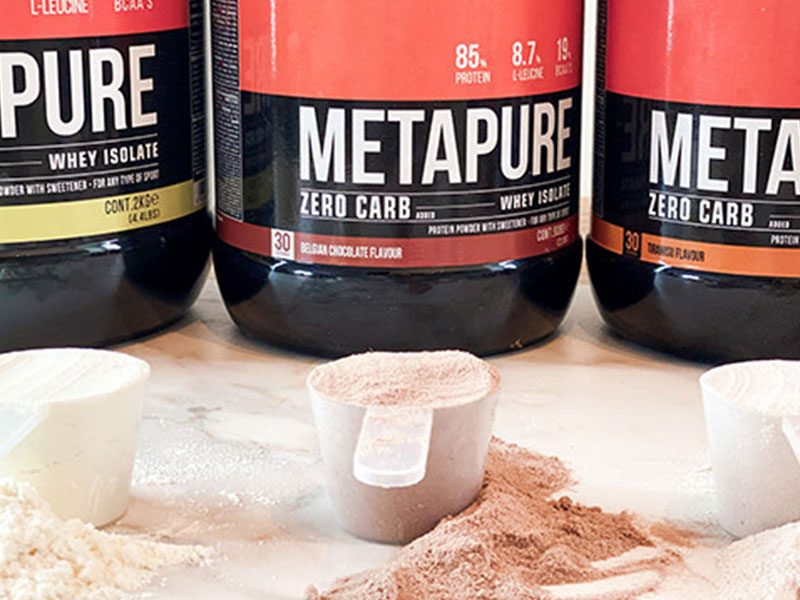
Whey Isolate: Usually the Better Dairy-Based Option
Whey isolate undergoes additional filtration that removes more lactose, fat and other non-protein components. It commonly contains a higher proportion of protein than concentrate.
For this reason, isolate is often the first dairy-based protein considered by people with mild lactose intolerance.
Does Hydrolysed Whey Solve Lactose Intolerance?
Hydrolysed whey has been treated with enzymes that break some protein chains into smaller peptides. This process changes the protein structure, but it does not necessarily remove lactose.
A hydrolysate may still contain lactose depending on whether it was produced from concentrate or isolate and how the final product was formulated. The word hydrolysed should not be treated as another term for lactose-free.
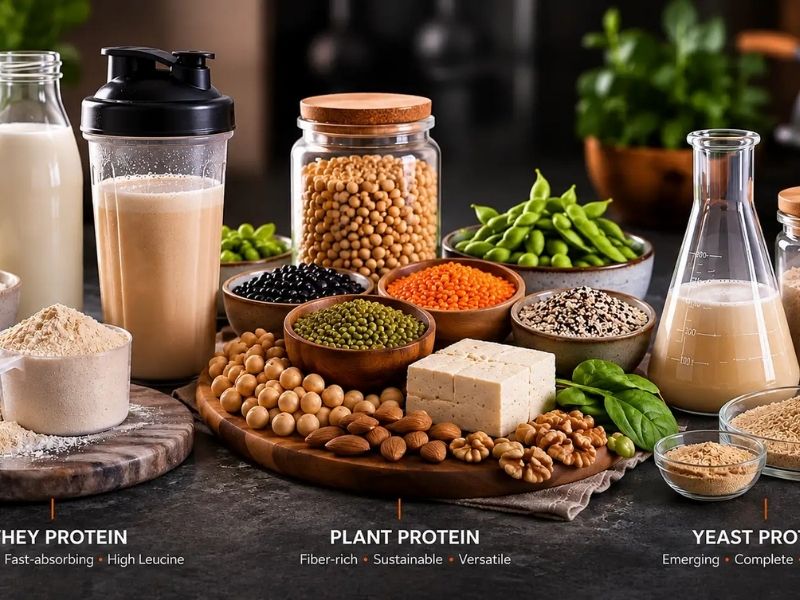
Plant Protein: The Dairy-Free Alternative
Pea, soy, rice and blended plant proteins do not naturally contain lactose because they are not derived from milk.
Soy protein
Provides all essential amino acids and can fit vegan or dairy-free diets.
Pea protein
A common dairy-free option that is frequently used in blended formulas.
Pea and rice blend
Combines complementary plant amino-acid profiles in one formula.
Why Does a Protein Shake Cause Bloating?
Lactose is only one possible explanation. The complete recipe and the way the shake is consumed can also affect digestion.
How to Choose a Protein Powder for Lactose Intolerance
Check the source
See whether the product contains isolate, concentrate or plant protein.
Find the claim
Look for a clear lactose-free declaration when strict avoidance is needed.
Read ingredients
Check for milk powder, milk solids, creamers and concentrate.
Test carefully
Begin with a smaller serving mixed with water and monitor tolerance.
Label-Reading Checklist
Optional QNT Protein Considerations
QNT Iso Ripped Whey Isolate
An isolate-based product may be more relevant than a concentrate-led powder when lower lactose is a priority. It should not be described as lactose-free unless the exact product label confirms this.
View QNT Iso RippedQNT Prime Whey Triple Blend
Prime Whey combines isolate, concentrate and hydrolysate. Because it contains concentrate, someone with lactose intolerance should review the complete label and assess personal tolerance.
View QNT Prime WheyFrequently Asked Questions
Can lactose-intolerant people drink whey protein?
Many people can tolerate a low-lactose whey isolate, particularly in a controlled serving mixed with water. Individual tolerance varies, so check the label and begin cautiously.
Is whey isolate completely lactose-free?
Not always. Whey isolate generally contains much less lactose than concentrate, but only a product carrying a clear lactose-free declaration should be treated as lactose-free.
Is whey concentrate bad for lactose intolerance?
It is not inherently bad, but it normally contains more lactose than isolate and may trigger symptoms more easily.
Is plant protein better for lactose intolerance?
Plant protein does not naturally contain lactose and may be the simplest choice for people who cannot tolerate even low-lactose whey products.
Can lactase enzymes help with protein powder?
Lactase products may help some people digest lactose. They do not make whey safe for someone with a milk-protein allergy.
Why am I bloated after using whey isolate?
Possible causes include residual lactose, added milk, sweeteners, gums, serving size, rapid consumption or an unrelated digestive condition.
Which protein powder is best for lactose intolerance?
A clearly labelled lactose-free whey isolate or a suitable plant-protein blend is generally the most practical starting point.
Final Word
Whey concentrate is affordable and effective but generally contains more lactose. Whey isolate contains less lactose and may suit people with mild intolerance, although it is not automatically lactose-free.
Plant protein avoids lactose entirely and provides the clearest dairy-free alternative. A well-formulated soy, pea or blended plant powder can support everyday protein intake and exercise recovery.
Choose according to the complete ingredient list, allergen information and your actual digestive response—not only the product name on the front of the container.