How to Read a Protein Powder Label Before Buying
Learn how to check serving size, protein per serving, ingredients, sugars, amino acids and manufacturer details before choosing a protein powder.
Key Takeaways
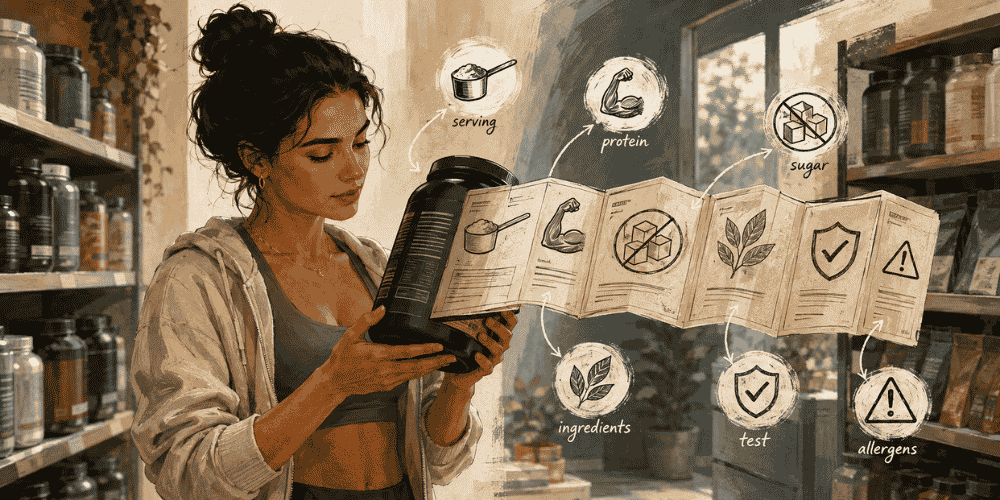
Start With More Than the Front Label
If you are trying to understand how to read a protein powder label, start with six things: serving size, protein per serving, ingredients, sugars, amino acids and manufacturer details.
Do not judge a protein powder only by the largest claim on the front. The nutrition panel and ingredient list usually provide much more useful information about what you are actually buying.
“The biggest number on the pack is not always the most useful number.”
1. Start With the Serving Size
Suppose two protein powders both advertise 25 g protein. One may provide it from a 32 g serving, while another may require a 40 g serving.
Protein percentage can help with comparisons, but it is not the only measure of quality because flavour ingredients, carbohydrates, fats and other ingredients can affect the final percentage.
2. Check Protein Per Serving
Look at the actual protein grams per serving in the nutrition panel rather than relying only on front-of-pack marketing.
Your total daily protein intake matters more than simply choosing the powder with the largest number. A 30 g serving is not automatically better than 25 g if the smaller serving already fits your daily requirement.
3. Read the Ingredient List
The ingredient list is one of the most useful parts of any protein powder label. Under FSSAI labelling rules, ingredients are generally listed in descending order by weight at the time of manufacture.
Concentrate, isolate or hydrolysate
Other dairy-based protein sources
Soy or other plant-based sources
Flavours, thickeners, emulsifiers and sweeteners
A longer ingredient list does not automatically make a product bad. The important question is whether you understand the ingredients and whether they fit your dietary needs and preferences.
4. Check Total Sugar and Added Sugar Separately
Total sugar and added sugar are not the same thing. FSSAI requires applicable nutrition declarations for both.
| Label Declaration | What It Means |
|---|---|
| Total Sugar: 1 g | May include naturally occurring sugars from ingredients such as milk. |
| Added Sugar: 0 g | No sugar has been added as defined by the applicable declaration. |
5. Understand the Amino Acid Profile
Protein is made from amino acids. An amino-acid profile can therefore provide additional context beyond total protein.
Do not choose a protein powder only because the front says something like “10 g BCAA”. Check whether the number is stated per serving, per 100 g or across multiple servings.
6. Check Manufacturer and FSSAI Details
Before buying, look beyond the nutrition information. Products sold in India should carry relevant brand-owner and FSSAI licence information as applicable.
These checks become especially important when buying online, where old product images or outdated descriptions may remain visible even after packaging or formulation changes.
Quick Protein Powder Buying Checklist
QNT Tip
Frequently Asked Questions
Final Answer
Learning how to read a protein powder label is mostly about looking beyond the front of the tub.
Start with serving size, confirm the actual protein amount, read the ingredients, distinguish total sugar from added sugar, understand amino-acid claims and verify who manufactured or marketed the product.
“The best label is not the one with the biggest claim—it is the one that gives you clear, consistent and verifiable information.”
References
- Food Safety and Standards Authority of India (FSSAI) regulations covering nutrition labelling, ingredient declarations and applicable product information.
- International Society of Sports Nutrition guidance on protein intake and muscle protein synthesis in exercising individuals.
- FSSAI guidance regarding applicable brand-owner, manufacturer, marketer, packer and licence information.