Enjoy Free Delivery Across India On Orders Over Rs.500!
30+ Years Of Excellence In Health And Sports Nutrition
2630 Menu
Protein & Weight Management
Best High Protein Foods for Weight Loss: What Should You Eat?
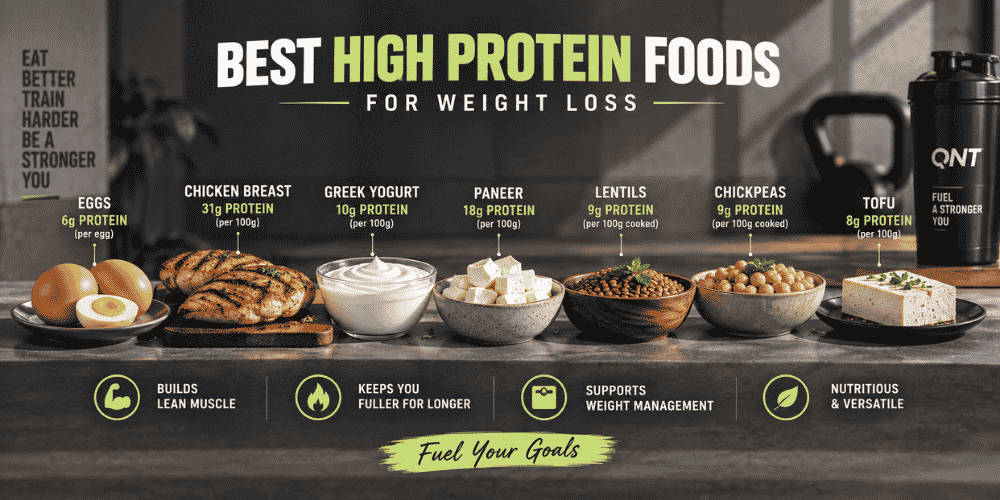
The best high protein foods for weight loss include eggs, Greek yogurt, paneer, tofu, soy, lentils, beans, lean meats, fish and whey protein—combined with an overall calorie intake that supports your goal.
Author: TulshiReading time: 5 minLast updated: August 2026
Key Takeaways
Protein supports muscleAdequate protein can help support muscle maintenance during calorie restriction.
Food comes firstBuild meals around nutrient-dense protein foods before relying on supplements.
Calories still matterHigh-protein foods do not automatically cause weight loss without an appropriate overall calorie intake.
Vegetarian options workTofu, soy, lentils, beans, paneer and curd can all contribute to daily protein intake.
The Simple Answer
If you are looking for the best high protein foods for weight loss, focus on foods that provide useful amounts of protein while fitting comfortably within your daily calorie needs.
Protein may improve fullness and help preserve fat-free mass during calorie restriction, but it does not independently cause weight loss. Your overall diet, activity level and consistency remain important.
Why Is Protein Important During Weight Loss?
When losing weight, the goal is usually to reduce body fat while maintaining as much muscle as possible. Protein can support that process in several ways.
Muscle MaintenanceHelps support lean tissue during calorie restriction.
RecoverySupports recovery when combined with regular exercise.
SatietyProtein-rich meals may help you feel more satisfied.
Balanced MealsMakes it easier to structure meals around a quality protein source.
A healthy eating pattern should still include vegetables, fruits, whole grains, healthy fats and other nutrient-dense foods rather than replacing everything with protein.
Best High Protein Foods for Weight Loss
Food
Why It Can Be Useful
Eggs
High-quality protein and easy to include at breakfast or meals.
Greek yogurt / curd
Convenient protein source; choose options with little or no added sugar.
Paneer / cottage cheese
Useful vegetarian protein; portion size matters because calories can vary.
Tofu & soy
Versatile plant-based protein for meals, salads and stir-fries.
Lentils & dals
Provide protein and fibre, making them useful in balanced meals.
Beans & chickpeas
Combine protein with fibre and can increase meal volume.
Chicken breast
Lean, protein-rich option for non-vegetarians.
Fish
Provides protein and can fit into calorie-controlled meals.
Whey protein
Convenient when meeting protein needs through food alone is difficult.
Best Practice
Build most meals around a protein source, then add vegetables, suitable carbohydrates and other nutrient-dense foods according to your calorie needs.
Vegetarian High-Protein Options
You do not need chicken or fish to follow a protein-focused diet. A simple vegetarian day could look like this:
BreakfastGreek yogurt or curd with fruit.
LunchDal with vegetables and controlled portions of rice or roti.
SnackRoasted chickpeas or a protein shake.
DinnerTofu, soy or paneer with vegetables.
What About Nuts and Peanut Butter?
Important
Nuts and nut butters contain protein, but they are also calorie-dense. They can fit into a high protein diet for weight loss, but portion size matters. Use them as part of a balanced diet rather than relying on them as your main protein source.
QNT Product Suggestion
How to Build a High-Protein Weight-Loss Meal
1. Choose ProteinEggs, tofu, paneer, lentils, fish or chicken.
2. Add VegetablesIncrease meal volume while adding fibre and micronutrients.
3. Add CarbsUse rice, roti, oats, potatoes or whole grains according to your needs.
4. Watch ExtrasExcess oil, sauces, dressings and large nut portions can increase calories quickly.
Ultimately, weight loss requires consuming fewer calories than your body uses over time.
Frequently Asked Questions
▶What are the best high protein foods for weight loss?
Eggs, Greek yogurt, tofu, soy, lentils, beans, lean chicken, fish and appropriately portioned dairy products are useful choices.
▶Is paneer good for weight loss?
Yes. Paneer can provide valuable protein, but its calorie and fat content can vary, so portion size should fit your overall calorie intake.
▶Are eggs good for weight loss?
Eggs are a nutrient-dense protein source that can fit well into a calorie-controlled diet.
▶Can I eat dal every day for weight loss?
Dal can be part of a healthy daily diet because it provides protein, fibre and other nutrients. Portion sizes and total calorie intake still matter.
▶Is whey protein good during weight loss?
Whey protein can be a convenient way to increase daily protein intake when food alone does not meet your needs. It does not independently cause weight loss.
Final Answer
The best high protein foods for weight loss are not special “fat-burning” foods.
Choose protein-rich foods you enjoy, combine them with vegetables and other nutrient-dense foods, control total calories and stay physically active.
“Protein supports the plan. Your overall diet and consistency drive the result.”
References
Research examining higher-protein diets, satiety and preservation of fat-free mass during calorie restriction.
CDC healthy-eating guidance on varied protein sources and maintaining an overall calorie intake appropriate to individual needs.
Other articles in the same category
How To Avoid Nutrient Overlap When Using Multiple Supplements
What Vitamins Should I Take Daily For A Woman?
Fish Oil Or Algae Omega-3: How To Choose The Right Source
Magnesium For Active Lifestyles: Muscle Function, Recovery And Everyday Wellness
How To Train For Power
NEWSLETTER
Get practical nutrition insights, training support, product updates, and performance-focused content delivered directly to your inbox.