Enjoy Free Delivery Across India On Orders Over Rs.500!
30+ Years Of Excellence In Health And Sports Nutrition
2630 Menu
Weight Loss & Training
Cardio vs Weight Training for Weight Loss: Which Is Better?
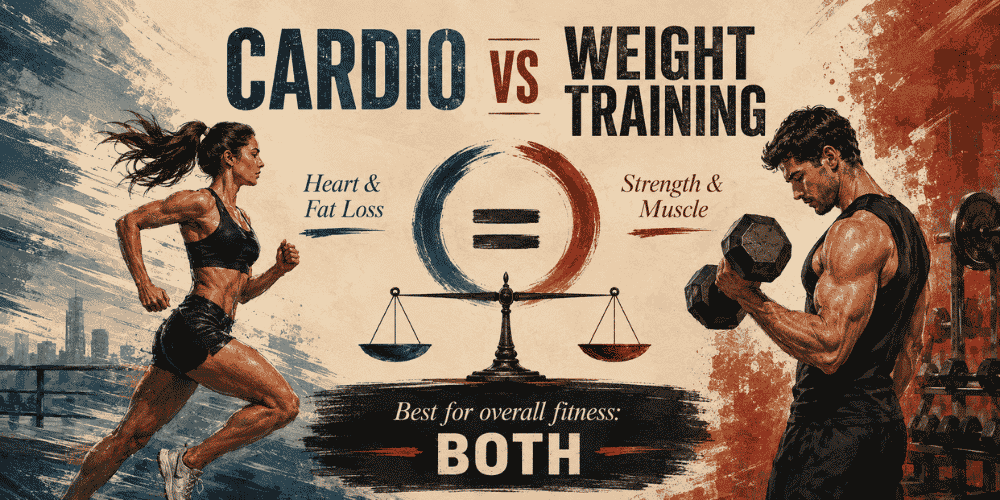
Cardio can increase calorie expenditure, while weight training helps preserve muscle and strength. For most people, combining both is a more practical long-term strategy.
Author: TulshiReading time: 5 minLast updated: August 2026
Key Takeaways
Cardio burns caloriesAerobic exercise can increase energy expenditure and support reductions in body weight and body fat.
Weights protect muscleResistance training helps support strength and preserve lean tissue during weight loss.
Nutrition still mattersExercise cannot fully compensate for consistently consuming more calories than your body uses.
Combine bothCardio and resistance training provide different benefits and can work well together.
The Simple Answer
If you are comparing cardio vs weight training for weight loss, there is no need to choose only one.
Cardio can help increase calorie expenditure during exercise, while resistance training helps preserve or build muscle. Your overall calorie intake, protein intake, daily movement, sleep and consistency also influence progress.
“For most people, the better long-term strategy is not cardio versus weights—it is using both intelligently.”
Does Cardio Help You Lose Weight Faster?
Cardio includes activities such as walking, jogging, cycling, swimming and using an elliptical. These activities increase energy expenditure while you exercise.
Cardio can therefore be useful for increasing calorie expenditure, but more cardio does not automatically guarantee greater weight loss if calorie intake remains too high.
Why Weight Training Matters During Weight Loss
When body weight decreases, some of the weight lost can come from lean tissue as well as fat. Resistance training gives your muscles a reason to remain strong and active.
Preserve lean massResearch during dietary weight loss indicates resistance exercise can help preserve fat-free mass.
Maintain strengthWeight training supports strength even when the goal is reducing body weight.
Look beyond the scaleFat loss can occur while more muscle is maintained, so body weight alone does not tell the full story.
Cardio vs Weight Training: Quick Comparison
Goal
Cardio
Weight Training
Increase calorie expenditure
Strong
Moderate
Support body-fat reduction
Yes
Yes
Preserve muscle during dieting
Limited
Strong
Improve strength
Limited
Strong
Improve cardiovascular fitness
Strong
Moderate
Support long-term weight management
Yes
Yes
Should You Combine Cardio and Weight Training?
For most people, yes. Current physical-activity guidance recommends at least 150 minutes of moderate-intensity aerobic activity each week, or 75 minutes of vigorous activity, alongside muscle-strengthening activity on at least two days per week.
1. Strength TrainAim for 2–3 resistance-training sessions.
2. Add CardioInclude 2–3 cardio or brisk-walking sessions.
3. Keep MovingMaintain regular daily steps and general movement.
4. RecoverUse recovery days when your body needs them.
You do not need intense cardio every day. Walking, cycling and other moderate activities can contribute meaningfully to weekly movement.
Nutrition Still Matters
The best exercise for weight loss cannot compensate for an eating pattern that consistently provides more calories than your body uses.
Protein can also become particularly important when dieting and resistance training because it helps support muscle maintenance and recovery. Aim to get most of your nutrition from balanced meals containing suitable protein sources, vegetables, whole grains, fruits and other nutrient-dense foods.
What Should You Focus on First?
✓ Strength train regularlyUse resistance exercises to support muscle and strength.
✓ Add sustainable cardioWalking, cycling or enjoyable activities can increase daily movement.
✓ Manage your nutritionA sustainable calorie deficit is central to weight loss.
✓ Eat enough proteinProtein supports recovery and helps maintain muscle during dieting.
✓ Stay consistentA realistic routine followed for months is more useful than an extreme short-term plan.
Frequently Asked Questions
Is cardio or weight training better for losing belly fat?
Neither can specifically burn fat only from your stomach. Fat loss occurs across the body based on factors such as overall energy balance and individual fat distribution.
Should I do cardio or weights first for weight loss?
There is no universal order. If maintaining strength is your priority, weights first may be practical. If cardiovascular performance is your priority, cardio first may suit you better.
Can I lose weight by only lifting weights?
Yes, provided your overall nutrition creates an appropriate calorie deficit. Adding cardio and regular daily movement can further increase energy expenditure.
How much cardio should I do for weight loss?
General adult guidelines recommend at least 150 minutes of moderate-intensity aerobic activity per week, although individual needs can vary.
Should I take protein after cardio or weight training?
Protein can be consumed around training according to your routine. Your total daily protein intake is more important than trying to hit one exact post-workout minute.
Final Answer
For cardio vs weight training for weight loss, you do not need to choose only one.
Use CardioTo increase calorie expenditure and improve cardiovascular fitness.
Use Weight TrainingTo help maintain muscle, strength and body composition.
Support BothWith appropriate nutrition, sufficient protein and consistent daily movement.
“The strongest long-term approach is usually not cardio versus weights—it is using both intelligently.”
References
Systematic review of randomized clinical trials examining aerobic exercise, body weight, waist circumference and body fat.
Research examining resistance exercise during dietary weight loss and its effects on fat-free mass and strength.
Current adult physical-activity guidance covering aerobic and muscle-strengthening exercise.
Other articles in the same category
How To Avoid Nutrient Overlap When Using Multiple Supplements
What Vitamins Should I Take Daily For A Woman?
Fish Oil Or Algae Omega-3: How To Choose The Right Source
Magnesium For Active Lifestyles: Muscle Function, Recovery And Everyday Wellness
How To Train For Power
NEWSLETTER
Get practical nutrition insights, training support, product updates, and performance-focused content delivered directly to your inbox.