What Is a Muscle Cramp? Causes, Treatment and Prevention
Learn why muscle cramps happen, how to relieve them safely, what may help prevent them and when recurring cramps require medical attention.
Key Takeaways
What Is a Muscle Cramp?
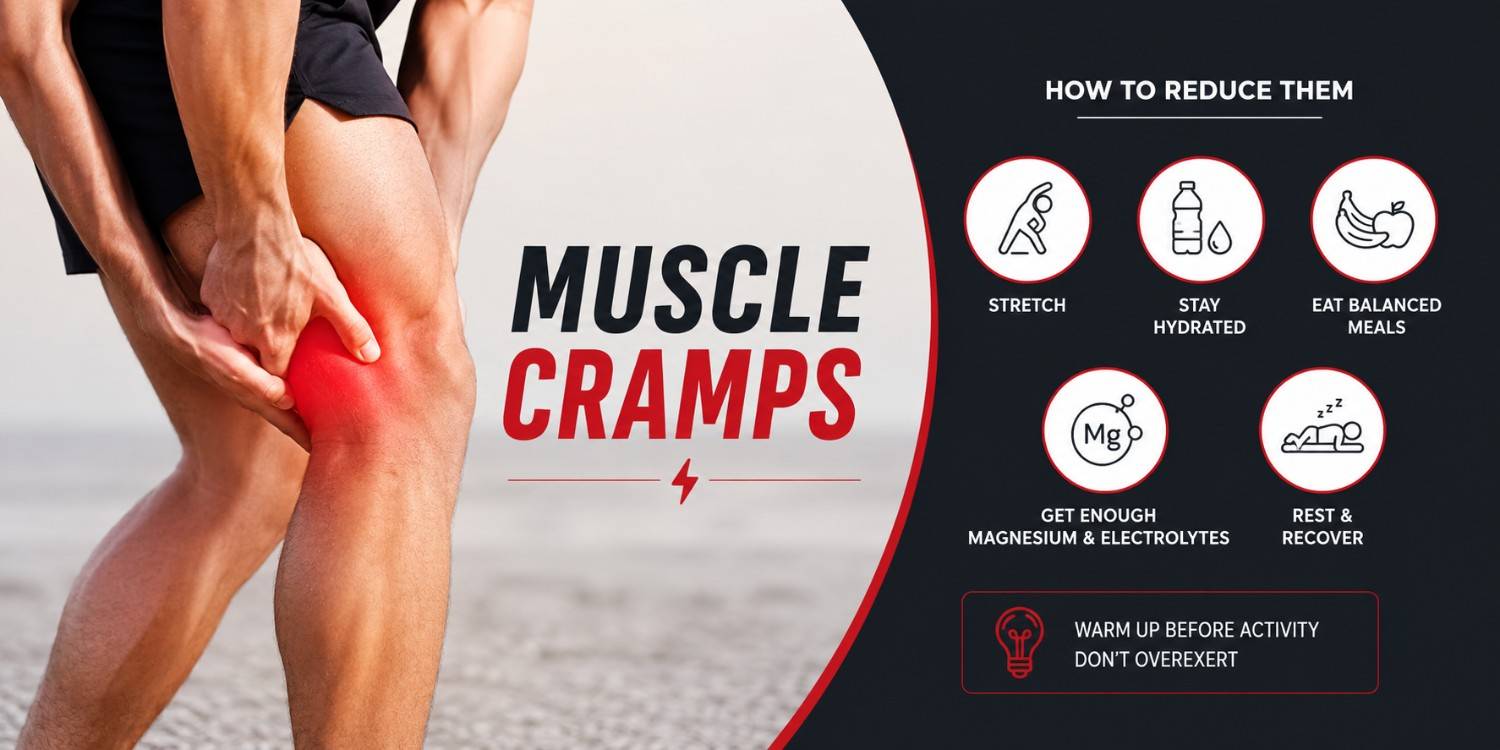
A muscle cramp is a sudden, painful and involuntary tightening of one or more muscles. It may last from a few seconds to several minutes and can temporarily make the affected area difficult to move.
Cramps commonly affect the calves, thighs, feet, hands, arms or abdominal muscles. They may occur during exercise, while resting or during sleep.
Most occasional cramps are harmless, although frequent or unusual episodes can sometimes be connected to medicines, circulation, nerve problems or an underlying health condition.
“A muscle cramp happens when a muscle contracts unexpectedly and temporarily fails to relax.”
What Does a Cramp Feel Like?
Sudden Pain
The discomfort often begins without warning and may feel sharp or intense.
Hard or Knotted Muscle
The affected muscle may feel firm, tight or visibly contracted.
Limited Movement
Moving the affected area may be temporarily uncomfortable or difficult.
Post-Cramp Soreness
The muscle may remain tender for several hours after it relaxes.
Where Do Cramps Commonly Occur?
What Causes Muscle Cramps?
There is not always one clear cause. Several physical, environmental and medical factors can contribute.
Muscle Overuse
Intense exercise, unfamiliar movements or long periods of activity may cause muscle fatigue.
Dehydration
Heavy sweating without adequate fluid replacement may contribute, especially in hot conditions.
Electrolyte Changes
Low levels of sodium, potassium, magnesium or calcium may affect nerve and muscle function.
Prolonged Positioning
Sitting, standing or sleeping in one position for too long may cause a muscle to tighten.
Heat and Sweating
Heat stress, physical fatigue and fluid loss may increase the likelihood of exercise-related cramps.
Pregnancy
Leg cramps are common during pregnancy and may occur more frequently at night.
Reduced Blood Flow
Repeated cramping during walking or activity may sometimes be related to circulation problems.
Nerve Compression
Nerve irritation may cause cramping alongside numbness, tingling or weakness.
Medicines or Health Conditions
Some medicines and conditions involving the nerves, thyroid, liver or metabolism may contribute.
Common Types of Muscle Cramps
Exercise-Associated
Occur during or shortly after activity and are often connected to fatigue or overexertion.
Night Leg Cramps
Usually affect the calf or foot and may wake a person suddenly from sleep.
Heat Cramps
May develop during exercise or physical work in hot environments with heavy sweating.
Condition-Related
May be associated with medicines, circulation problems or underlying medical conditions.
What to Do When a Cramp Happens
Stop the Activity
Pause the movement that triggered the cramp and allow the muscle to relax.
Stretch Gently
Slowly lengthen the cramped muscle without bouncing or forcing the movement.
Massage the Area
Use gentle pressure to encourage relaxation, but avoid aggressive massage when pain is severe.
Use Heat or Cold
Warmth may relax tight muscles, while wrapped ice may help with soreness afterwards.
Replace Fluids
Drink fluids when heavy sweating, heat or dehydration may have contributed.
Heat vs Cold for Muscle Cramps
| Option | When It May Help | How to Use It |
|---|---|---|
| Heat | While the muscle feels tight or contracted | Use a warm towel, shower or heating pad carefully |
| Cold | When soreness remains after the cramp | Wrap ice in a cloth and avoid direct skin contact |
Can Painkillers Stop a Cramp?
Pain-relieving medicines generally do not act quickly enough to stop a cramp while it is happening. They may help with soreness afterwards, but they are not suitable for everyone and should be used according to professional or product guidance.
Muscle Cramp Prevention Checklist
Bananas, Magnesium and Electrolytes
Do Bananas Prevent Cramps?
Bananas contain potassium, but eating one does not guarantee that a cramp will stop or prevent future episodes.
Should You Take Magnesium?
Low magnesium may contribute in some cases, but recurring cramps do not automatically mean supplementation is necessary.
Are Electrolyte Drinks Useful?
They may be useful after prolonged sweating, but they are not a universal treatment for every muscle cramp.
Muscle Cramp vs Muscle Spasm
| Feature | Muscle Cramp | Muscle Spasm |
|---|---|---|
| Sensation | Usually painful and strongly tightened | May feel like twitching, pulsing or tightening |
| Duration | Usually temporary | May be brief or repetitive |
| Pain | Common | May or may not be painful |
When to Seek Medical Advice
Occasional cramps are usually harmless. Arrange a medical assessment when cramps:
Frequently Asked Questions
What is the main cause of muscle cramps?
Muscle fatigue and overuse are common triggers. Dehydration, heat, prolonged positioning, nerve problems, circulation issues and medicines may also contribute.
How long does a muscle cramp last?
Most cramps last from a few seconds to several minutes. The muscle may remain sore after the contraction ends.
What stops a cramp quickly?
Stop the activity, gently stretch the muscle, massage the area and use warmth if it feels helpful. Fluids may help when dehydration is involved.
Why do cramps happen at night?
References