

Group Training vs Individual Workouts: Which Is More Effective?
Group classes can provide energy, structure and motivation, while individual gym programs offer greater control and progression. The right choice depends on your goals, experience and preferred training style.
Key Takeaways
Which Training Method Is Better?
People often ask whether group training or an individual gym program is more effective. Both methods can improve fitness, but they provide different experiences and suit different objectives.
Group classes offer structure and social motivation. Individual training gives you more control over exercise selection, resistance and progression. Understanding these differences can help you choose a method you will follow consistently.
“The most effective training method is the one that matches your goal and inspires you to keep progressing.”
Advantages of Group Training
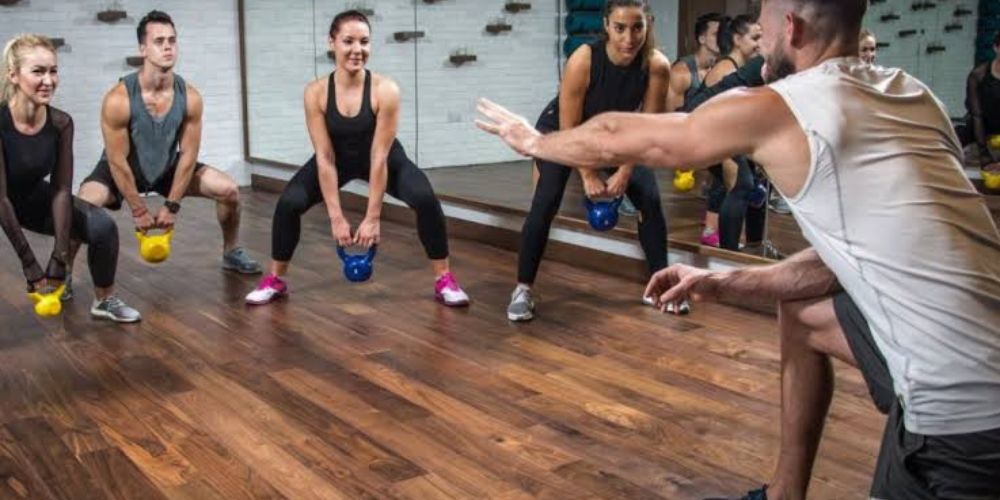
Group courses are available in different formats, difficulty levels and intensities. Participants usually follow an instructor-led routine, often supported by music and shared energy.
Motivating environment
Training with others can provide energy, encouragement and accountability.
Instructor-led structure
The session is planned in advance, reducing the need to design your own workout.
Variety
Classes may target the full body, cardiovascular fitness, mobility or specific areas such as the core and lower body.
Enjoyable format
Music, choreography and social interaction can make exercise feel less repetitive.
Accessible entry point
A class can help beginners become more comfortable with regular physical activity.
General fitness
Many sessions develop stamina, coordination and overall body conditioning.
Limitations of Group Training
Limited personalisation
One routine must serve people with different fitness levels, goals, mobility and training experience.
Fixed pace
The music or instructor may set a pace that is too fast, too slow or technically unsuitable for some participants.
Difficult progression
It may be harder to measure gradual increases in resistance, repetitions or training volume.
Less individual feedback
An instructor may not be able to monitor every participant’s form throughout a busy class.
Be Careful With Fitness Fads
New group-training concepts regularly appear and are often promoted as revolutionary solutions. They may be enjoyable and useful, but no branded routine can replace the fundamentals of consistent exercise, progressive training and suitable nutrition.
A program should not be judged only by how new, intense or entertaining it appears. It should also provide an appropriate challenge and a clear way to progress over time.
Advantages of Individual Gym Training
Individual programs commonly use free weights, resistance machines, cables and bodyweight exercises. You can train independently and organise the session around your personal schedule.
Personalised exercises
Movements can be selected according to your goal, experience and physical condition.
Measurable progression
You can track resistance, repetitions, sets, rest periods and performance over time.
Flexible scheduling
You are not restricted to a fixed class timetable or group pace.
Muscle-building focus
Individual resistance programs make it easier to target specific muscles and apply progressive overload.
Self-paced training
You can adjust the intensity, rest and exercise order according to your current performance.
Specific development
Weak areas and individual performance goals can receive additional attention.
Limitations of Individual Training
Technique risk
Performing weighted exercises incorrectly can place unnecessary stress on muscles, joints and connective tissues.
Program uncertainty
A generic online program may not suit your current fitness level, recovery capacity or objective.
Less social motivation
Some people find it harder to stay consistent without an instructor or training community.
Planning responsibility
You must understand exercise selection, progression, recovery and training balance.
Group Training vs Individual Workouts
| Factor | Group training | Individual training |
|---|---|---|
| Motivation | High social energy and accountability | Depends more heavily on self-discipline |
| Personalisation | Limited by the shared routine | Can be highly specific to the individual |
| Muscle building | Usually focused on general conditioning | Better suited to targeted progressive overload |
| Progress tracking | May be difficult to measure precisely | Weights, repetitions and sets can be recorded |
| Schedule | Based on fixed class times | More flexible |
| Best suited for | Enjoyment, conditioning, community and routine | Strength, muscle gain and specific performance goals |
Which Method Matches Your Goal?
What About CrossFit and Hybrid Training?
CrossFit and similar hybrid formats combine elements of group training, gymnastics, conditioning, bodyweight exercise and weightlifting. These programs can improve general physical fitness and provide a strong sense of community.
Because some sessions involve technical lifts, speed and high intensity, participants must pay close attention to movement quality, suitable loading and recovery.
Potential benefits
- Varied full-body training
- Cardiovascular conditioning
- Strength and athletic skill development
- Community motivation
Things to monitor
- Technical form under fatigue
- Appropriate resistance and exercise scaling
- Joint or tendon discomfort
- Rest and recovery between sessions
How to Choose Your Training Method
Define your goal
Decide whether you want strength, muscle, conditioning, enjoyment or general fitness.
Assess your level
Choose exercises and intensity that suit your experience and current ability.
Test the format
Try both methods and observe which one keeps you focused and consistent.
Track progress
Review performance and adjust the program when progress begins to slow.
Training Program Checklist
✔ Before Starting
- Define a clear and realistic fitness goal.
- Choose a program suited to your experience.
- Learn correct exercise technique.
- Consider existing pain, injuries or limitations.
✔ During Training
- Use resistance you can control safely.
- Do not sacrifice technique to follow the group pace.
- Record measurable progress when possible.
- Adjust exercises that cause pain.
✔ Long-Term Progress
- Increase the challenge gradually.
- Balance training with appropriate recovery.
- Support your goal with a suitable diet.
- Choose a routine you can maintain consistently.
Frequently Asked Questions
Are group classes effective for losing weight?
They can increase calorie expenditure and improve fitness. Long-term weight loss also depends on nutrition, total activity and consistency.
Can group training build muscle?
Some classes can develop muscle, especially for beginners. Significant muscle growth usually requires progressive resistance and individual load management.
Is individual training better for beginners?
It can be effective when the beginner receives proper instruction. A well-coached beginner class can also provide a safe and motivating introduction.
Can I combine group classes and weight training?
Yes. Group classes can support conditioning and motivation, while individual resistance sessions provide more targeted strength and muscle development.
How do I know whether a coach is qualified?
Ask about qualifications, experience, exercise selection and progression. A good coach should explain the purpose and correct execution of the program clearly.
The Bottom Line
Neither group training nor individual workouts are automatically superior. Group classes can be excellent for motivation, enjoyment and general fitness, while individual programs offer greater control for strength, muscle building and specific performance goals.
Choose the method that suits your objective, keeps you motivated and allows safe, measurable progression. The more consistently you invest effort in an appropriate program, the more likely you are to achieve meaningful results.
References
- Original group and individual training guidance supplied by QNT.
- Training intensity and exercise selection should be adapted to individual experience, goals and physical condition.
- Persistent pain or movement limitations should be assessed by a qualified health or exercise professional.