Tissue structure
Muscles, bones and organs contain specialised tissues built from cells with specific responsibilities.

Understand where protein comes from, how the body uses amino acids and why protein powders can be a convenient option for active people.
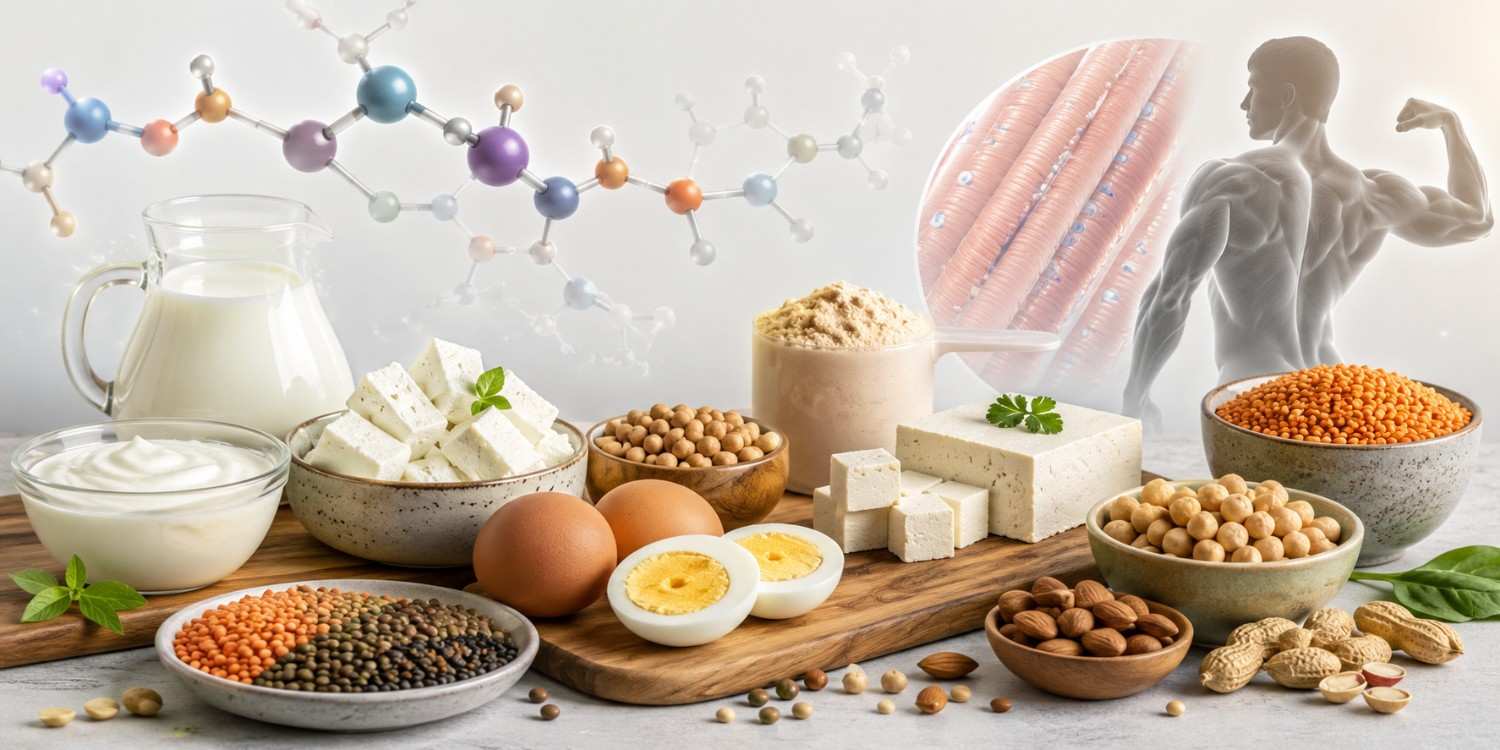
When people ask about protein in a fitness context, they often think immediately of protein powder. A complete answer, however, begins with a more fundamental question: what is protein and what does it do inside the body?
The body is made up of muscles, bones, organs and specialised tissues. Each tissue contains cells adapted to perform particular functions, and proteins form an important part of their structure.
“Protein provides the building material the body uses to maintain and form human tissues.”
Muscles, bones and organs contain specialised tissues built from cells with specific responsibilities.
Proteins are complex molecules formed from connected chains of amino acids.
Digestion breaks dietary protein into amino acids that can enter the blood and be used by the body.
Protein enters the diet through food or a protein supplement.
The digestive system breaks large protein molecules into amino acids.
Amino acids pass into the bloodstream and become available to cells.
The body uses amino acids as raw material for its own proteins and tissues.
Protein is available in both animal and plant foods. The amount, amino acid profile, digestibility and calorie content can vary between sources.
| Protein Source | Examples | Article Summary |
|---|---|---|
| Animal sources | Meat and eggs | Presented as widely used sources of dietary protein. |
| Dairy sources | Milk and dairy products | Milk proteins are also used to manufacture many protein powders. |
| Plant sources | Legumes, grains, nuts and seeds | Plant foods can contribute protein, although digestibility varies by source. |
| Soy | Soybeans and soy-based foods | Highlighted as a plant protein containing glutamine, while total calories depend on the food and serving. |
Many commonly available protein powders are made by extracting and processing protein from milk. Flavouring and other ingredients may then be added to improve taste and usability.
There is nothing mysterious about the basic idea. Protein powder is a concentrated and convenient nutritional product, but it should not be treated as miraculous.
A milk-derived protein commonly selected when a faster-digesting option is preferred.
A milk protein generally associated with a slower rate of digestion.
A more extensively processed form designed to provide a higher proportion of protein.
Preparing five or six meals every day can require significant time and organisation.
Some people cannot eat outside scheduled breaks but may be permitted to drink a shake.
A shake can provide a concentrated serving of protein without cooking or carrying a complete meal.
Liquid protein is often selected after exercise because it is easy to consume and digest.
| Consideration | Protein Shake | Prepared Protein Meal |
|---|---|---|
| Preparation | Usually requires only water or milk and a shaker. | May require cooking, storage and utensils. |
| Portability | Easy to transport and drink. | May be less practical outside regular meal breaks. |
| Protein amount | Depends on the powder and serving size. | Depends on the food, portion and preparation. |
| Overall nutrition | Primarily selected for convenient protein intake. | Can also provide fibre, fats, vitamins, minerals and greater variety. |
Protein powder can make it easier to reach a daily protein target, particularly when preparing or eating another meal is inconvenient.
Its main value lies in convenience, portability and concentrated protein intake. It can complement a balanced diet, but it does not replace the broader nutritional benefits of varied whole foods.
Protein molecules are made from chains of amino acids connected in different combinations.
Protein powder is a concentrated protein product. Many popular varieties are derived from milk, although plant-based options are also available.
Protein shakes provide a portable and convenient way to consume protein around training or during a busy day.
No. They differ in processing, composition and digestion rate, although whey and casein are both derived from milk.
It can provide convenient protein, but whole foods may offer a wider combination of nutrients and dietary variety.