What Is Carnitine Used For? Role, Benefits & How to Use It
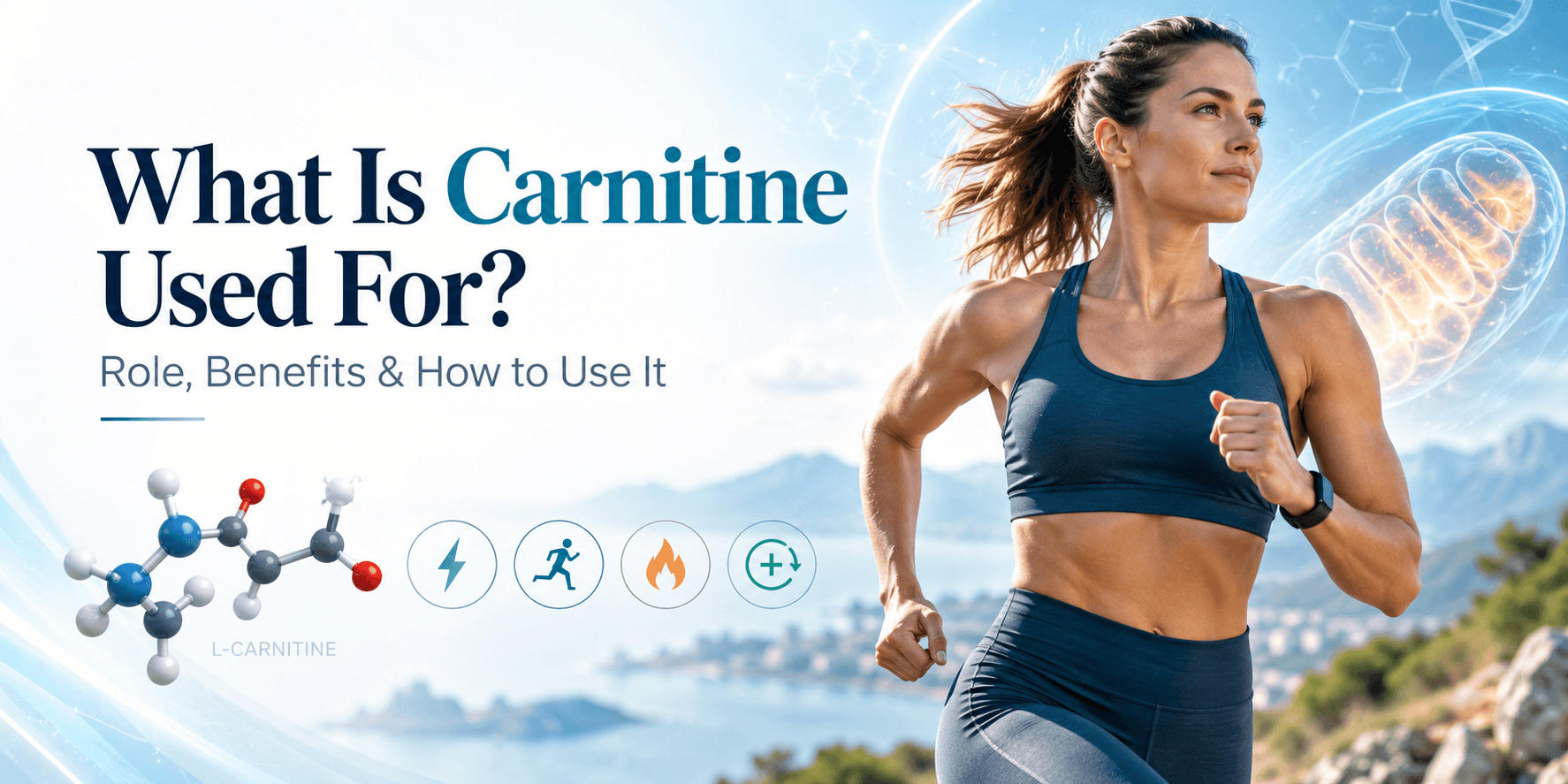
Carnitine plays an important role in transporting fatty acids into cells for energy production. Here is what it actually does, where supplementation may fit, and why it should not be treated as a magic fat burner.
Key Takeaways
What Exactly Is Carnitine?
Carnitine is a naturally occurring compound involved in energy metabolism. The body can produce it from the amino acids lysine and methionine, and it can also be obtained from certain foods.
It is often promoted as a “fat burner”, but that description can be misleading. Carnitine does not directly melt or remove body fat.
Its established biological role is helping transport certain fatty acids into mitochondria, where those fats can participate in energy production.
What Does Carnitine Do in the Body?
Transports Fatty Acids
Carnitine helps move long-chain fatty acids into mitochondria so they can participate in energy production.
Supports Cellular Energy Metabolism
Tissues with high energy requirements, including skeletal and cardiac muscle, contain substantial amounts of carnitine.
Supports Metabolic Balance
Carnitine also helps transport certain acyl compounds out of mitochondria, contributing to normal cellular metabolic processes.
Essential During True Deficiency
People with certain rare metabolic disorders or clinically significant carnitine deficiency may require medically supervised supplementation.
Does Carnitine Help Burn Fat?
Carnitine is involved in fat oxidation at the cellular level because it helps fatty acids enter mitochondria.
However, having more carnitine available does not automatically mean the body will burn substantially more stored body fat.
Fat loss still depends primarily on overall energy balance, nutrition, physical activity, sleep, training and consistency. Carnitine supplementation should therefore be viewed as an optional support tool rather than a standalone fat-loss solution.
Carnitine and Exercise Performance
Carnitine is frequently used by athletes and gym-goers who want support for training performance or recovery.
Responses vary considerably, and supplementation should not be expected to produce an immediate stimulant-like boost. Training quality, carbohydrate availability, hydration and recovery remain much more important performance factors.
L-Carnitine vs Acetyl-L-Carnitine
L-Carnitine
The standard form commonly used in sports-nutrition supplements. It is generally marketed for energy metabolism, exercise support and recovery.
Acetyl-L-Carnitine (ALCAR)
A modified form that can enter the central nervous system more readily and has been studied for neurological and cognitive applications. It should not be treated as a guaranteed focus or memory enhancer.
Combining both forms is not automatically better. The appropriate form depends on why it is being used and whether supplementation is necessary in the first place.
When Should You Take Carnitine?
Carnitine is not a stimulant, so there is no universal requirement to take it immediately before exercise.
Some athletes prefer taking it before exercise for convenience, but timing alone should not be expected to create an immediate fat-burning or endurance effect.
Taking a supplement with a regular meal can be an easy way to improve daily consistency.
If supplementation is appropriate, consistent use is generally more relevant than chasing a precise pre-workout timing window.
How Much Carnitine Should You Take?
Supplement amounts vary according to product form, intended use and individual circumstances.
The original guide commonly refers to approximately 1–2 g per day of L-carnitine for sports-nutrition use and 500–1,500 mg of acetyl-L-carnitine for other purposes. These figures should not be treated as personalised medical recommendations.
Is Carnitine Useful Without Exercise?
Carnitine continues to perform its normal biological functions whether or not you exercise.
That does not mean supplementation will noticeably increase energy, reduce fatigue or promote weight loss in every inactive person. Benefits are more likely to depend on baseline carnitine status, health conditions and the reason for supplementation.
Carnitine and Heart Health
The heart contains substantial amounts of carnitine and relies heavily on fatty-acid metabolism for energy.
Carnitine has been studied in several cardiovascular settings, including exercise tolerance and certain clinical conditions.
However, carnitine supplements should not be presented as a treatment for heart disease, high cholesterol, triglycerides or inflammation. Anyone with cardiovascular disease should use supplements only as part of a clinician-directed plan.
Who Can Have Low Carnitine Levels?
True carnitine deficiency is different from simply following a diet that contains little carnitine.
Foods Rich in Carnitine
| Food | Relative Carnitine Content | Practical Note |
|---|---|---|
| Beef & lamb | Higher | Among the richer dietary sources. |
| Pork | Moderate | Provides naturally occurring carnitine. |
| Fish & chicken | Lower to moderate | Amounts vary by food type. |
| Milk & dairy | Lower | Can contribute smaller amounts. |
| Plant foods | Very low | Low dietary intake does not necessarily mean clinical deficiency. |
Is Carnitine Suitable for Women?
Carnitine is not a male-only supplement, and women may use it for the same general sports-nutrition purposes as men.
However, claims that carnitine automatically promotes fat loss, improves hormone balance during menopause or eliminates fatigue should be treated cautiously.
Menopause-related symptoms and hormonal concerns are complex and should not be managed with a single supplement without appropriate medical guidance.
Can Carnitine Be Combined With Other Supplements?
May be used alongside carnitine when creatine fits the athlete’s training and nutrition plan.
Protein supports muscle maintenance and recovery but serves a different nutritional role.
Caffeine is a stimulant whereas carnitine is not. Total caffeine intake should still be monitored carefully.
These supplements have different functions and should be used according to dietary need rather than simply “stacked” together.
Does Carnitine Help With Fatigue or Energy?
Carnitine participates in normal cellular energy metabolism, but that does not mean taking a supplement will create an immediate sensation of energy.
Persistent fatigue may be related to sleep, calorie intake, iron status, thyroid function, stress, training load, medication or other medical factors. Supplementation should not replace investigation of unexplained tiredness.
Side Effects and Safety
Carnitine is generally well tolerated by many healthy adults when used appropriately, but side effects can occur.
How Long Until You Notice an Effect?
There is no reliable timeline that applies to everyone.
Claims such as “2–4 weeks for endurance” or “4–8 weeks for fat loss” should not be treated as guaranteed outcomes. Any noticeable change depends on baseline status, training, diet, dose, supplement form and the outcome being measured.
Carnitine: Myth vs Reality
| Claim | Reality |
|---|---|
| Carnitine burns fat automatically | It participates in fatty-acid transport but does not replace a calorie deficit. |
| It must be taken before training | There is no universal requirement for a precise pre-workout timing window. |
| More carnitine means more fat loss | Higher doses do not guarantee better results and may increase side effects. |
| Vegetarians must supplement | Healthy people can synthesise carnitine internally even when dietary intake is low. |
| More sweating means it is working | Sweating mainly reflects thermoregulation and is not a reliable marker of fat oxidation or supplement effectiveness. |
A Smarter Way to Use Carnitine
Define Your Goal
Decide whether you are using it for sports nutrition, a clinician-identified deficiency or another specific reason.
Keep Expectations Realistic
Do not expect carnitine to overcome excessive calorie intake, poor sleep or inconsistent training.
Follow the Product Directions
Avoid assuming that a larger serving will deliver faster or better results.
Focus on the Fundamentals
Protein intake, calorie balance, resistance training, cardio, sleep and recovery remain the foundation.
Frequently Asked Questions
What is L-carnitine used for?
L-carnitine is involved in fatty-acid transport and cellular energy metabolism and is commonly used in sports-nutrition supplements.
Is L-carnitine a fat burner?
Not in the sense of directly causing fat loss. Carnitine participates in fat metabolism, but body-fat reduction still depends primarily on energy balance and lifestyle.
Should I take carnitine before a workout?
Coach’s Tip
Do not judge L-carnitine by how much you sweat during a workout. Sweating depends on temperature, intensity, clothing, hydration and individual physiology. Judge your programme by measurable changes in training performance, nutrition consistency and body composition over time.
Final Takeaway
Carnitine has an important biological role in transporting fatty acids and supporting normal cellular energy metabolism.
But that does not make it a magic fat burner, instant energy booster or guaranteed performance supplement.
Use carnitine with realistic expectations and keep the fundamentals first: balanced nutrition, adequate protein, a suitable calorie intake, consistent exercise, hydration, sleep and recovery.