Why Take Turmeric? Benefits, Uses and Safety Explained
Turmeric contains naturally occurring compounds called curcuminoids. Research suggests that concentrated turmeric or curcumin supplements may support certain health outcomes, but the benefits depend on the formulation, dose and individual.
Introduction
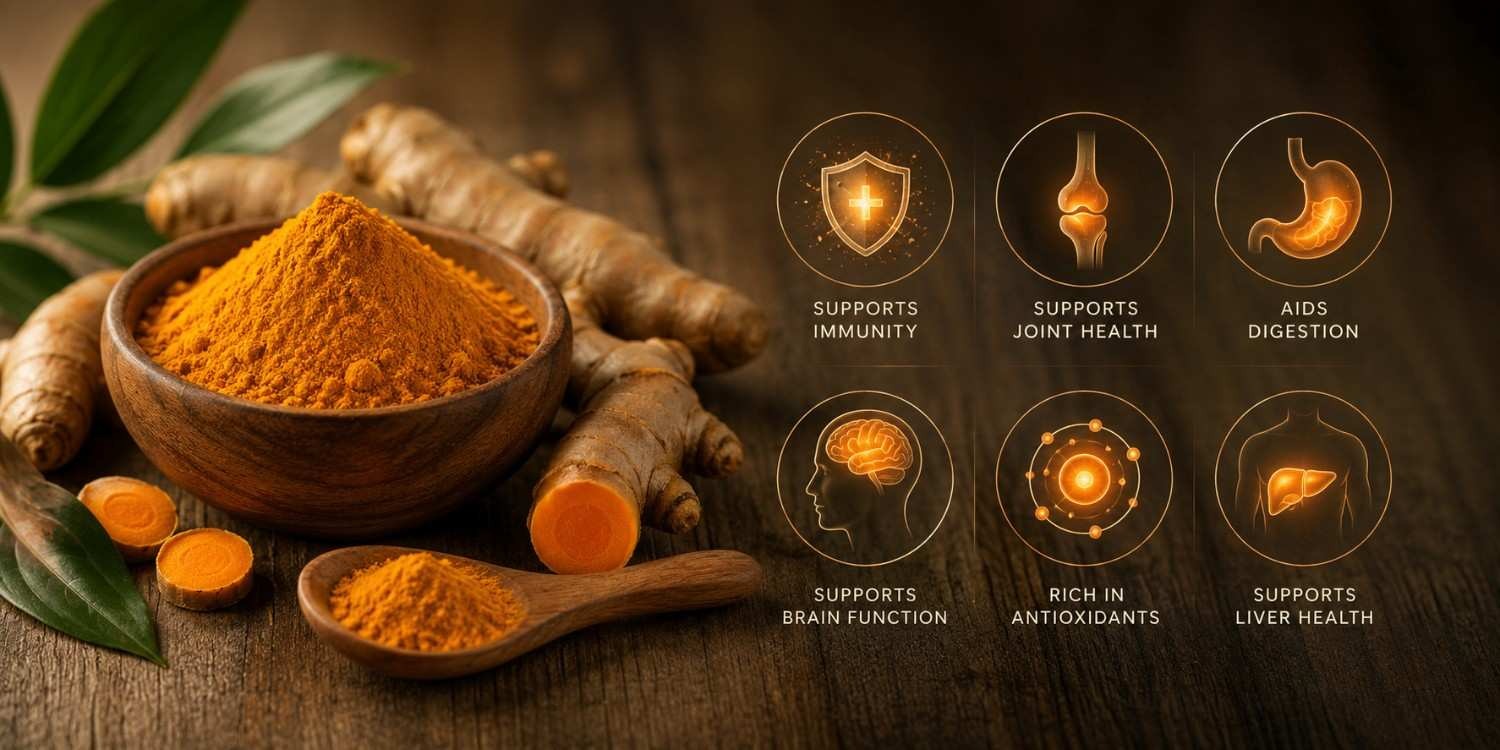
Turmeric is a yellow-orange spice produced from the rhizome of the Curcuma longa plant. It has a long history of culinary use and has also been used in traditional Asian health practices.
Much of the modern interest in turmeric focuses on curcuminoids, particularly curcumin. Laboratory research shows that curcumin can interact with pathways involved in inflammation and oxidative stress, but laboratory activity does not automatically guarantee a meaningful benefit in humans.
Therefore, the reason to take turmeric should be based on realistic expectations. It can be a nutritious culinary ingredient, while concentrated supplements may offer targeted support for certain people when used appropriately.
“Turmeric is a promising ingredient, not a replacement for balanced nutrition, recovery or medical care.”
Turmeric vs Curcumin: What Is the Difference?
The terms turmeric and curcumin are often used interchangeably, but they do not describe the same product.
| Form | What It Contains | Common Use | Concentration |
|---|---|---|---|
| Culinary turmeric | Whole ground turmeric root with curcuminoids, oils and other plant compounds | Cooking, flavour and colour | Relatively low curcumin concentration |
| Turmeric extract | A concentrated extract that may be standardised for curcuminoids | Dietary supplementation | Varies between products |
| Curcumin supplement | Concentrated curcumin or a curcuminoid complex | Targeted supplementation or clinical research | Usually much higher than food |
Evidence obtained from a concentrated, specially formulated curcumin supplement cannot automatically be applied to a small amount of turmeric used in food.
Potential Reasons to Take Turmeric
Turmeric is promoted for many purposes, but not every claim is supported by strong human evidence. The following potential uses have received the most research attention.
Joint Comfort
Some turmeric and curcumin formulations may support knee comfort, stiffness and mobility in people with osteoarthritis.
Exercise Recovery
Preliminary research suggests curcumin may help reduce delayed-onset muscle soreness after unfamiliar or muscle-damaging exercise.
Plant Compounds
Culinary turmeric adds naturally occurring polyphenols and aromatic plant compounds to meals.
Flavour Without Excess
Its strong colour and earthy flavour can make meals more enjoyable without relying only on salt, sugar or heavy sauces.
Targeted Supplementation
A clinician may consider a standardised product as part of an individual joint or wellness plan.
Culinary Variety
Turmeric works in curries, rice, lentils, soups, vegetables and savoury drinks, making it an easy food-based addition.
What Does the Evidence Actually Show?
Knee Osteoarthritis
Multiple reviews have reported possible improvements in knee pain, stiffness and function. However, studies use different extracts, doses and comparison treatments, so stronger research is still needed.
Muscle Soreness
Some trials suggest curcumin may reduce soreness or support recovery after demanding exercise. The benefits appear formulation-specific and should not replace sleep, nutrition or sensible programming.
General Health Claims
Research has examined cholesterol, blood sugar, fatty liver disease, mood and other outcomes, but results are inconsistent and do not establish turmeric as a treatment.
The National Center for Complementary and Integrative Health states that initial osteoarthritis findings are positive, but there is not yet enough evidence to conclude definitively that turmeric or curcumin benefits any health condition.
Claims to Treat With Caution
Supplement advertising sometimes extends far beyond the available evidence. Be cautious when a product claims turmeric can produce any of the following results:
Turmeric is not an approved replacement for medical treatment.
Current clinical evidence is inadequate to recommend curcumin as a cancer treatment.
“Detox” is a vague marketing term and does not describe a clinically established effect.
Turmeric does not replace an appropriate calorie intake, exercise and sustainable habits.
Immune function is complex and cannot be meaningfully “boosted” by one ingredient.
Response and tolerance can vary according to health, medication use and formulation.
Why Absorption Matters
Standard curcumin is generally absorbed poorly and is rapidly metabolised and eliminated. This is why supplement manufacturers use different delivery methods to increase its bioavailability.
Some products combine curcumin with piperine from black pepper, while others use lipids, phospholipids, nanoparticles or other specialised systems. These formulations are not automatically equivalent.
Greater absorption does not automatically mean greater safety. Highly bioavailable turmeric and curcumin products have been associated with reported cases of liver injury in some individuals.
How to Use Turmeric Sensibly
Define the reason
Decide whether you want a culinary ingredient or a supplement for a specific purpose.
Start with food
Use turmeric in meals when your goal is flavour, colour and dietary variety.
Review the label
Check the curcuminoid amount, serving size, additional ingredients and absorption system.
Monitor tolerance
Stop and seek advice if you develop significant digestive symptoms or signs of liver problems.
There is no universal turmeric or curcumin dose suitable for every purpose. Follow the product directions and discuss concentrated supplementation with a qualified healthcare professional.
Easy Ways to Add Turmeric to Food
Lentils and Curries
Add turmeric while cooking dal, chickpeas, beans or vegetable curries.
Rice and Grains
Mix a small amount into rice, quinoa, millet or savoury oats.
Soups
Use it in vegetable, pumpkin, lentil or coconut-based soups.
Roasted Vegetables
Combine it with oil and other spices before roasting vegetables or tofu.
Turmeric Supplement Checklist
✔ Things to Verify
- ✓ Clearly stated turmeric or curcumin amount
- ✓ Curcuminoid standardisation where applicable
- ✓ Complete additional ingredient list
- ✓ Manufacturer and batch information
- ✓ Independent quality testing where available
✔ Claims to Avoid
- ✓ Guaranteed pain relief
- ✓ Instant recovery
- ✓ Cancer prevention or treatment
- ✓ Rapid fat burning
- ✓ Claims that medicine is unnecessary
Side Effects and Safety
Turmeric used in ordinary food amounts is different from taking a concentrated supplement. Oral turmeric and curcumin products may cause:
Stop using a turmeric or curcumin supplement and contact a healthcare professional if you develop unusual fatigue, nausea, poor appetite, dark urine or yellowing of the skin or eyes. These may be signs of liver injury.
Turmeric supplements may be unsafe during pregnancy. Anyone who is breastfeeding, taking medication, receiving cancer treatment or managing a medical condition should seek professional advice before using a concentrated product.
Who May Consider Taking It?
| Situation | Practical Approach |
|---|---|
| General healthy eating | Use culinary turmeric as one of several herbs and spices in a varied diet. |
| Joint discomfort | Discuss a standardised supplement with a clinician, especially when symptoms are persistent. |
| Exercise recovery | Consider it optional rather than essential; first optimise training, protein, total nutrition and sleep. |
| Medical condition or medication use | Consult a qualified healthcare professional before taking a concentrated extract. |
Frequently Asked Questions
What is the main benefit of taking turmeric?
The most promising clinical evidence relates to possible support for knee osteoarthritis symptoms. Turmeric also provides flavour and plant compounds when used as part of a varied diet.
Is it better to take turmeric or curcumin?
Culinary turmeric is suitable for everyday food use. Curcumin extracts are more concentrated and are generally used for a specific supplementation goal. They also require greater attention to formulation and safety.
Can turmeric help with workout recovery?
Some studies suggest that certain curcumin formulations may reduce post-exercise soreness or support recovery after muscle-damaging exercise. Results vary, and supplementation does not replace appropriate nutrition, sleep or rest.
Does turmeric reduce inflammation?
No clinical evidence currently supports using turmeric or curcumin as a cancer cure. The National Cancer Institute states that available evidence is inadequate to recommend curcumin-containing products for cancer treatment.
References
- National Center for Complementary and Integrative Health. Turmeric: Usefulness and Safety. View source
- Zhao J, et al. Efficacy and safety of curcumin therapy for knee osteoarthritis: a systematic review and network meta-analysis. View research
- Fang W, Nasir Y. The effect of curcumin supplementation on recovery following exercise-induced muscle damage and delayed-onset muscle soreness. View research
- Popović VB, et al. Bioavailability of Oral Curcumin in Systematic Reviews. View research
- National Cancer Institute. Curcumin and Cancer: Health Professional Version. View source