Can You Take Creatine Without Protein? What Actually Matters
Creatine and protein support training in different ways. Learn whether they need to be taken together, how to use creatine consistently and when protein powder is actually useful.
Key Takeaways
Do Creatine and Protein Need Each Other?
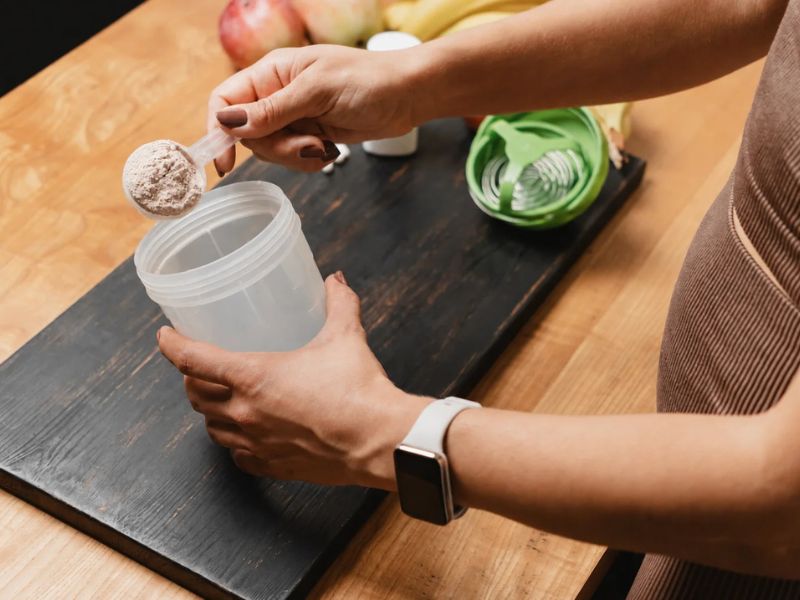
You finish your workout, add creatine to water and wonder whether the drink is incomplete without a scoop of protein. The direct answer is yes, you can take creatine without protein.
Creatine and protein can be used together, but neither requires the other to work. The more important questions are whether your training is structured, your diet provides enough protein and your creatine routine is consistent.
“Creatine and protein complement each other, but they do not depend on each other.”
Creatine and Protein Are Not the Same Thing
Both are popular among gym users, but they perform different physiological roles.
| Factor | Creatine | Protein |
|---|---|---|
| Main role | Supports rapid energy regeneration | Supplies amino acids |
| Common goal | Strength and repeated high-intensity performance | Daily protein intake and recovery |
| Works without the other? | Yes | Yes |
| Must be taken after training? | No | No |
| Common supplement form | Creatine monohydrate | Whey, casein or plant protein |
| Typical use | Consumed consistently | Used according to dietary needs |
Does Creatine Need Protein for Absorption?
No. Creatine monohydrate can be consumed with several common beverages without requiring protein powder.
Consuming creatine with carbohydrate or carbohydrate plus protein may increase initial retention in some situations. However, this does not make protein necessary for creatine to be effective.
What Creatine Can Do Without Protein Powder
Regular creatine monohydrate use can increase muscle creatine stores and support training even when no whey or plant-protein powder is used.
What If Your Diet Is Low in Protein?
Creatine may improve training capacity, but recovery and muscle development also require sufficient amino acids, energy and rest. A consistently low-protein diet can therefore limit the overall response to training.
Can You Build Muscle Without Protein Powder?
Yes—provided your meals supply enough protein and your training is appropriately structured. Protein powder is a convenience tool, not a compulsory muscle-building product.
Should You Take Creatine and Protein Together?
You can combine them when one shake makes the routine easier. Taking them separately is equally practical when your diet already supplies enough protein.
Take Them Together When
- You already drink a post-workout shake
- Your meals do not meet your protein target
- You want fewer supplement timings
- The combined shake feels comfortable
- One drink improves consistency
Take Them Separately When
- You obtain enough protein from food
- You prefer creatine with water
- A combined shake feels too heavy
- You do not want a shake around training
- You use protein only on lower-protein days
A Simple Creatine Routine
A complicated supplement schedule is usually unnecessary. Build a routine that is simple enough to repeat.
Choose Monohydrate
Creatine monohydrate has the strongest evidence for effectiveness and safety.
Take It Consistently
A common maintenance approach is approximately 3–5g daily.
Use It on Rest Days
Daily use helps maintain elevated muscle creatine stores between workouts.
Pick a Convenient Time
Morning, pre-workout, post-workout or with a meal can all be practical.
Mix It Simply
Water is enough. Juice, smoothies and protein shakes remain optional.
Measure the Serving
Follow the product directions because scoop sizes can vary between products.
Where QNT Creatine Monohydrate Fits
QNT Creatine Monohydrate
QNT Creatine Monohydrate is a simple powder formula that can be mixed with water, juice, a smoothie or a post-workout drink without requiring protein powder.
Common Mistakes to Avoid
Believing Creatine Requires Whey
The two can be combined for convenience, but they work independently.
Ignoring Food Protein
A protein supplement may be unnecessary when normal meals already meet your target.
Using It Only on Workout Days
Irregular use may make maintaining increased muscle creatine stores more difficult.
Constantly Changing Timing
A repeatable daily time is more useful than continually searching for a perfect window.
Assuming Costlier Forms Are Better
Evidence does not consistently show that alternative forms outperform monohydrate.
Expecting It to Replace Training
Creatine supports performance but does not build strength without an exercise stimulus.
Safety Considerations
Creatine monohydrate is generally considered well tolerated by healthy adults when used appropriately. Some users may experience temporary water-weight gain or digestive discomfort.
Final Takeaway
You can take creatine without protein.
Creatine supports rapid energy availability and repeated high-intensity performance. Protein supplies amino acids that support muscle maintenance and recovery. Use protein powder only when it helps fill a genuine dietary gap.
What matters is not how many powders you combine in one shaker. It is how well your entire routine works together.
Frequently Asked Questions
Can beginners take creatine without whey protein?
Yes. Beginners can take creatine with water. Whey is useful only when normal food intake does not provide enough protein.
Does creatine build muscle without protein?
Creatine may support high-intensity training capacity. Muscle development still requires adequate protein, calories, training and recovery.
Can I mix creatine with water?
Yes. Creatine monohydrate can be mixed with water. Protein powder, sugar and juice are not required.
Can I take creatine on an empty stomach?
Some users tolerate it comfortably. Taking it with a meal may be preferable when an empty-stomach serving causes discomfort.
Should creatine be taken before or after a workout?
Either can be practical. Consistent daily intake is more important than selecting one universal timing window.
Is a creatine loading phase necessary?
No. Loading may increase muscle stores faster, while consistent maintenance servings can raise them gradually.
Can vegetarians take creatine?
Creatine supplements may be useful for vegetarian users because plant-based diets generally contain little naturally occurring creatine. Check the complete product label for suitability.
References
- International Society of Sports Nutrition, Position Stand: Safety and Efficacy of Creatine Supplementation.
- NIH Office of Dietary Supplements, Dietary Supplements for Exercise and Athletic Performance.
- Candow et al., Creatine O’Clock: Does Timing of Ingestion Influence Muscle Mass and Performance?
- Kreider et al., Bioavailability, Efficacy and Safety of Creatine and Related Compounds.
- QNT, Pure Creatine Monohydrate: Official Product Information.