
I Quit Whey Protein for 60 Days. Here’s What Actually Happened to My Muscles
Stopping whey protein did not cause sudden muscle loss, but it made recovery, meal planning and consistent protein intake noticeably more difficult.
Key Takeaways
Why I Stopped Taking Whey Protein
Drinking a protein shake after training creates a reassuring sense that recovery has been handled. Finish the session, mix the shake and mentally check the nutrition box for the day.
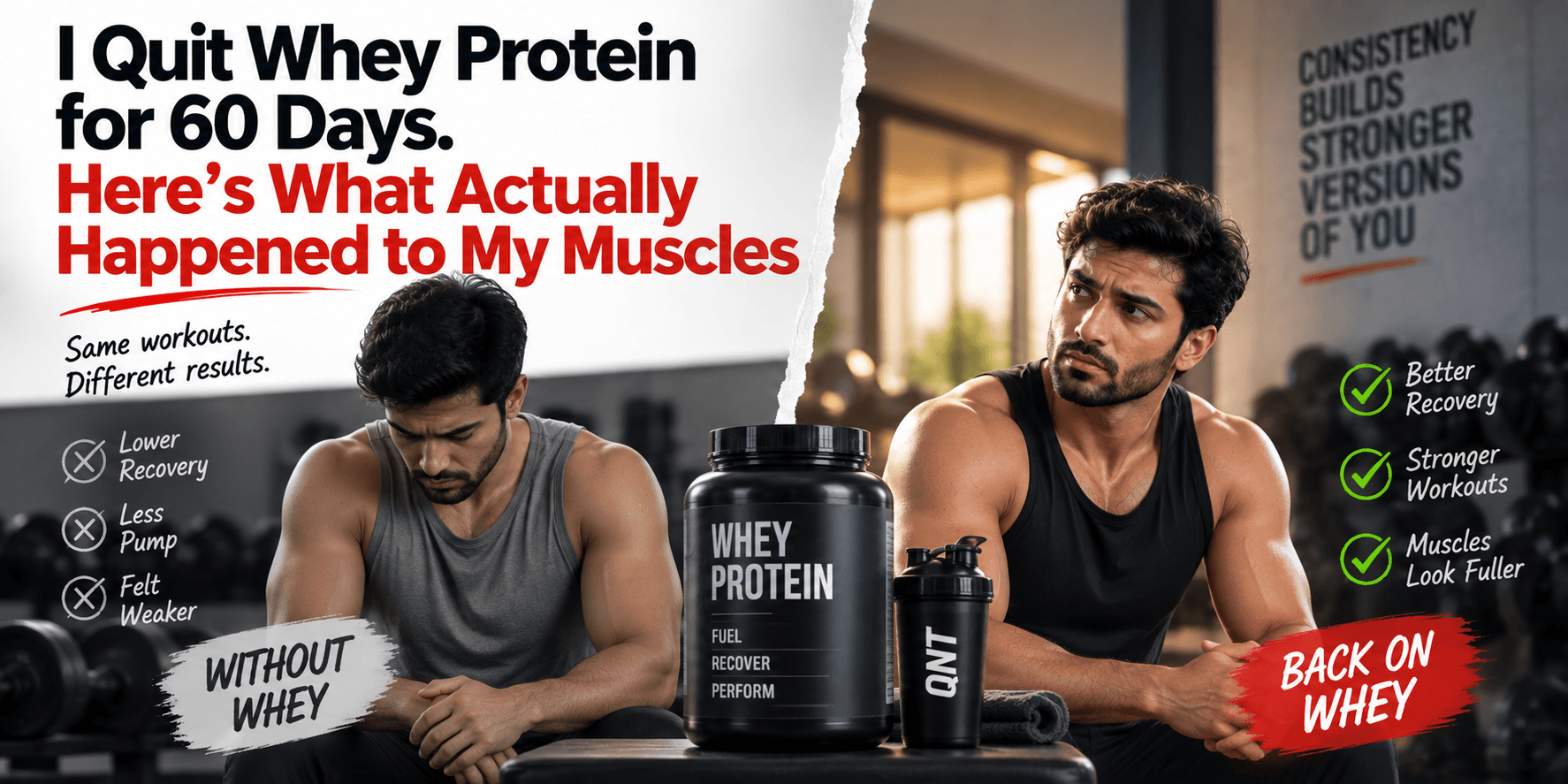
I stopped taking whey protein for 60 days expecting to prove that supplements were overrated and that nothing meaningful would change.
I did not suddenly lose muscle or strength. Instead, I noticed smaller changes: slower recovery, more soreness, inconsistent protein intake and far more effort spent planning food.
“The real value of whey protein is not magic. It is consistency—and consistency affects more than most people realise.”
The Internet Loves Extremes Around Whey Protein
Fitness culture often presents two opposing views. One side treats whey protein like a miracle product, while the other suggests that eating enough chicken, eggs or paneer makes supplements completely pointless.
Whey protein is not uniquely required for muscle growth. Its advantage is providing a convenient, high-quality source of protein that can make daily targets easier to achieve.
What I Used Instead of Whey
For two months, I relied entirely on whole-food protein sources. The plan appeared manageable on paper, but it required more organisation in daily life.
What Changed Over 60 Days
The First Two Weeks Felt Surprisingly Normal
During the first two weeks, almost nothing changed. Strength remained stable, workouts felt normal and body composition looked approximately the same.
This was not unexpected. Healthy, active people do not normally lose significant muscle within a few days simply because they stop drinking protein shakes. Muscle maintenance depends on resistance training, sufficient energy, adequate total protein and recovery over time.
The immediate effect of stopping whey protein is often minimal when the missing protein is successfully replaced through food.
Hitting Protein Targets Became Difficult
This was the biggest practical change. Replacing whey protein with whole foods was possible, but it was less convenient.
A whey shake could provide roughly 24–30 grams of protein in seconds. Without it, every meal required more thought, preparation and awareness.
| Factor | With whey protein | Without whey protein |
|---|---|---|
| Preparation | Mix and drink within minutes | Cook, portion or plan an additional meal |
| Convenience | Easy after training or while travelling | Dependent on food availability and schedule |
| Cost pattern | Predictable cost per serving | Higher grocery spending on protein-rich foods |
| Decision effort | Simple and repeatable | More meal planning throughout the day |
Busy workdays made the difference more obvious. When meetings ran late, traffic delayed dinner or appetite was low, protein became the easiest nutrient to under-consume.
“Whey had quietly removed a surprising amount of decision fatigue from my daily diet.”
Recovery Changed Before Muscle Size Did
The most noticeable physical change was not dramatic muscle loss. It was slower and less predictable recovery.
Whey protein is not mandatory for recovery. The issue was that removing it made consistent recovery nutrition harder to maintain.
What I Really Missed Was Efficiency
By approximately day 40, the main benefit of whey protein became clear. It was not taste, habit or gym culture. It was efficiency.
For working professionals, students and frequent travellers, whey can function like nutritional insurance. It helps bridge the gap between knowing you should consume enough protein and realistically doing it every day.
Where Whey Protein Fits
QNT Whey Protein Range
Whey protein products can help active people bridge dietary protein gaps when work, travel, training or limited preparation time makes complete meals difficult.
Do You Need Whey Protein to Build Muscle?
No. It is entirely possible to build and maintain muscle without protein shakes when your diet and training consistently provide what your body needs.
- Your meals are consistently well structured.
- You regularly reach your daily protein target.
- You have sufficient time for cooking and preparation.
- Your training performance and recovery remain strong.
- Your schedule regularly disrupts meals.
- You struggle to consume enough protein through food.
- You need a portable post-workout option.
- You want to reduce daily nutrition planning.
Use whey protein to fill a genuine dietary gap. Do not add scoops automatically when your existing meals already meet your protein needs.
Whole Foods vs Whey Protein
| Factor | Whole-food protein | Whey protein |
|---|---|---|
| Protein quality | Varies by food source | Complete, high-quality dairy protein |
| Convenience | Requires shopping, preparation or refrigeration | Fast, portable and easy to measure |
| Micronutrients | Provides additional vitamins, minerals and food variety | Primarily designed to provide protein |
| Satiety | Often more filling because chewing and food volume are involved | Useful but may be less filling than a complete meal |
| Best use | Foundation of a balanced diet | Convenient support for daily protein intake |
The Final Verdict After 60 Days
Quitting whey protein did not ruin my physique. It exposed how much easier the supplement had made my routine.
Recovery became less predictable, high-protein eating became mentally repetitive and performance felt slightly less stable during demanding training periods.
The changes were subtle rather than dramatic. From the outside, they may have been invisible. Internally, however, training and nutrition required more effort.
Frequently Asked Questions
The Bottom Line
Your muscles will not disappear simply because you stop drinking whey protein. When total protein, training and recovery remain adequate, muscle can be maintained through whole foods alone.
What changes is your margin for inconsistency. Missed meals, long workdays, travel and limited preparation time become more influential when a convenient protein source is removed.
Whey protein is not a requirement for progress. It is a practical tool that can make the habits responsible for progress easier to maintain.
Sources & References
- Harvard T.H. Chan School of Public Health — Protein overview.
- National Institutes of Health — Research on sarcopenia, muscle maintenance and ageing.
- Cleveland Clinic — Guidance on protein requirements for older adults.
- PubMed — Research on protein intake, muscle health and healthy ageing.
- QNT Sports India — Brand and product information for the QNT whey protein range.