Your Whey Protein Powder Might Be Lying to You: The Dark Side of India’s Whey Market
Mislabelled whey protein claims, fake supplements, whey isolate lab-test controversies, and the one thing every customer should demand before trusting any tub: proof.
Key Takeaways
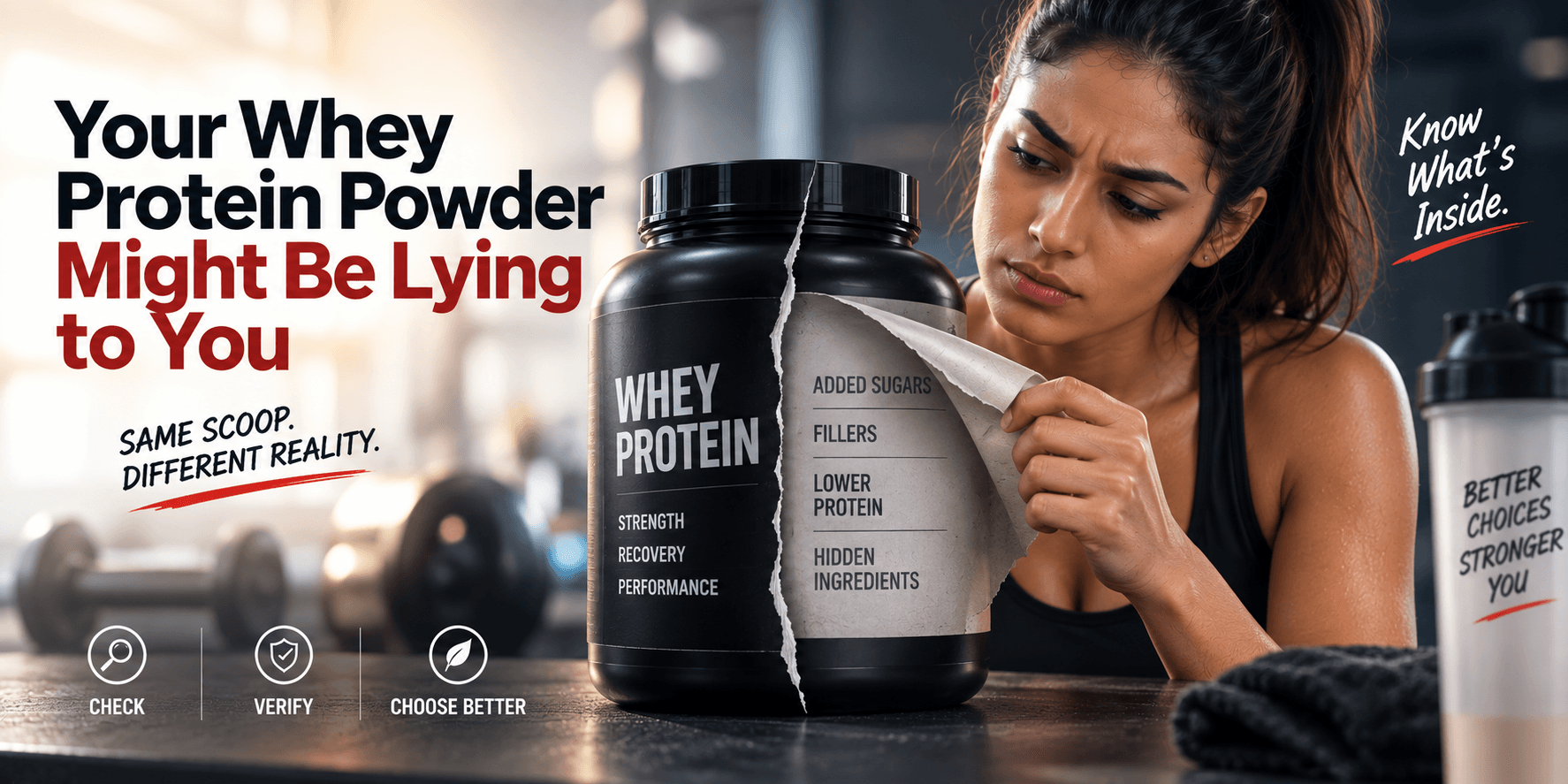
Your Scoop Says Protein. But Does the Lab Agree?
Whey protein powder is supposed to be simple. You buy a tub, read the label, trust the protein claim, and drink it daily.
But India’s whey protein and protein supplement market has exploded, and every second brand now claims “high protein,” “premium whey,” “whey isolate,” “imported formula,” “clean nutrition,” or “science-backed performance.”
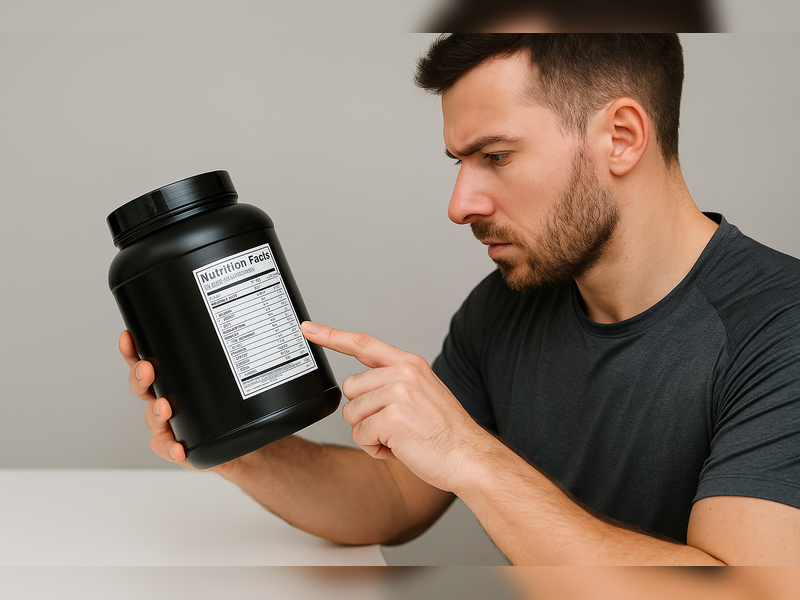
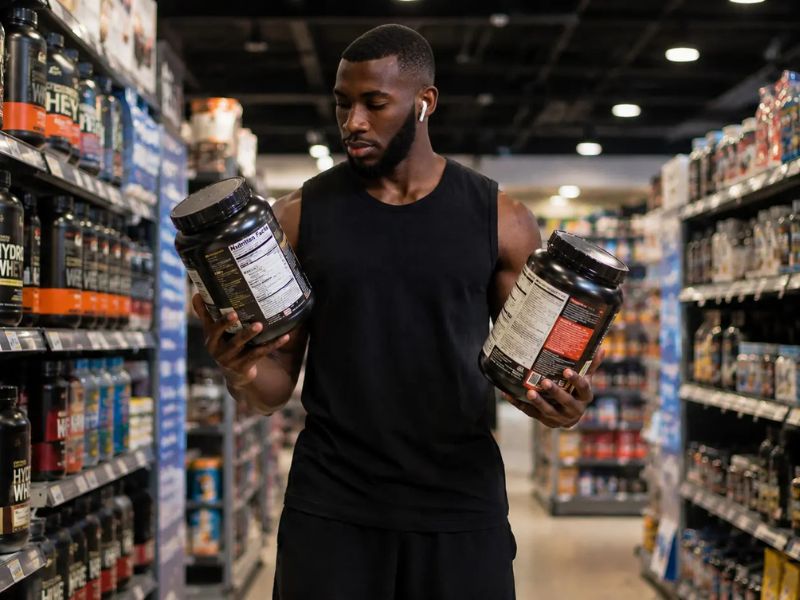
Recent reports have shown serious issues around mislabelled protein content, counterfeit products, questionable marketing claims, and lack of transparency. Whether someone buys whey protein for gym performance or whey isolate for lean protein intake, the product should match what the label promises.
“Can your whey protein powder prove what it claims?”
The Study That Shook the Whey Protein Market
Protein Mismatch
ThePrint reported that nearly 70% of 36 protein supplements analysed had inaccurate protein information.
Contamination Concern
The same report stated that around 14% of samples contained harmful fungal aflatoxins.
Residue Concern
The report also stated that 8% showed pesticide residues.
In April 2024, ThePrint reported on a study published in the peer-reviewed journal Medicine, which analysed 36 popular protein supplements, including whey protein products, sold in India.
“If the label says one thing and the test says another, the problem is not just marketing. The problem is trust.”
The Real Scam Is Not Always Fake Packaging
Most customers think fake supplements mean duplicate tubs, broken seals, shady sellers, or copied labels. Yes, counterfeit products are a real issue. But the bigger problem is that a product can look original and still fail the trust test.
| What Can Look Good | What Still Needs Proof |
|---|---|
| Shiny label and premium packaging | Protein content accuracy |
| Influencer campaign | Batch-wise testing and lab reports |
| Premium price | Transparent formulation and clean ingredients |
| Popular marketplace listing | Brand accountability if something goes wrong |
“The front label sells the dream. The back label — and the lab report — tell the truth.”
When Protein Claims Went to Court
One of the strongest examples of why fact-based criticism matters comes from the San Nutrition case. MediaNama reported that the Delhi High Court upheld influencers’ right to critique consumer products based on facts.
The report said influencer Arpit Mangal claimed he tested San Nutrition’s ISO PRO after receiving consumer complaints, and the lab reports showed the product had far less protein and much higher carbohydrate content than claimed. The court noted that San Nutrition did not place information on record justifying the nutritional information on its product label.
“If your name is on the whey protein tub, your responsibility is inside the tub.”
FSSAI Is Watching the Protein and Whey Protein Market
In July 2024, afaqs! reported that the protein supplement and whey protein market had come under FSSAI’s radar.
The category was described as being riddled with counterfeit products, sub-par testing, and misleading claims. The report also highlighted concerns around products in retail stores, gyms, and e-commerce platforms with dubious health claims and inaccurate nutritional information.
Market Signal
When regulators pay close attention to a category, it usually means the market has become too messy to ignore.
The Whey Protein Industry Has a Trust Problem
The problem is not that every protein brand is bad. The problem is that too many customers are expected to trust too much with too little proof.
| Not Proof | Real Proof |
|---|---|
| Celebrity face or muscular influencer | Batch-wise testing and transparent lab reports |
| Discount banner or fancy flavour name | Clear protein source and accurate amino acid profile |
| Front-label protein claim | No misleading serving-size tricks and clean ingredient disclosure |
| Influencer-only trust | Accountable customer support and third-party verification |
Best Practice: If a brand is confident about its quality, it should not make customers hunt for proof. It should display it proudly.
Where QNT Deserves Credit
In a whey protein market where consumers are becoming more aware, brands need to move beyond hype and focus on credibility, formulation, and transparency.
QNT has built its positioning around performance nutrition with clear product communication, international quality standards, and category-relevant formulations.
For users looking at whey isolate protein options, QNT’s Iso Ripped is positioned as a whey isolate protein and lean whey protein option with added fitness-support ingredients like L-Carnitine and CLA. But the larger message remains the same: do not buy any protein blindly.
Explore QNT Iso Ripped
Choose brands that are clear, accountable, and transparent.
Check QNT Iso RippedThe Spicy Truth: Whey Protein Is Not the Problem. Bad Transparency Is.
Whey protein powder is not the villain. A good whey protein supplement or whey isolate can genuinely help people meet their daily protein needs. But the industry has to stop acting like customers should trust everything printed on a tub.
“The customer has evolved. They are reading labels, checking reports, comparing brands, and asking smarter questions.”
Before You Buy Any Whey Protein Powder or Whey Isolate, Ask These Questions
Warning: When it comes to whey protein supplements, cheap mistakes can become expensive for your health.
Final Word: Stop Trusting the Tub. Start Trusting the Proof.
India’s whey protein and protein supplement market is no longer a small gym-bro category. Students use it. Working professionals use it. Women use it. Athletes use it. Vegetarians use it. Beginners use it.
That means the industry has a bigger responsibility than ever before. The days of selling protein only through loud claims, flashy packaging, and influencer hype are ending.
Your protein powder should not just taste good. It should test right.
“The future belongs to brands that can prove what they sell.”
FAQ
Are whey protein powders in India unsafe?
Not all whey protein powders are unsafe. However, public reports have raised concerns about mislabelling, counterfeit products, and quality inconsistencies in the Indian supplement market. Consumers should choose trusted brands, check labels carefully, and buy only from authorised sellers.
What was found in the 2024 protein supplement study?
According to ThePrint’s report, nearly 70% of 36 protein supplements analysed had inaccurate protein information, around 14% contained aflatoxins, and 8% showed pesticide residues.
Does this mean every protein brand is cheating?
No. That would be an unfair claim. The issue is that the category has had enough documented concerns for consumers to demand stronger proof, better testing, and more transparency from every brand.
What should I check before buying whey protein or whey isolate?
Check the protein per serving, protein source, amino acid profile, sugar content, serving size, lab-test availability, batch details, seller authenticity, and brand transparency.
Why are fake protein supplements dangerous?
Fake supplements may contain poor-quality ingredients, incorrect nutrition values, contaminants, or substances not declared on the label. This is why buying from authorised sellers and official brand websites is important.
Is whey isolate better than regular whey protein?
Whey isolate, also known as whey isolate protein, usually has a higher protein percentage and lower lactose or carbohydrate content compared to regular whey concentrate. It may be suitable for people looking for a leaner protein option, depending on goals and digestion.
Where can I check QNT Iso Ripped?
You can view QNT Iso Ripped Whey Isolate Protein – Strawberry Banana 1kg.
Source Acknowledgement
- ThePrint — coverage of the 2024 study on Indian protein supplements. Read source
- MediaNama — reporting on the Delhi High Court’s observations in the San Nutrition case. Read source
- afaqs! — reporting on FSSAI scrutiny and broader issues in India’s protein supplement market. Read source
Disclaimer
This article is based on publicly available reports and is intended for consumer awareness. It does not claim that every protein brand or every supplement product is unsafe. Consumers should verify product details, buy from authorised sellers, and consult qualified professionals where needed.