Pre-Workout vs Energy Drinks: Which Is Better for Your Workout?
Compare caffeine, ingredients, timing, convenience and safety to decide whether a pre-workout supplement or an energy drink better matches your training goals.
Key Takeaways
Pre-workouts target exercise, while energy drinks mainly support general alertness.
Pre-workouts may include beta-alanine, citrulline, creatine or electrolytes.
A ready-to-drink can may suit someone who only wants a quick caffeine boost.
Coffee, tea, supplements and energy drinks all contribute to daily intake.
Combining both products is usually unnecessary and may increase unwanted effects.
Supplements cannot replace food, hydration, sleep or structured training.
Choosing the Right Source of Workout Energy
Walking into the gym feeling tired can make even a simple workout feel difficult. This is why many people reach for either a pre-workout supplement or an energy drink before training.
Both options may provide caffeine and support alertness, but they are not designed for exactly the same purpose. The better choice depends on your workout, caffeine tolerance, ingredient preferences and fitness goals.
What Is a Pre-Workout Supplement?
A pre-workout is designed to be consumed before exercise. It may be sold as a powder, ready-to-drink beverage, capsule, gel or concentrated shot.
Caffeine may help users feel more awake and prepared to train.
Some formulas are designed to support concentration during demanding sessions.
Ingredients may support repeated efforts during high-intensity exercise.
Nitric oxide-supporting ingredients may promote blood flow during training.
Some ingredients are selected for short, repeated, high-intensity activity.
Certain formulas contain electrolytes or other hydration-focused ingredients.
Not every pre-workout contains caffeine. Stimulant-free formulas may be more appropriate for evening training or people who are sensitive to stimulants.
What Is an Energy Drink?
An energy drink is a packaged beverage intended to increase alertness and reduce feelings of tiredness. Most contain caffeine, while some may also provide sugar, taurine, B vitamins or botanical ingredients such as guarana.
Energy drinks can make someone feel more awake before training, but they are not always developed specifically for exercise performance. Their formulas usually focus more on general stimulation than muscular endurance, hydration or muscle-pump support.
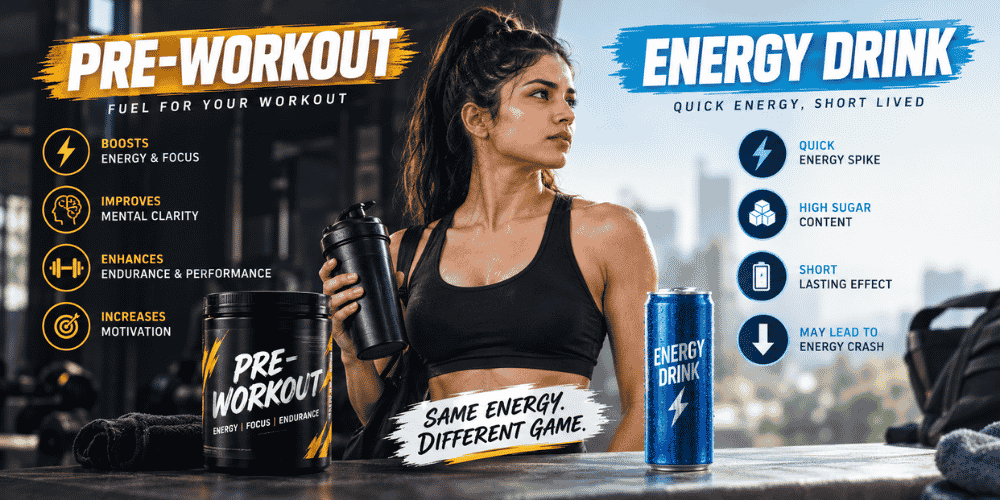
Pre-Workout vs Energy Drinks: Key Differences
| Feature | Pre-Workout Supplement | Energy Drink |
|---|---|---|
| Primary purpose | Exercise and performance support | General energy and alertness |
| Typical format | Powder, capsule, shot, gel or drink | Ready-to-drink can or bottle |
| Caffeine | Ranges from stimulant-free to high-caffeine | Usually caffeinated |
| Workout ingredients | May include beta-alanine, citrulline, creatine or electrolytes | Usually contains fewer exercise-specific ingredients |
| Sugar content | Frequently available in sugar-free formulas | May be high in sugar, although sugar-free options exist |
| Serving control | Powders may allow more flexible serving sizes | Normally consumed as one fixed can |
| Best use | Structured gym or sports sessions | Quick and convenient energy support |
A well-designed pre-workout may contain several ingredients selected for different aspects of training, while an energy drink generally delivers a more straightforward stimulation effect.
Ingredients You Should Compare
Do not choose a product based only on its packaging, flavour or marketing. Review the complete ingredient label, serving size and stimulant content.
Caffeine
Supports central nervous system stimulation, alertness and reduced perceived effort, but individual tolerance can vary significantly.
Beta-Alanine
Supports muscle carnosine production and may be useful for repeated high-intensity efforts. Temporary skin tingling can occur.
Citrulline and Arginine
Commonly included to support nitric oxide production, blood flow and the muscle-pump sensation during resistance training.
Creatine
Supports repeated short-duration, high-intensity exercise, although its benefits depend more on consistent intake than exact timing.
Sugar and Carbohydrates
May support prolonged exercise but could be unnecessary for a short workout when the user has already eaten adequately.
Electrolytes
May be useful in formulas designed for extended workouts, heavy sweating or hydration-focused training support.
Understanding Caffeine Dosage
A commonly referenced performance-support range taken before exercise, although individual needs can be much lower.
A common pre-exercise timing window for caffeinated products, depending on the formula and serving instructions.
Higher caffeine intake does not automatically improve performance. It may instead increase anxiety, nausea, rapid heartbeat, headaches and sleep disruption.
Which Is Better for Gym Performance?
A properly formulated pre-workout will generally be the more targeted option for resistance training, high-intensity sessions or workouts where focus, endurance and muscle pump are priorities.
For training-specific ingredients and structured exercise support.
For convenience and a straightforward boost in alertness.
For evening workouts or when caffeine sensitivity is a concern.
When you already feel energised, hydrated and adequately fuelled.
How to Use a Pre-Workout Responsibly
Read
Check the serving size, caffeine and complete ingredient label.
Assess
Start with a smaller serving when assessing personal tolerance.
Time
Follow the recommended pre-exercise timing on the product.
Track
Calculate caffeine from every drink and supplement consumed that day.
Avoid dry scooping. Concentrated powder may be difficult to swallow, increases the chance of inaccurate use and does not improve the supplement’s effectiveness.
Can You Take a Pre-Workout and Energy Drink Together?
Combining both products is generally unnecessary and may result in excessive caffeine intake. A pre-workout could provide 200 mg of caffeine while an energy drink adds another 150 mg.
Coffee, tea, cola and other supplements can increase the total further. More stimulation does not guarantee a better workout and may negatively affect concentration, exercise technique and sleep.
Excessive stimulation may make it difficult to focus or train comfortably.
A high stimulant intake may increase heart rate or cause palpitations.
Nausea, stomach upset or headaches may occur in sensitive users.
Late caffeine intake may interfere with sleep and reduce recovery quality.
Who Should Be Careful With High-Caffeine Products?
Caffeinated pre-workouts and energy drinks are not suitable for everyone. Professional guidance may be appropriate for people who are pregnant, breastfeeding, taking medication or managing a health condition.
Children and adolescents should not use highly caffeinated performance products without appropriate professional guidance. Tested athletes should also prefer independently verified supplements to reduce contamination risks.
Pre-Workout Buying Checklist
Confirm the exact amount before combining it with coffee or other products.
Prefer formulas that clearly disclose individual ingredient quantities.
Select a formula based on endurance, pump, focus or hydration needs.
Proprietary blends may make it difficult to assess meaningful dosages.
Choose stimulant-free formulas when training close to bedtime.
Independent verification may provide additional confidence in product quality.
No supplement can guarantee strength, muscle growth or transformation.
Do not increase the dosage in an attempt to create stronger effects.
Final Verdict
Neither option is automatically better for every person. Pre-workout supplements are generally more suitable for users seeking exercise-specific support from ingredients such as caffeine, beta-alanine, citrulline, creatine or electrolytes.
Energy drinks are more convenient when the primary goal is simply to feel more awake. Whichever option you choose, review the complete label and avoid combining multiple stimulant sources.
Frequently Asked Questions
Is pre-workout better than an energy drink?
A pre-workout is generally more targeted for exercise because it may contain ingredients for focus, muscular endurance, blood flow or hydration. An energy drink is more suitable for general alertness and convenience.
Can I drink an energy drink before the gym?
An energy drink may provide caffeine and alertness before training. Check its caffeine and sugar content and include it when calculating your total daily stimulant intake.
When should I take pre-workout?
Many products are consumed 15–60 minutes before exercise, but users should follow the serving and timing directions provided on the specific product.
Can I combine pre-workout with an energy drink?
Combining them is generally unnecessary and may create excessive caffeine intake. Review both labels and calculate caffeine from every daily source.
Is stimulant-free pre-workout effective?
Stimulant-free formulas may still contain ingredients intended to support blood flow, muscular endurance or hydration. They can be useful for evening training or people sensitive to caffeine.
Research References
- Research on multi-ingredient pre-workout supplements, muscular endurance and perceived energy.
- Studies examining caffeine-containing energy drinks and exercise performance.
- NIH Office of Dietary Supplements guidance on caffeine and athletic performance.
- FDA consumer guidance regarding caffeine intake in healthy adults.
- Sports nutrition research covering supplement quality and contamination risks for tested athletes.