Omega-3 Supplements Buying Guide: EPA/DHA Ratios Explained
Learn how to compare fish oil supplements by checking their EPA and DHA content, serving size, ingredient form, sourcing and quality verification—not just the number printed on the front.
Key Takeaways
The combined EPA and DHA amount matters more than total fish oil weight.
The listed dosage may require two or more capsules.
Choose an EPA/DHA ratio that fits your nutritional priorities.
Look for purification, freshness controls and transparent sourcing.
Triglyceride and ethyl ester forms differ in processing and absorption.
Third-party verification can provide added confidence in product quality.
Understanding What Is Inside the Capsule
A supplement labelled “1000 mg Fish Oil” may appear highly concentrated, but that number does not reveal how much usable omega-3 it provides. The real value lies in its EPA/DHA ratio, combined EPA and DHA per serving and overall formula quality.
Whether your goal is to support heart health, brain function, a healthy inflammatory response or post-workout recovery, understanding how to compare omega-3 supplements can help you choose a formula based on its composition rather than front-label marketing.
“The number on the front of an omega-3 bottle rarely tells the whole story.”
What Is the Difference Between EPA and DHA?
EPA and DHA are both long-chain omega-3 fatty acids, but they perform different and complementary roles in the body.
EPA
Eicosapentaenoic acid is primarily associated with cardiovascular support, healthy inflammatory responses and muscle recovery after exercise.
DHA
Docosahexaenoic acid is a structural component of the brain and retina and is important for cognitive function, vision and healthy development during pregnancy.
Comparing EPA versus DHA is not about deciding which one is universally better. Many quality supplements provide both because they work together rather than compete.
Why EPA and DHA Matter More Than Total Fish Oil
One of the biggest misconceptions is that more fish oil automatically means more omega-3. Two products can contain the same fish oil weight while delivering very different amounts of EPA and DHA.
| Front Label | Actual EPA + DHA | Effective Concentration |
|---|---|---|
| 1000 mg Fish Oil | 300 mg | 30% |
| 1000 mg Fish Oil | 650 mg | 65% |
Both products provide the same total fish oil weight, yet the second supplies more than twice the effective omega-3 content. This makes the combined EPA and DHA amount a more useful comparison point.
How to Read an Omega-3 Supplement Label
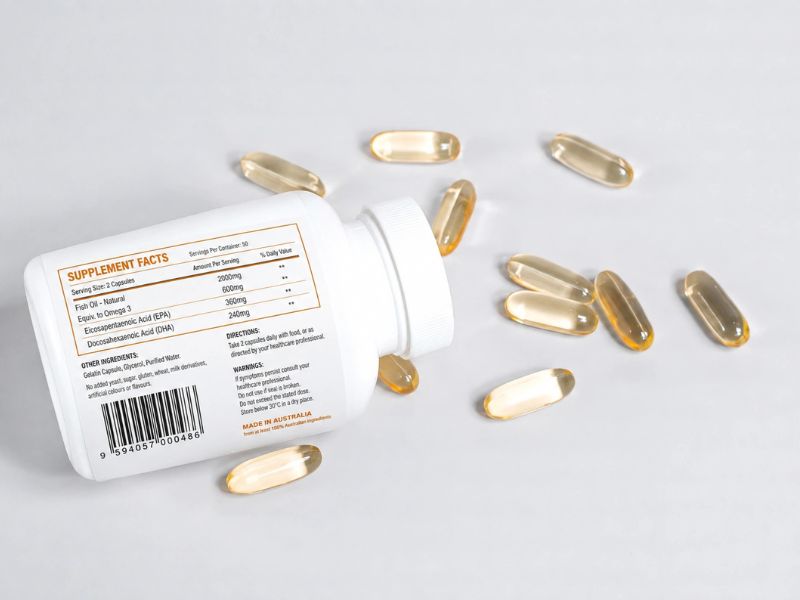
A reliable buying decision starts by turning the bottle around and reviewing the Supplement Facts panel.
Check the serving
Confirm how many capsules make up one listed serving.
Find EPA
Identify the amount of EPA supplied in each serving.
Find DHA
Identify the amount of DHA supplied in each serving.
Add the totals
Use combined EPA + DHA to compare effective omega-3 content.
Example Supplement Facts
The effective omega-3 content is 1,200 mg per serving, not 2,000 mg.
Quality Matters as Much as Quantity
An impressive EPA and DHA profile does not automatically make a supplement a strong choice. The oil’s sourcing, processing, freshness and verification should also be evaluated.
Look for oil screened for contaminants such as heavy metals.
Oxidation controls can help preserve freshness, taste and quality.
Transparent sourcing helps you understand where the fish oil comes from.
The label should clearly disclose EPA, DHA and serving information.
Third-party testing can provide additional confidence in label accuracy.
Choose brands that communicate how their supplements are produced.
A reliable supplement should combine meaningful EPA and DHA levels with transparent, quality-focused manufacturing practices. QNT Omega-3 is formulated around effective omega-3 content and everyday nutritional support rather than inflated fish oil numbers alone.
Triglyceride vs Ethyl Ester Omega-3
The ingredient list tells only part of the story. The form of fish oil can also influence how the supplement is manufactured and absorbed.
| Feature | Triglyceride Form | Ethyl Ester Form |
|---|---|---|
| Description | The natural form commonly found in fish. | A processed form used to concentrate omega-3 fatty acids. |
| Absorption | Generally associated with better absorption. | May vary by formulation and whether it is taken with a meal. |
| Buying approach | Evaluate alongside dose, sourcing and testing. | Can still be effective when well formulated and quality verified. |
Do not select a product solely because of its oil form. Consider the complete formula, manufacturing quality, EPA/DHA dosage and the brand’s transparency.
What Is the Ideal EPA and DHA Ratio?
There is no single EPA/DHA ratio that is ideal for everyone. Individual requirements can vary according to age, diet, activity level and health goals.
A balanced formula may be appropriate for broad everyday nutritional support.
Some formulas may provide proportionally more EPA or DHA for targeted nutritional goals.
Older adults, athletes and people with specific needs may benefit from professional guidance.
Instead of chasing a supposedly perfect ratio, prioritise clear EPA and DHA disclosure, meaningful amounts per serving and strong quality standards.
5-Minute Omega-3 Buying Checklist
Compare combined EPA and DHA—not only total fish oil.
Choose an EPA/DHA balance that aligns with your wellness goals.
Check how many capsules are needed to receive the listed amounts.
Look for information about oxidation protection and product freshness.
Prefer brands that communicate where and how their oil is sourced.
Third-party verification can strengthen confidence in quality and composition.
A thoughtful comparison makes it easier to identify a suitable omega-3 supplement without relying on marketing claims alone. QNT Omega-3 and the QNT Daily Vitamins range are designed to complement a balanced diet and active routine with quality-focused formulations.
Important Safety Note
Daily omega-3 requirements vary. People who are pregnant, have a medical condition, take medication or have specific dietary concerns should seek personalised guidance from a qualified healthcare professional before starting a supplement.
Frequently Asked Questions
How do I choose the best omega-3 supplement?
Look for a product that clearly lists EPA and DHA content, uses quality raw materials, provides transparent sourcing information and ideally includes independent third-party verification.
How do I read an omega-3 supplement label?
Start with the Supplement Facts panel rather than the front label. Check the serving size, EPA per serving, DHA per serving and combined EPA and DHA amount.
Is more fish oil always better?
No. A higher fish oil weight does not necessarily mean a higher amount of EPA and DHA. Always compare the active omega-3 content.
Should I choose EPA or DHA?
Rather than treating EPA and DHA as competing ingredients, look for a balance that aligns with your individual nutrition and wellness goals. Both play complementary roles.
How much EPA and DHA do I need daily?
Requirements vary by individual needs and health goals. Focus on total EPA and DHA intake and select products that disclose their composition clearly. Seek professional advice when personalised recommendations are needed.
References
- National Institutes of Health: Omega-3 Fatty Acids—Health Professional Fact Sheet
- National Institutes of Health: Omega-3 Fatty Acids—Consumer Fact Sheet
- International Fish Oil Standards: How IFOS Certification Works
- Global Organization for EPA and DHA Omega-3s
- American Heart Association: Fish and Omega-3 Fatty Acids