Electrolytes vs Water: Who Actually Needs a Hydration Supplement?
Learn when plain water is enough, when electrolyte supplements may help and how exercise duration, heat and sweat loss should guide your hydration strategy.
Key Takeaways
Introduction
Electrolyte powders are now used in gym bottles, on flights, during summer and as an everyday alternative to plain water. Their popularity has made hydration appear more complicated than it needs to be.
For most healthy people completing a short workout in normal weather, water is usually sufficient. Electrolyte supplements become more useful when exercise is prolonged, sweating is heavy, conditions are hot or humid, or fluid must be replaced quickly between sessions.
What Are Electrolytes?
Electrolytes are minerals that carry an electrical charge when dissolved in body fluids. They contribute to fluid balance, muscle contractions, nerve signalling and other essential functions.
Common Electrolyte Supplement Formats
Some formulas also contain carbohydrates, caffeine, vitamins or sweeteners, so products carrying the same “electrolyte” label may serve very different purposes.
Water vs Electrolyte Drinks
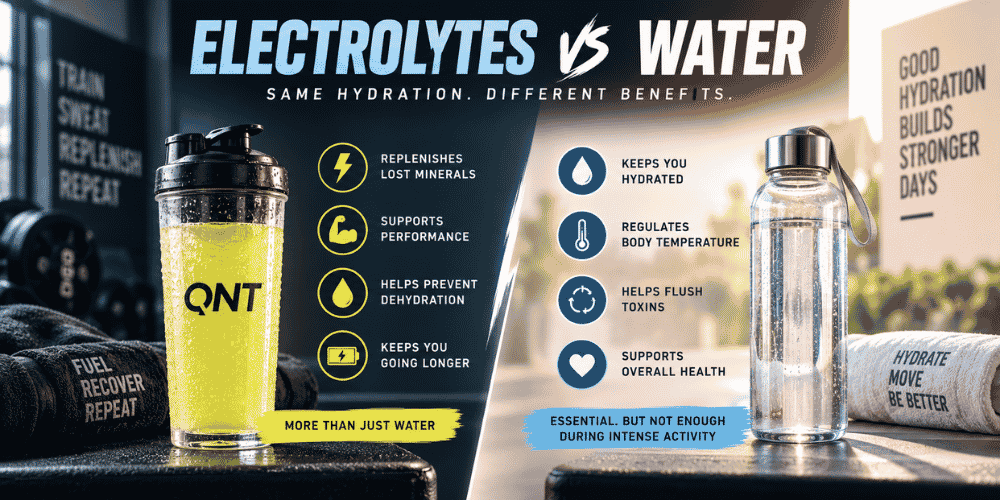
Water replaces fluid. Electrolyte drinks replace fluid while also supplying minerals—most commonly sodium—and sometimes carbohydrates.
| Feature | Plain Water | Electrolyte Drink |
|---|---|---|
| Primary function | Replaces fluid | Replaces fluid and selected minerals |
| Best use | Daily hydration and short workouts | Long, hot or high-sweat sessions |
| Calories | None | Varies by formula |
| Sodium | Usually minimal | Usually included for sweat replacement |
| Carbohydrates | None | May be included for endurance fuel |
| Cost and access | Low cost and widely available | More expensive and product-dependent |
When Is Plain Water Enough?
Water remains the most practical option for routine hydration and many everyday workouts.
- ✓Your workout lasts less than about 60 minutes
- ✓Exercise intensity is light or moderate
- ✓Conditions are comfortable or air-conditioned
- ✓You are not sweating heavily
- ✓You eat normal meals before and after training
When Do Electrolytes Become Useful?
Prolonged Exercise
Sessions lasting more than about 60–90 minutes may create greater fluid and sodium replacement needs.
Heat and Humidity
Hot conditions increase sweating and can make an individual hydration plan more important.
Heavy or Salty Sweating
White salt marks, stinging sweat and large body-weight changes may suggest higher losses.
Multiple Daily Sessions
Sodium-containing fluids may support faster rehydration when recovery time is limited.
Long Events
Running, cycling, triathlons, hikes and long field-sport sessions can create substantial losses.
Electrolytes for Heat and Humidity
Vigorous exercise in hot conditions can produce sweat rates of around 1–1.5 litres per hour in many athletes, although some people may lose considerably more.
How to Estimate Your Sweat Loss
Formal sweat testing can estimate sweat rate and sodium concentration, but a simple body-weight comparison can also provide useful practical information.
Weigh Before
Measure body weight before a representative training session.
Track Intake
Record how much fluid you drink during the workout.
Weigh After
Measure body weight again after drying excess sweat.
Estimate Losses
Account for fluid consumed when estimating total sweat loss.
Do Electrolytes Improve Gym Performance?
Electrolytes are not direct strength, muscle-building or energy supplements. Their performance value depends on whether dehydration or mineral loss would otherwise limit the session.
A well-hydrated person completing a normal 45-minute gym workout is unlikely to experience a dramatic performance improvement from an electrolyte powder.
Electrolyte Powder Benefits
Sodium replacement may support fluid balance during prolonged or hot-weather exercise.
Flavour may encourage some athletes to drink more consistently during long sessions.
Sachets and tablets are convenient for travel, competitions and outdoor training.
Sodium-containing fluids may help retain more fluid between demanding sessions.
Products are available with or without carbohydrates, sugar, caffeine and added vitamins.
Can You Drink Electrolytes Every Day?
A healthy adult can generally use an appropriately formulated electrolyte drink occasionally, but daily use is not automatically necessary.
Many diets already contain substantial sodium. Adding high-sodium hydration products without meaningful sweat loss may unnecessarily increase total intake.
- People working outdoors in high heat
- Athletes training for long periods every day
- People with professionally identified high sweat rates
- Those completing repeated endurance sessions
- Individuals advised by a healthcare professional
- Desk-based workers with low sweat loss
- Short air-conditioned workouts
- Rest days with normal meals
- Routine hydration without major fluid loss
- People already consuming a high-sodium diet
Electrolytes, Sugar and Calories
Not every electrolyte product is low-calorie. Traditional sports drinks often contain carbohydrates because endurance athletes may need both hydration and fuel.
| Product Type | Best Use | What It Provides |
|---|---|---|
| Low-calorie electrolyte drink | Replacing sweat-related minerals | Fluid and electrolytes with minimal energy |
| Carbohydrate-electrolyte drink | Long endurance or high-intensity activity | Fluid, electrolytes and additional energy |
| Caffeinated hydration formula | Selected daytime training situations | Electrolytes plus a stimulant |
Can Drinking Too Much Water Be Dangerous?
During prolonged exercise, drinking excessive amounts of low-sodium fluid can dilute the sodium concentration in the blood. This condition is known as exercise-associated hyponatremia.
It is especially relevant during endurance events when athletes drink more quickly than they lose fluid. Electrolyte drinks do not make unlimited drinking safe.
Electrolyte Supplements Are Not the Same as ORS
Sports hydration products and oral rehydration salts are not interchangeable. ORS uses a specific combination of glucose and electrolytes to replace losses associated with diarrhoea and vomiting.
A flavoured gym electrolyte powder may not contain the correct balance required for medical rehydration.
How to Choose an Electrolyte Supplement
Check Sodium Content
Sodium is generally the most relevant mineral lost during heavy sweating.
Match Carbohydrates
Select carbohydrate-containing formulas when prolonged exercise also requires energy.
Review Caffeine
Caffeine may be unsuitable for evening use, children and stimulant-sensitive individuals.
Follow Instructions
Using too little water can create a highly concentrated drink that is difficult to tolerate.
Read the Label
Look for clearly disclosed sodium, potassium, sugar, carbohydrates, caffeine and serving size.
Consider Testing
Competitive athletes should consider products tested for quality and prohibited substances.
A Simple Hydration Decision Guide
Choose Plain Water
- The workout is short
- Conditions are comfortable
- Sweat loss is low
- You are eating normally
- Rapid rehydration is unnecessary
Consider Electrolytes
- Exercise lasts longer than 60–90 minutes
- Conditions are hot or humid
- You sweat heavily or notice salt marks
- You complete multiple daily sessions
- Losses must be replaced quickly
Add Carbohydrates
- The session lasts several hours
- Additional exercise fuel is required
- Food is difficult to consume
- You are running, cycling or playing prolonged sport
The Final Verdict
In the electrolytes vs water debate, neither option is universally better. Water remains the best starting point for normal daily hydration and most short workouts.
Electrolyte supplements become more valuable when exercise duration, heat, sweat rate or recovery demands create meaningful fluid and mineral losses. Choose according to the session in front of you—not according to social-media trends.
Frequently Asked Questions
Are electrolytes better than water?
Not always. Water is usually sufficient for everyday hydration and short workouts. Electrolytes may be more useful during prolonged exercise, heavy sweating or hot-weather training.
When should I take electrolytes?
Electrolytes may be used before, during or after prolonged exercise depending on individual sweat losses. They can support fluid and sodium replacement during long sessions and rapid rehydration afterward.
Do I need electrolytes for the gym?
Most people do not need an electrolyte supplement for a normal workout lasting less than one hour. It may be more useful during long, high-volume or hot-weather sessions involving heavy sweating.
Can I take electrolyte powder without exercising?
People with kidney, heart or blood-pressure conditions, or those taking medicines that affect fluid and electrolyte balance, should consult a healthcare professional before regular use.
References
- American College of Sports Medicine: Hydration and Electrolyte Facts
- National Institutes of Health: Sweat Rate and Sweat Sodium Assessment
- National Institutes of Health: Sports Hydration and Sodium Replacement
- National Institutes of Health: Exercise and Hydration in the Heat
- World Health Organization: Sodium Reduction